11.3 Defining Simplicity
Today, most IT managers find
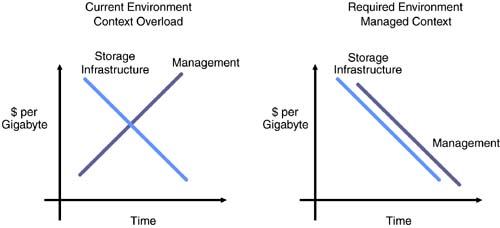
Figure 11-4. Moving to a managed context environment.
Many of the management burdens escalating in current environments are routine
Achieving storage simplicity requires driving both infrastructure and management costs to decline in parallel while increasing functionality and value.
Ultimately, the combination of simpler storage infrastructure and management leads to the following:
|
11.4 Managing Storage: A Plan of Attack
Storage professionals need to harness and shape their IT departments with a coordinated plan of attack. The Data Mobility
The race to recapture time and storage resources, such as unused capacity, led to the creation of dozens of storage management products. Primarily software-driven, these products range from point solutions for specific
For a storage professional looking to deploy a storage management solution, the product landscape can be overwhelming. Organizationally, the scope of functions that fall under the storage management domain can span several individuals. The first steps to achieving management simplicity require a framework to address broader issues of managing storage domain.
What should a storage management group within the larger enterprise IT department look like? What skill sets should be represented within this group? How should the group be structured? What disciplines should be practiced? These are just a few of the questions that need to be
While it would be a gross oversimplification to say that storage was once a simple matter of plugging an array into a SCSI port, compared to the array of alternatives available today, the past was clearly a lot simpler. The days of one-size-fits-all SCSI are long gone.
Storage as an enterprise
Given this complexity, it is becoming increasingly common to find storage management groups within enterprise IT departments. Once a decision is made to form such a group, the
11.4.1 Practice Disciplines
Think of enterprise storage management as a practice
For the purposes of this outline, we consider three discipline areas: managing the storage environment as a business entity, managing data from the standpoint of the storage environment, and using the storage environment to manage and mitigate corporate risk. There are no hard boundaries between discipline areas. In fact, management practices and products that fall under one area could also overlap with the other two. For example, copy functions that have been placed under the data management heading are also a critical component of business continuance (under risk management) and are becoming critical enablers of content distribution services (under business management). The discipline areas and overlap are shown in Figure 11-5. Figure 11-5. Practice disciplines for managing the storage domain. (Source: The Data Mobility Group)
Dividing storage management first into discipline areas provides a method for identifying and assigning specific disciplines to each group member. Depending on the specifics of the organization, it may also be useful to add or further
11.4.2 Business ManagementThe business management discipline area includes management of the storage domain as a business entity, complete with customer service levels (both internal and external) and a method for tracking usage and applying charge-back. The basic functions of this grouping are outlined in Figure 11-6. Figure 11-6. Business management practice objectives and implementation examples.
A quick look back in storage history to storage service providers (SSPs) helps clarify this discipline. In spite of their
In the case of an enterprise-based storage utility, customers are users represented by departments or applications and can be managed the same way that SSPs managed their outsourcing customers ”via service level agreements (SLAs).
Many of the provisions covered in SLAs fall under this discipline area, including on-demand capacity provisioning, quality of service (QoS), continuous availability, and performance monitoring and management. Since the storage utility is run as a business, amortizing the cost across the entire user base provides a lower cost to each
The business management practice also includes hardware and software selection. Balancing the double-edged sword of choice, this group must decide between fewer
11.4.3 Risk ManagementRisk management includes the use of the storage domain to mitigate corporate risk through the use of well-established backup and recovery procedures, business continuance, disaster recovery, and most recently, security functions. The storage domain is also a good place to focus attention when implementing compliance with regulatory requirements. Examples in the United States include the Securities and Exchange Commission (SEC) for public companies and the Health Insurance Privacy and Accountability Act (HIPAA) for health-care organizations.
A tightly integrated combination of storage hardware, software, and networking services can be used to secure and protect data from unforeseen catastrophic events, human error, or malicious intent. Consequently, storage platforms can now be thought of as places to manage and mitigate enterprise risk. With the increasing dependence on corporate data,
Figure 11-7. Risk management practice objectives and implementation examples. (Source: The Data Mobility Group)
Four major IT disciplines relating to risk management can be applied to the storage environment:
11.4.4 Data ManagementThe data management practice includes the effective presentation of data contained within the storage domain through storage-based file systems and copy functions. It also includes effective storage infrastructure design for maximum performance. The primary objective and implementation examples are shown in Figure 11-8. Figure 11-8. Data management practice objectives and implementation examples. (Source: The Data Mobility Group)
This discipline area serves as a foundation for business management and risk management with basic functions acting as building blocks for other areas. Data management will become more important over time as more file management capabilities move into the storage domain. Storage-based file management systems can protect shared data ”accessed by multiple applications, servers, or users ”from loss or corruption while maintaining a high degree of data availability for all authorized applications or users.
Copy functions fall into the data management practice. These functions are essential to the storage domain's risk management capabilities for functions such as backup and replication. Copy functions also enable new Web-
A subset of policy-based automation also
11.4.5 Shaping Storage Domain Management
The storage management plan outlined through the business, risk, and data management practices can be implemented within an existing enterprise IT department with minimal disruption. This plan can also be used to structure the operational and organizational management of a new team
IT skills
Implementation of the plan
|