The Artistic Vision
I have mentioned at various points throughout this book the evil that is known as the focus group . It is important to understand the distinction between playtesters and focus groups. Focus groups, particularly those gathered early in a game s development, are customarily groups of off the street people who are given a one- or two- hour presentation, often on a series of different games. Many times they are not allowed to play the games, as often the games have not even been developed yet. They hear about game concepts and, based on the descriptions, are asked whether they would be interested in buying such a game or not. Playtesters, on the other hand, are people whom members of the development team know or whom they at least have a chance to get to know. Knowing a person is crucial to understanding how seriously you should take their opinion. Furthermore, playtesters get to play the games in question, while early focus group members often do not. As a result of these key differences, focus groups tend to be antithetical to the creation of original, creative games and encourage the development of safe, less innovative games. As Mark Cerny has put it, a focus group can tell you primarily what was cool fifteen minutes ago. One can only imagine how the focus group for games like Pac-Man, Tetris , or Civilization would react . We know from the interview withWillWright in Chapter 22 that the focus group for The Sims went so poorly that the game was nearly canceled . It should be telling that focus groups are run by the marketing department, while playtesting is handled by the development team. One group s primary interest lies in making money for the company in the simplest way possible, while the second, it is hoped, is interested in producing compelling and stimulating games. Of course, the two motives need not necessarily be at odds, but when one aims primarily for the former instead of the latter, one is likely to end up with neither . Focus groups can also be conducted later in development, when the group can actually play a section of the game. These tests can be much more useful and informative, particularly when trying to get the opinions of people who do not play many games. Since these are off the street people, however, it will be difficult to gauge each person s individual opinion. As a result, for the focus test data to be statistically valid, you will need a fairly large number of participants .
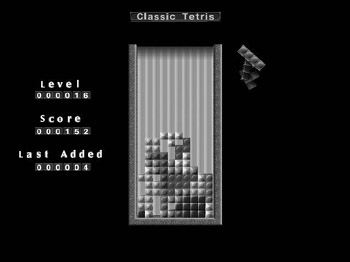
When released, Tetris was an extremely unique game. Chances are, an early focus group for the game would have gone terribly. Pictured here: classic mode in The Next Tetris .
As you are testing, it is important to remember that you cannot please everyone. Given a large enough testing team, there are bound to be people who dislike portions of your game, or even who dislike the entire game. If you start trying to make every single person on the testing team happy, you often end up making the game less fun for other people. While you may have started with a game that a bunch of people liked a great deal and a few people thought was dull, if you start trying to please everyone you may end up with a game that everyone thinks is OK, but which no one is truly enthusiastic about. Given the choice, I always prefer to give a certain group of people an experience they truly love than try to give everyone something they like only marginally.
Playtesting should also not mean game design by committee. You do not have to take every suggestion that your development team presents and implement it. Some of these ideas may be perfectly reasonable but you may feel that they just do not fit with your game. That is a totally acceptable response to have. In the end, it may be that every single playtester you have tells you that some part of the game must change, but if you feel, in your gut, as an artist, that you do not want to change that portion of the game, then leave it as it is. In the end you must be the final arbiter of what happens in the game. A committee, whether it consists of executives, testers, or even members of the development team, can never have the unity of vision and certainty of purpose that can be maintained by a single person. This makes game development a significantly more risky proposition for the game designer, since if the game fails he will be the one largely to blame. At the same time, if it succeeds people will recognize his impressive achievement. In the end, being an artist and doing quality work is all about taking risks.

EAN: 2147483647
Pages: 189
- The Four Keys to Lean Six Sigma
- Key #4: Base Decisions on Data and Facts
- Making Improvements That Last: An Illustrated Guide to DMAIC and the Lean Six Sigma Toolkit
- The Experience of Making Improvements: What Its Like to Work on Lean Six Sigma Projects
- Six Things Managers Must Do: How to Support Lean Six Sigma