Chapter Ten Vision Re-engineering
Ten Vision Re engineering
Overview
Lotus Development Corporation successfully deployed Solution Selling throughout the company. Lotus gave us lots of credit for helping it achieve significant sales results, and for that I will always be grateful. Lotus originally set a goal of selling 30 million sets of Lotus Notes, and it achieved that goal almost two years earlier than the original plan called for. The keys to this early success were an outstanding product and Solution Selling. Solution Selling enabled them to sell Notes as an enterprise-wide solution to business executives, which had been a challenge for Lotus salespeople before they used Solution Selling.
During the time that Lotus Notes was doing so well, Lotus Corporation attracted the attention of IBM. In an inspired moment, IBM acquired Lotus, and this is where my story of working with IBM and vision re-engineering really begins.
Since IBM was not a customer of ours when it acquired Lotus, we were very apprehensive about our future relationship with Lotus. Would IBM allow Lotus to continue to work with us? Would IBM come in and make wholesale changes and require Lotus to follow IBM’s methods and procedures? We talked to everyone we knew at Lotus trying to find answers. Early on, no one knew, but the consensus was that Lotus would be left alone and we would be kept onboard.
Two or three months postacquisition, while on a business trip to California, I received a phone call in my hotel room early one morning from a gentleman at IBM whom I did not know. He introduced himself and told me he was aware of our work with Lotus. He said that a Lotus executive—Mark Tapling—had given him my name.
Of course, I was very excited to get a call from IBM inquiring about doing business together. Who wouldn’t be? I’ve always admired IBM, and Mark was a person whom I had grown to respect and admire as well. My caller asked if we would be interested in preparing a proposal for IBM to do skills-based sales training for a large number of IBM salespeople.
I wanted to say, “Yes, of course, who wouldn’t?” But I didn’t. Instead, I said, “Tell me what you are specifically looking to accomplish with this training. What business problems are you trying to solve? What skills are you looking to improve, and why? Are you looking to incorporate these skills into a companywide sales process or roll them out as training events?”
It didn’t take him long to respond to my questions, because he knew exactly what he was looking for. In fact, he was so precise that it was clear I wasn’t the first person he had spoken to about this. Later, I discovered the project had been going on for almost a year, and IBM was in the final stages of making a decision. He was calling me out of courtesy to Mark Tapling, because Mark had been internally promoting our approach to IBM since the acquisition.
I realized we were being asked to participate in an active opportunity. I knew we would be just another column—and I knew we would be column fodder as well. It would be a major mistake for us to engage because of the time and effort it would take to prepare a quality proposal and because we had a low probability of winning. I thanked him for the opportunity to participate in the evaluation and respectfully declined.
You could have heard a pin drop over the telephone. After a few seconds of silence, he said, “Let me get this straight. You’re doing business with Lotus, you’ve been training its salespeople, and you’re refusing to propose to the parent company, IBM?”
I quickly said, “I hope you’ll understand what I’m doing and why I’m doing this, but please let me explain. I’m practicing the methodology we teach salespeople. For me to engage at this time in your buying process would be a grave mistake. You see, we missed the first phase of your buying process. That’s where you or someone else helped you define your business problems and determine what you need to solve them. You’re now in the second phase of your buying process, where you already have a vision of what you need and a good idea of the company you want to do business with.”
I went on to explain to him, “The only way we can make a proposal is if you’re willing to take some time and help us understand the business problems you’re trying to solve and then give us the opportunity to reengineer your current vision to match our capabilities. If this isn’t possible, then again, I must respectfully decline.”
“I don’t understand,” he said, “and I don’t agree with your approach. We can’t slow down our process just for you. However, I do respect your decision not to participate.” We ended the conversation with a few polite comments that I don’t remember.
After hanging up the phone, I kept hoping I had done the right thing. After all, that was IBM on the phone, one of the world’s largest and most respected companies. But I wouldn’t be telling you this story if it didn’t have a happy ending. The happy ending began forty-eight hours later when my phone rang.
“I can’t believe what you did,” the same IBM executive said.
“What do you mean?” I replied.
“I’ve never had anybody in my life do what you did,” he said. “Yet, at the same time, that’s exactly what we want our salespeople to be able to do.”
“Please explain,” I said.
“IBM can’t afford to work on deals or opportunities that don’t close, or worse yet, that we lose to the competition. Many people think that because we’re IBM, we have deep pockets with unlimited funds and unlimited resources, but that’s not true. We have to be able to qualify out of opportunities that we can’t win. I want our salespeople to do what you did with me. Can you teach us to do that?”
That was the beginning of a long and lasting relationship with IBM that continues today. Since the implementation of Solution Selling began at IBM in 1996, we have worked with and trained more than 50,000 IBM employees and business partners around the world. Solution Selling is the core sales execution component of IBM’s sales process.
This story is an example of vision re-engineering. When the IBM executive first called, he was trying to get us to complete a column in his evaluation matrix. He was buying skills-based sales training, and his mind was made up about what he wanted and with whom he wanted to do business—and it was not my firm, not at first.
Fortunately, I was able to differentiate myself with my approach, which was very important in this situation. Later on, I was able to reengineer his vision and help him see that deploying a total sales process throughout IBM was the real key to improved sales results versus engaging in skills-based sales training events.
I must give the IBM executive who called back a lot of credit. That return phone call has made all the difference in the world to IBM and to my company as well.
VISION PROCESSING MODEL, VISION RE ENGINEERING
When it comes to active opportunities and vision re-engineering, I strongly recommend following the 9 Block Vision Processing Model. You’ve already seen the 9 Block Model. However, this time we’re going to use the 9 Block Vision Processing Model differently. In vision re-engineering, we start in Box C1, because the buyer is already at vision. See Figure 10.1 and note the nine steps and the new sequence by which we navigate the model.
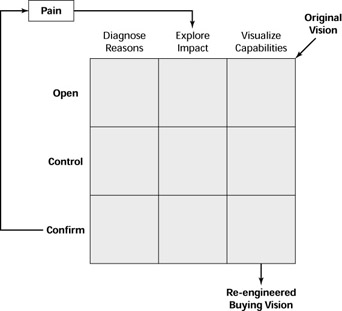
Figure 10.1: The 9 Block Vision Processing Model—Vision Re-engineering
Let’s revisit our sales scenario with Bill Hart and Steve Jones, but let’s reverse the situation. This is not a latent opportunity. Steve Jones, VP Sales for the manufacturing company, Titan Games, Inc., calls Bill Hart. Steve briefly explains why he is calling, and then asks for Bill’s product specifications, pricing, and a demonstration. Bill is told that Titan is in the market for e-commerce capabilities. Steve is inviting Bill to bid or, as we now know, to fill a column—but not Column A.
The conversation starts with the buyer calling the salesperson. Bill engages the buyer in a vision re-engineering conversation. Note how Bill navigates through the resequenced model—what he says and when he says it.
Buyer: Mr. Bill Hart, please.
Salesperson: Hello, this is Bill Hart speaking.
Buyer: Mr. Hart, my name is Steve Jones and I work for Titan Games, Inc. We’re a manufacturing organization that specializes in production of toys and games . . . [the description continues in detail]. We haven’t met, but we’re looking for some specific e-commerce type of capabilities. We’ve heard great things about your company and would like to know what you have to offer. You know, the usual stuff: specifications, terms and conditions, prices—including a demonstration of your offering.
Salesperson: Thank you. I’ll be happy to give you all the information you want, but before I do, I’d like to ask you a few questions. I need to know more before I’m able to talk about our offerings.
Buyer: Like what?
Here’s an important Solution Selling principle: first make yourself equal before you make yourself different. In other words, first understand everything you can about the competing vision. Think about it: How will you know how to compete and what differentiators to use until you thoroughly learn about the current vision?
As you read this hypothetical conversation, note that each step has a small graphic illustrating where that step occurs in the 9 Block Vision Processing Model. It will help you follow along in the dialogue.
We enter the conversation starting with the first box (C1) of the 9 Block Vision Processing Model.
Box C1 Open Question, Visualize the Buyer s Current Capabilities
Salesperson: What specific capabilities are you looking for, and how do you see yourself using these capabilities?

Box C1
Buyer: Our salespeople have assigned accounts. Any time customers want to place an order, they must place that order through their assigned salesperson. I feel our salespeople spend way too much time doing what I call order taking with their assigned accounts instead of being out there selling into new accounts. Given all that, we’ve decided to implement an e-commerce application that will allow those existing customers to place their own orders. First, they’d be able to view inventory levels, then place the order on their own and have it allocated and confirmed on the Internet. We really think this will allow the salespeople to devote their time to selling into new accounts.
Salesperson: [Clarifies initial vision.] So, it sounds like when existing customers want to place an order on standard items, you want them to easily and at any time be able to do that via the Internet without involving the salesperson, is that right?
Buyer: Yes, that’s what we’re attempting to do.
You will find all types of active buyers. The buyer may be active but has not selected a vendor. The buyer is truly shopping for the best alternative. In this case, the salesperson may have some latitude to further explore Box C1 and ask some probing questions to better participate in the existing vision. It’s possible that the buyer will even share the pain early on that is driving the requirements.
Unfortunately, this is not usually the case. We will proceed with the dialogue assuming a worst-case scenario. The buyer is not very talkative and has not admitted a pain, and the salesperson doesn’t feel he has earned the right to explore the current vision too much. The salesperson must attempt to establish valuable differentiators to earn the right to continue. After Bill has gained a good understanding of Steve’s existing vision, the next step is to differentiate himself—that is, change the buying requirements so they include his strengths. The goal is to move into Column A and become the company and salesperson of choice. Let’s assume that Bill has a good idea of the buyer’s existing vision. It’s now time to make himself different.
Box C2 Control Question, Visualize Capabilities
| Note |
This is a sensitive area, because Bill is exploring areas outside Steve’s original vision. The Pain Sheet example from Chapter Seven showed a list of four possible reasons for a given pain with four corresponding capabilities (visions) that address each reason. In this re-engineering scenario, the buyer has offered one of the four capabilities listed on the Pain Sheet as his existing vision. This allows the salesperson to attempt to provide a differentiating capability among the ones left. |

Box C2
First Differentiating Capability (Capability B)
Salesperson: Steve, as part of your e-commerce initiative, are you also looking for a way for customers who are at your Web site and have questions to click on a FAQ to get those answers, or, alternatively, select a help option to connect to the appropriate person in the company?
Buyer: That’s not currently part of our initiative, but it does sound interesting.
| Note |
Bill has two options here: (1) he can continue positioning all his differentiators and then explore the possible value of them (reason column), or (2) he can bounce back and forth through the boxes. That is, once interest is shown in a new capability, Bill might go straight to the reason columns to establish value for the new capability before introducing a second new capability. The chosen style will vary by salesperson and opportunity. |
For the sake of this illustration and to learn the sequence, we will have Bill continue positioning his differentiating capabilities in Box C2 before exploring their value.
Second Differentiating Capability (Capability C)
Salesperson: Steve, we will certainly explore that further, but let me ask you this: Are you also looking for a way, when offering promotions, for your salespeople to create personalized messages and broadcast them to all the prospects via email?
Buyer: Not really. Our sales force doesn’t get involved with creating promotions. It’s something we’ve looked into, but I really don’t want to explore that today.
Although Steve wasn’t interested in the second differentiating capability, Bill is not discouraged. He explores another differentiator.
Third Differentiating Capability (Capability D)
Salesperson: Well, I respect that. [Moves on to additional capability.] Do you think it would help if, when visiting your Web site, your customers could be prompted to submit referrals in exchange for discounts or promotional items?
Buyer: Again, this is not part of our current initiative, but that does intrigue me.
Now that Bill understands Steve’s current vision and has piqued his interest in exploring some additional capabilities, it’s time to find out what it currently costs the buyer to do business without the desired capabilities and why the buyer is seeking those capabilities. Again, you find all types of active buyers. Some may allow you to back up in their buying process to establish the “cost of doing business today.” In this case, the salesperson may be able to ask some probing questions to better establish value for the existing vision. Once again, this is not usually the case. Often, buyers who have already gone through the due diligence process don’t want to repeat it. In that case, the salesperson should respect their decision and focus on establishing value for his or her differentiating capabilities only. We’ll proceed with the dialogue assuming the latter, worst-case scenario.
| Note |
When Bill explores Boxes R1 and R2, the boxes seem to merge together. The dialogue fluctuates between the two. |
Box R1 Open Questions, Diagnose Reasons

Box R1
Salesperson: Tell me about it—how do you manage your accounts today without these capabilities?
Buyer: Specifically in regard to handling FAQs, I was intrigued by your description, because today when customers have a question, they go straight to their assigned sales reps. They usually call on a direct line. If they don’t get their reps that way, they usually can reach them on their cell phones.
Salesperson: I’d like to explore that a little further, if I may.
Buyer: By all means, go ahead.
Box R2 How They Do Business Today Without Capability B
The dialogue below is very similar to the drill-down conversation that I explained in Chapter Eight showing the establishment of value during Vision Creation.
Salesperson: Today, how much time do salespeople actually spend answering these types of questions?
Buyer: They probably spend 15 percent of their day answering FAQs.

Box R2
Salesperson: Well, how much time do you think should be devoted to that?
Buyer: Frankly, none. They are salespeople, not customer support. This really takes away from the time that they should be selling into new accounts.
Salesperson: How many new accounts did each sales rep acquire last year?
Buyer: On average, each sales rep was probably assigned ten new accounts.
Salesperson: And what was the average revenue per new account?
Buyer: I would guess conservatively that it was about $75,000 each.
Salesperson: If the salespeople were freed from answering FAQs, could they bring in one new account with the saved time?
Buyer: They probably should bring in more accounts, but one account sounds good.
Salesperson: Is it reasonable then that if all the reps—all fifty—could bring in one new account each and those accounts yielded at least $75,000, that you could bring in $3.75 million in revenue from new accounts?
Buyer: I never thought of the potential as that large, but I think that’s a reasonable figure.
Once Bill had established the cost of doing business today without the first differentiating capability, he would then explore the second differentiating capability by asking the open question of R1. He would have then explored the cost of doing business today in R2 without the second differentiating capability. The dialogue is similar to the drill-down conversation that took place for the first differentiating capability. In the next dialogue, Bill confirms how the firm does business today.
Box R3 Confirm Questions, Diagnose Reasons (Cost of Business Today)

Box R3
Salesperson: So, it sounds like from what we just discussed, the way you’re doing business today is that (A) your salespeople spend too much time handling repeat business in existing accounts, (B) they’re also spending too much time answering FAQs, and this is taking away from their task of prospecting into new accounts, and (C) they also fail to ask customers for referrals and leads. Looking quickly at the numbers, it appears that not having these additional capabilities could be costing you close to $4.75 million in revenue a year. Is that right?
Buyer: Yes, the figures I gave you are accurate.
Admission of Pain Between Boxes R3 and I1 When conducting Solution Selling Workshops, I (jokingly) call this moment in the Vision Re-engineering Model the “out-of-box experience.” Here we’re assuming the worst-case scenario, where the buyer has not admitted his or her pain to us. It may become obvious to the salesperson (via the exploration of how the firm does business today) that the pain is driving the opportunity, but it’s important that the buyer be the one to admit it. Here we would ask a leading question:
Salesperson: What is the effect on you and your business of doing it this way?
Buyer: Well, quite frankly it’s having a real bearing on my ability to hit our new account revenue targets.
Salesperson: What is your target? And how short of it do you think you will be?
Buyer: Our goal is $5 million. At this rate we won’t even come close.
| Note |
Bill would explore the impact column in the same method as he did for Vision Creation. Feel free to skip the dialogue and proceed to Box C3. |
Box I1, Open Question, Explore Impact

Box I1
Salesperson: Besides yourself, who else in your organization is impacted because the new account revenue targets are being missed? And how are they impacted?
Buyer: Well, I know our salespeople are frustrated because they’re challenged with hitting their quotas. It tends to bring morale down.
Box I2 Control Question, Explore Impact

Box I2
Salesperson: If the new account revenue targets are being missed, is that causing your overall revenue goals to be missed?
Buyer: It really is having a huge impact.
Salesperson: Have you seen profits affected because of this?
Buyer: Our profits have been stagnant, but at this rate the overall profit targets of the company will be missed.
Salesperson: Do you know what the profit margins are here at TGI?
Buyer: Approximately 20 percent.
Salesperson: Which person in your organization is going to be most impacted by missed profit targets?
Buyer: That would be Jim Smith, our VP Finance.
Salesperson: Have the declining profits had any major effect on the value of your stock?
Buyer: Well, as you can imagine, we’re all shareholders here. The earnings per share have slipped, but I’d say that the declining profits have affected us more in our ability to grow our business.
Salesperson: Who is looking to grow the business here at TGI?
Buyer: We all are, but this is really the initiative of our CEO, Susan Brown.
Box I3 Confirm Question, Explore Impact

Box I3
Salesperson: So, from what I just heard, it sounds like your salespeople are frustrated with the effort it requires to hit their quotas, the VP Finance is challenged with hitting his profit targets, and your CEO is finding it difficult to grow TGI’s business. It sounds like this is not just your problem in sales but a companywide problem. Is that correct?
Buyer: Bill, I can’t disagree. You seem to have a real handle on our issues here at TGI.
Having established the cost of doing business today, positioned differentiating capabilities, and explored Steve’s pain and the impact on others at TGI, Bill can now confirm his understanding of the total situation at TGI.
Box C3 Confirm Question, Visualize Capabilities

Box C3
This summary here attempts to establish a new reengineered buying vision. Notice how it’s structured: “When you called, you said you needed [A = original vision]. But you also said you needed [B and C = additional capabilities]. If you had all these capabilities, could you [address your goal]?” Also, note how the salesperson ties back in the value established.
Salesperson: Steve, I just want to confirm our conversation here. So, when you called, you were looking at e-commerce to give (A) your customers who want to place orders the ability to view inventory levels, place an order on their own, and have it allocated and confirmed over the Internet. You also said you needed a way to (B) allow customers to answer their own questions by clicking on a FAQ Web menu or a Help option that would connect them to the appropriate person in the company. (C) You also wanted your customers to be prompted to submit referrals in exchange for discounts or promotional items when visiting your Web site. If you had all three of these capabilities, could you regain what appears to be a total of $7 million in new account revenue [including value of Capability A]—actually surpassing the shortfall that you shared with me earlier of $5 million?
Buyer: Bill, I really do believe that we could.
There you have it. You’ve taken a competing vision and learned all you can about it, and then you reengineered it with your most competitive differentiators.
However, before leaving the subject of vision re-engineering, there is one more important topic: Requests for Proposal (RFP) and Request for Information (RFI).
THE RFP (REQUEST FOR PROPOSAL)
RFPs, RFIs, tenders—all these purchasing vehicles are different from culture to culture, industry to industry, and company to company, but the general philosophy and approach for handling them is the same.
The question is—what should you do in active opportunities that come to you as an RFP? The simple answer—don’t waste your time on them unless you wrote them. If you did not define or contribute to all or part of an RFP’s buying requirements, your chances of winning are much less than 10 percent—most customers tell me less than 2 percent. It also costs a great deal of time and money to answer them, and it takes you away from activities that are more productive. Salespeople often respond to RFPs wired for their competition because they have nothing better to do. The sad reality is that the RFP is their best prospect.
Chapter Nine addresses the rules for competing in active opportunities—an RFP is definitely an active opportunity, so those rules apply. If you understand those rules and you decide to use them, then your responsibilities are clear. If for some reason they’re not clear, go back and read Chapter Nine, paying particular attention to the Five Rules for Deciding Whether to Compete or Not and the Opportunity Assessment Worksheet (Figure 9.1, page 140).
Rule One says don’t fool yourself into thinking you’ve got just as good a chance of winning as anybody else. You don’t. You have to assume the RFP was written for and by someone else. I have salespeople argue with me over this issue all the time. They don’t want to be told not to waste their time. They ask, “How can you say it was written by somebody else?” They also ask, “What if the RFP was written by a third party?”
My response is that most organizations don’t have the time or the expertise to put together RFPs totally on their own. Even if the RFP was developed internally, it was probably influenced by outside consultants or a vendor. So stop kidding yourself. Almost every RFP is biased in some shape, form, or fashion. If you will just accept that fact, you will be able to adopt the proper competitive strategy and deploy the right tactical approach that will improve your chances of winning.
Deploying the Right RFP strategy
What competitive strategy should you use? The End-Around strategy should be the default strategy with RFPs that you didn’t develop. Tactically, you want to re-engineer the vision in the RFP and bias the requirements in favor of your differentiated capabilities.
When attempting to re-engineer an RFP, I recommend using the following eight specific tactical steps.
Tactical Step 1 Call the sender and offer to respond to the RFP in exchange for three one-hour interviews (that’s your quid pro quo). Whether you’re looking for three interviews or two, the point is that you need a chance to meet with the key players impacted by the scope of the project or you will have no chance at influencing the requirements of the RFP in your favor. If granted, go to Tactic 4.
Tactical Step 2 If your request for a meeting is denied, send a letter to the sender stating that it will be impossible to respond to the RFP without the three one-hour interviews. Include with the letter marketing and sales collateral equal in volume to the RFP. Figure 10.2 is an example of the kind of letter you might send.
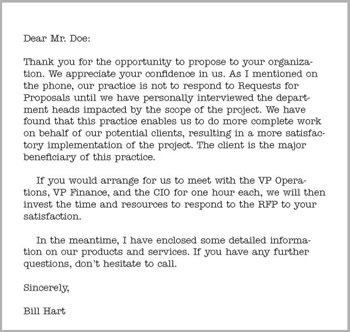
Figure 10.2: RFP Initial Response Letter—Example
Note that the people in the job titles I asked to meet with were determined from reading and analyzing the scope of the RFP. The reason for the marketing-related materials is an attempt to send the message, “My company has a lot to offer, and it’s difficult to respond without knowing more about the situation than I do now.” This letter can be adapted slightly in the event a third party is involved, such as a consultant. The same message and tactical approach still apply.
Tactical Step 3 When the prospect calls again, offer to respond to the RFP in exchange for three one-hour interviews. If they seriously want you to respond or if they simply need you to fill a column, they will find a way for you to talk to the right people. Maintain the quid pro quo of only responding to the RFP once the interviews are granted.
Tactical Step 4 When an interview is granted to you, ask each line executive, What are the two primary issues behind the project? You’re trying to determine each one’s pains so you can re-engineer their buying visions.
Tactical Step 5 Prepare your response to the RFP as agreed.
Tactical Step 6 Send a cover letter with the proposal to the person controlling the RFP. Specifically point to the executive summary and how it documents the buying vision of each line executive with whom you spoke.
Tactical Step 7 Highlight the key capabilities you can provide in the executive summary. The executive summary attempts to highlight the differentiating capabilities that you established during the interviews and vision-processing sessions. It specifically points out how important the differentiating capabilities that you discovered are in helping the firm solve its business problems. You can make your case stronger and give it a compelling reason to do business with you if you can quantify the negative impact of not having these unique capabilities.
Tactical Step 8 Copy the cover letter and the RFP and send them to the line executive with whom you had the best rapport.
THE RFI (REQUEST FOR INFORMATION)
An RFI is distinct from an RFP in one important way: the buyer probably doesn’t have a fully formed buying vision. Therefore, respondents have a chance to form part, if not all, of the buying vision. This situation provides a much easier opportunity for the salesperson to influence the buying criteria and requirements than at the RFP stage. The RFI is generally used as a precursor to the RFP step in an organization’s procurement process. RFIs are commonly used in government and highly regulated sectors.
Companies and organizations use RFIs for several reasons, including finding out if capabilities exist to help solve a problem, establishing buying criteria and budgets, and looking for a team of vendors or suppliers who can work together. I recommend you deploy the eight tactics previously discussed at the RFI stage in regulated and government sectors.
The goal in responding to RFIs and RFPs is to obtain the interviews so that you can create or alter the buying requirements. The buying requirements must include your unique capabilities—your differentiators—to give you a reasonable chance of winning.
If the RFP is part of a highly regulated industry or company, always request a Bidder’s Conference if one is not already scheduled. Also, in highly regulated situations you may find that you can use this tactic at the Request for Information (RFI) stage of the process if access is denied once RFPs are published.
The Bidder s Conference
The Bidder’s Conference represents an opportunity, and maybe the only opportunity you have, to affect the requirements. Whether it’s regulated or nonregulated, public or private sector, you really have no other choice—that is, if you want to compete.
Participate as though you were in a regular face-to-face sales call or meeting, except that you want to be the salesperson asking all the questions. In other words, make yourself equal and learn everything you can about the company’s pains, reasons, impacts, current vision, and so on.
Next, make yourself different. Try to alter the buying requirements. You must re-engineer the RFP in front of the other competitors who are also attending the Bidder’s Conference.
Don’t worry about what your competitors may be thinking or doing. What difference does it make what they think? After all, in this situation, if you can’t deploy the End-Around competitive strategy and tactically re-engineer the requirements of the RFP, you’ve learned you have almost no chance of winning.
Part One - Solution Selling Concepts
Part Two - Creating New Opportunities
- Chapter Four Precall Planning and Research
- Chapter Five Stimulating Interest
- Chapter Six Defining Pain or Critical Business Issue
- Chapter Seven Diagnose Before You Prescribe
- Chapter Eight Creating Visions Biased to Your Solution
Part Three - Engaging in Active Opportunities
Part Four - Qualify, Control, Close
- Chapter Eleven Gaining Access to People with Power
- Chapter Twelve Controlling the Buying Process
- Chapter Thirteen Closing: Reaching Final Agreement
Part Five - Managing the Process

EAN: N/A
Pages: 106
