1-7 aggregate-address address mask suppress-map route-map-name
| < Free Open Study > |
1-7 aggregate-address address mask suppress-map route-map- nameSyntax Description:
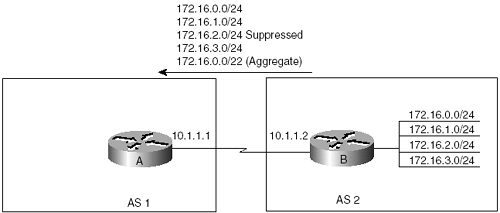
Purpose: To create an aggregate entry in the BGP table. An aggregate is created only if a more-specific route of the aggregate exists in the BGP table. This form of the aggregate-address command advertises the aggregate while suppressing the more-specific routes indicated by the route map. Cisco IOS Software Release: 10.0 Configuration Example: Suppressing a Subset of the More-Specific Routes Used to Form the AggregateIn Figure 1-8, Router B is generating an aggregate for 172.16.0.0/22 while suppressing one of the more-specific prefixes. Figure 1-8. Suppressing Specific Prefixes Router A router bgp 1 neighbor 10.1.1.2 remote-as 2 ___________________________________________________________________________ Router B interface loopback 0 ip address 172.16.0.1 255.255.255.0 ! interface loopback 1 ip address 172.16.1.1 255.255.255.0 ! interface loopback 2 ip address 172.16.2.1 255.255.255.0 ! interface loopback 3 ip address 172.16.3.1 255.255.255.0 ! router bgp 2 network 172.16.0.0 mask 255.255.255.0 network 172.16.1.0 mask 255.255.255.0 network 172.16.2.0 mask 255.255.255.0 network 172.16.3.0 mask 255.255.255.0 neighbor 10.1.1.1 remote-as 1 ! Four loopbacks have been created on Router B to simulate the locally sourced routes that will be aggregated. A BGP router can advertise an aggregate only if at least one specific route of the aggregate is in the BGP table. The BGP network commands are necessary on Router B in order to place more-specific routes of the aggregate into the BGP table. Before aggregating the loopback prefixes, you need to verify that the specific routes are in the BGP tables on Routers A and B: rtrA# show ip bgp BGP table version is 16, local router ID is 172.17.1.1 Status codes: s suppressed, d damped, h history, * valid, > best, i - internal Origin codes: i - IGP, e - EGP, ? - incomplete Network Next Hop Metric LocPrf Weight Path *> 172.16.0.0/24 10.1.1.2 0 0 2 i *> 172.16.1.0/24 10.1.1.2 0 0 2 i *> 172.16.2.0/24 10.1.1.2 0 0 2 i *> 172.16.3.0/24 10.1.1.2 0 0 2 i ___________________________________________________________________________ rtrB# show ip bgp BGP table version is 6, local router ID is 172.16.3.1 Status codes: s suppressed, d damped, h history, * valid, > best, i - internal Origin codes: i - IGP, e - EGP, ? - incomplete Network Next Hop Metric LocPrf Weight Path *> 172.16.0.0/24 0.0.0.0 0 32768 i *> 172.16.1.0/24 0.0.0.0 0 32768 i *> 172.16.2.0/24 0.0.0.0 0 32768 i *> 172.16.3.0/24 0.0.0.0 0 32768 i Now modify the BGP configuration on Router B to enable the advertisement of the aggregate while suppressing the more-specific route 172.16.2.0/24: Router B router bgp 2 network 172.16.0.0 mask 255.255.255.0 network 172.16.1.0 mask 255.255.255.0 network 172.16.2.0 mask 255.255.255.0 network 172.16.3.0 mask 255.255.255.0 aggregate-address 172.16.0.0 255.255.252.0 suppress-map suppress neighbor 10.1.1.1 remote-as 1 ! access-list 1 permit 172.16.2.0 0.0.0.255 route-map suppress permit 10 match ip address 1 The form of the route map used permits routes to be suppressed. This example permits prefix 172.16.2.0/24 to be suppressed. The prefixes that are contained in the aggregate that are not specifically matched by the route map will not be suppressed. VerificationVerify that the aggregate address is in both the Router A and B BGP tables and that the more-specific route 172.16.2.0/24 has been suppressed: rtrA# show ip bgp BGP table version is 29, local router ID is 172.17.1.1 Status codes: s suppressed, d damped, h history, * valid, > best, i - internal Origin codes: i - IGP, e - EGP, ? - incomplete Network Next Hop Metric LocPrf Weight Path *> 172.16.0.0/24 10.1.1.2 0 0 2 i *> 172.16.0.0/22 10.1.1.2 0 2 i *> 172.16.1.0/24 10.1.1.2 0 0 2 i *> 172.16.3.0/24 10.1.1.2 0 0 2 i ___________________________________________________________________________ rtrB# show ip bgp BGP table version is 7, local router ID is 172.16.3.1 Status codes: s suppressed, d damped, h history, * valid, > best, i - internal Origin codes: i - IGP, e - EGP, ? - incomplete Network Next Hop Metric LocPrf Weight Path *> 172.16.0.0/24 0.0.0.0 0 32768 i *> 172.16.0.0/22 0.0.0.0 32768 i *> 172.16.1.0/24 0.0.0.0 0 32768 i s> 172.16.2.0/24 0.0.0.0 0 32768 i *> 172.16.3.0/24 0.0.0.0 0 32768 i Examine the specific information for prefix 172.16.2.0/24 on Router B: rtrB# show ip bgp 172.16.2.0 BGP routing table entry for 172.16.2.0/24, version 7 Paths: (1 available, best #1) Advertisements of this net are suppressed by an aggregate. Not advertised to any peer Local 0.0.0.0 from 0.0.0.0 (172.16.3.1) Origin IGP, metric 0, localpref 100, weight 32768, valid, sourced, local, best, ref 2 Troubleshooting
|
| < Free Open Study > |
![Cisco[r] BGP-4 Command and Configuration Handbook](/icons/6652-small.jpg "Cisco[r] BGP-4 Command and Configuration Handbook")
EAN: 2147483647
Pages: 300