Chapter Eleven Gaining Access to People with Power
Eleven Gaining Access to People with Power
Overview
A few years ago, while I was teaching a Solution Selling workshop in Stanford, Connecticut, a young lady, Christine Matson, came up to me at the end of the third day and said, “I wish I had been given the Solution Selling process in my previous company. I know I would still be there if I had. Would you mind if I passed your name along to my former boss? I still stay in touch with him.” “Of course not,” I said.
That was on a Thursday. The following Monday, I received a phone call from—guess who? Her former boss, a sales manager, who asked, “What exactly do you do and what is Solution Selling all about?” This was an open invitation for me, a salesperson, to reach in my pocket, pull out my product or service, and begin to sell.
If you take nothing else away from this book, remember this: Don’t lead with your product. Learn to keep your products and services in your pocket until you have fully diagnosed the situation. Remember the Solution Selling principle: diagnose before you prescribe. The products or services you represent may give buyers more reasons not to buy than to buy.
Back to the sales manager on the phone—I said, “I’ll be glad to tell you about Solution Selling. However, before I do, would you take just a minute and tell me what Christine told you that sparked your interest? I’d also like to hear about your situation and any sales-related problems you may be having.”
I let him know that with this information I would be in a better position to describe specifically how Solution Selling capabilities apply to his business. He agreed, and with just a little prompting, he told me all about his business and his challenges. This allowed me to begin diagnosing his situation before I introduced Solution Selling’s capabilities. In fact, as I continued to ask questions about his situation, he started to form his own opinion about Solution Selling and me.
After a few minutes of conversation, mostly me asking questions, he asked, “When can you come to Dallas and show me your Solution Selling process?” My temptation at this point was to ask, “When would you like me to come?” and volunteer to show up whenever he wanted me to, but I didn’t.
The good news was that he was interested and wanted me to fly to Dallas for a demonstration of our capabilities. This provided me with the opportunity to ask for something from him that I wanted—the perfect quid pro quo scenario. You are never in a better position to ask for something than when a prospective customer wants something from you. So, what did he want? A demonstration or proof of Solution Selling’s capabilities. What did I want? If you’re thinking money, you’re wrong. I wanted access to power. I then suggested a bargain, a quid pro quo.
“I’ll be glad to come to Dallas in exchange for the following: you arrange to have both your division president and the VP Sales in the meeting, and you agree to pay for my expenses to come to Dallas.” You can imagine his reaction. He had a problem with—you guessed it—paying for my expenses.
“You’ve got to be kidding me!” he said. “I can’t believe you want me to pay for your expenses; we don’t do that in Texas.” At least those are the words I’m willing to use here in this book.
To put him at ease, I quickly explained my reason for making the request to have the executives in the meeting and for my expenses to be covered. I said, “If you cover my expenses, then we’re both committed. You will have invested your time and money, and I will have invested my time and shared my expertise, for which I usually get paid.”
I also knew that if he didn’t make a financial commitment, or have “skin in the game,” as we sometimes say, there was a good possibility that I would show up, but his executives would not. With his financial commitment, I was much more confident of getting access to the right people and having the executives involved.
As we were ending the conversation, he sheepishly asked, “Is this the kind of stuff you teach in your class?” With a slight chuckle, I proudly said, “As a matter of fact, it is.” It took him some time, but he agreed to set up the meeting with the executives and to pay for my expenses. In the meantime, I sent a letter confirming our conversation. The letter documented his sales challenges, the reasons for the challenges, and the ideas we had discussed on ways to improve the situation. The letter spoke directly to his and his company’s business issues.
In Dallas, I was greeted by the sales manager. As we were exchanging pleasantries, the president of the division walked into the meeting room, looked directly at me with an expressionless face, slid a sheet of paper across the boardroom table, and asked, “Are you the person who put this letter together?” By this time, the letter had traveled across the conference room table and was resting squarely in front of me.
I looked at it, knowing I had written it, and thinking to myself, “Yes, that is indeed my letter. I sure hope you liked it,” but not knowing what she thought of it. I answered her, “I certainly did write that letter.”
At that point her demeanor warmed. She smiled and said, “It’s apparent to me that you really understand our business.”
My outward reaction was calm, but on the inside, I was yelling “yes, yes, yes!” Why? Because I knew I had just differentiated myself from everyone else, and people want to do business with someone who really understands their business.
That was the start of a very long relationship with the largest outsourcing company in the world—EDS.
GAINING ACCESS TO POWER
Whether you initiate an opportunity from latent pain, as we discussed in Part Two, “Creating New Opportunities,” or find an active opportunity, as discussed in Part Three, “Engaging in Active Opportunities,” eventually you must qualify the opportunity by gaining access to power. In Solution Selling, we define power as someone who has the absolute authority to buy or the influence to get what he or she wants, regardless.
If you discover that the person whom you initially contacted doesn’t have the authority or the influence to make the decision, then you need to get that person (a Sponsor) to provide you with access to the person or persons who do (a Power Sponsor). In some cases, he or she offers to take you there, but in many cases, you need to negotiate for this access to power. In such a negotiation, the most powerful leverage you have is the vision of a solution that you either created or re-engineered.
The best way to gain access to power is to find a prospect in pain, diagnose the pain, and create or re-engineer a vision of a solution. People get very excited when they see or hear for the first time how to solve a difficult situation that they’ve had for a long time. Naturally, this excited individual wants to see and be offered proof that this solution exists. This desire for proof becomes a strong bargaining chip for access to power. The salesperson that begins by demonstrating his or her products and services loses this bargaining chip.
POWER PRINCIPLE YOU CAN T SELL TO SOMEONE WHO CAN T BUY
Many salespeople spend an enormous amount of time trying to sell to someone in the organization who can’t make the buying decision. This is often referred to as “selling too low.” They also fall into the trap of trying to sell to a person with a title. They assume this person has absolute authority, and all they have to do is reach that person. Both these selling behaviors cause difficulties for the salesperson.
In the case of selling too low, salespeople tend to call on people they like and who are similar to themselves. It’s human nature to want to spend time with smiling enthusiasts who tell you what you want to hear, rather than frowning skeptics or executive-level people with whom you don’t have anything in common. We see this situation often with technical products and services and other complex selling situations. The technical people in the prospect’s organization love to talk with salespeople and get a free education on all the latest products and technology. But salespeople eventually have to deal with someone who has the authority or influence to make a buying decision.
In the case of selling to a title or person they think has absolute authority, salespeople fall into a different trap—the trap of sketching out an organization chart and thinking they only need to sell to the person at or near the top. The problem with this situation is the organizational chart only maps out the formal organization of a company. Although this is helpful to know, it won’t tell you which person has the most influence—the real power to get something he or she wants.
How does someone gain influence, the key ingredient of power? There are many contributing factors, such as age, experience, tenure, and politics. In some organizations, it is who you know and what your last name is. However, I have found that those who have made significant contributions to an organization tend to be very influential.
In Chapter Six, I used a structured sales call model called the Strategic Alignment Framework (Figure 6.1, page 88) to demonstrate the steps of a first meeting or sales call. I used this framework and a prompter to demonstrate how a salesperson can remain strategically aligned with his or her buyers through the first four steps of an initial call. Once again, I want to use that same framework and prompter to leverage the vision that has been created and negotiate access to power.
HOW TO MOVE THE BUYER TO COMMITMENT
You have diagnosed the prospect’s pain and created a vision of a solution that is biased toward your product or service. Now you must move the buyer to commitment. In this case, we’re only asking for a commitment to explore further, not a commitment to buy anything. We will go from an agreed-upon customer buying vision (Step 4) to determining the customer’s ability to buy (Step 6) by first gauging how willing the customer is to move forward (Step 5). There are two approaches or options to this transition in Step 5.
Step 5 Gain Agreement to Move Forward
Option 1. I’m reasonably sure we can provide you with those capabilities. I want to check some things with my resources within the company. If they confirm what we just discussed, will you further evaluate my company and our capabilities? [Get buyer’s agreement.]
Option 2. I’m confident we can provide you those capabilities, and I would like the opportunity to prove it to you. Would you give me that opportunity? [Get buyer’s agreement.]
If during the process the buyer volunteers access to power, schedule the meeting and end the call. If the buyer does not volunteer access to power, go to Step 6.
Option 1 is the conservative option. You give yourself an out. When you say that you’re reasonably sure, you give yourself the ability to go back and check. If your company’s resources confirm what was discussed, then you’re asking the buyer to seriously evaluate what you have to offer. Some salespeople like this option because it sounds more consultative, like they don’t have all the answers. Others think it sounds weak to a buyer when they aren’t more confident. I personally like Option 1 because you arrive at the same place as Option 2 without sounding too sure of yourself. For example, what if you discovered something in your conversation with the prospective buyer that you are unsure of and you really do need to check things out? If that occurs, you don’t want to say, “I’m confident we can provide you with those capabilities.”
Option 2 is more aggressive, but you still have to offer proof. Don’t forget, your job title is still salesperson, and it is still early in this relationship. It likely will take time for you to establish trust with your prospect. Option 2 may be more appropriate when time is limited—such as in re-engineering scenarios—or if you are talking to a Power Sponsor and you feel this may be your only chance to meet with him or her.
In this example, you have the buyer’s agreement to explore further. What’s next? What should you do now? Before you proceed, you must determine if this person has power. At this point in this example, you’re not trying to determine the organization’s need for the product or whether there is a budget. You must determine if this person has the influence or the authority to say yes. In other words, does he or she have the power to buy? Don’t make the mistake illustrated in the Wall Street Journal ad in Figure 11.1.
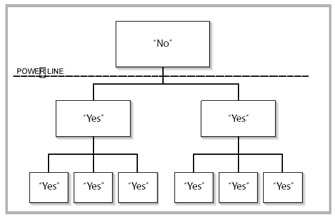
Figure 11.1: Getting to the Right Person
AT POWER? IF NOT, BARGAIN FOR ACCESS
This is a crucial question at this point in the sales call. Although there are many beneficiaries of your product in the prospect’s organization, there are probably few who can approve or make the actual purchase happen. How can you politely determine this person’s ability to buy? The question can be made less threatening by asking about the buying process, as shown in Step 6.
Step 6 Determine Ability to Buy
Salesperson: Let’s say that you become convinced that it really is possible to [repeat buying vision] and you want to go forward. What do you do then? Who else would need to be involved?
The answers to these questions should reveal whether you have a Power Sponsor who has the ability to buy, or a Sponsor who will provide access to power, or neither. Before we go on, let’s take a moment to clearly distinguish between a Sponsor and a Power Sponsor:
Power Sponsor. Power Sponsors have enough influence (regardless of their job title) or authority to make the purchase, even if it is not budgeted. They can and will take you anywhere in the organization you need to go. They can and will negotiate the steps leading to a buying decision.
Sponsor. Sponsors can promote your proposed solution inside the their organization, but they do not have the power to make a buying decision. Sponsors are important. They “sell internally” by promoting your product or service to everyone. They provide you with internal information that you need and set up meetings, but most important, they provide access to power.
If your Sponsor does not provide you with access to power, then he or she is not a good Sponsor and you need to find one who will. The real job and role of a Sponsor is to provide you with access to power. No exceptions! For now, let’s assume that your Sponsor has revealed the name(s) of the power person(s), and proceed to Step 7a.
Step 7a Bargain with Proof for Access to Power
Salesperson: Could we get on his calendar?
Buyer: That may be premature at this point.
Salesperson: I would like to make a bargain with you. I’m not yet sure of the best way for us to prove these capabilities to you. I first want to consult with my company. Whichever method we end up using to prove these capabilities, it will take some of my company’s resources. I’m willing to make that commitment today. If through that effort we succeed in proving to you that you will be able to [repeat buying vision], at that point, will you then introduce me to [power person]? Is that fair? [Get buyer’s agreement and end call.]
Salesperson: Thank you for your time. I’m going to consult with my company. I will then write you a letter [email] confirming my understanding of your situation. In that letter [email], I will propose a specific way for us to prove these capabilities to you. You should receive the letter [email] shortly.
There is an extremely powerful phrase in the wording of the bargain. The salesperson hasn’t used it up to this point in the sales call to preserve its power. The salesperson saved it to negotiate for access to power because access to power is so important. The phrase is “Is that fair?” Notice that the actual question being asked is not “Will you introduce me to the power person?” You are actually asking the Sponsor if it is fair, and it is.
Quid Pro Quo
The Latin expression quid pro quo should be an integral part of every salesperson’s life. It means that you will not give without getting something in return. Literally translated, it means “this for that.” I’m going to give you something, and I expect something in return.
This is one of the most important business concepts that all businesspeople and especially salespeople need to learn. It is a key concept in any business relationship or negotiation. Some people have said that this is the single most important concept in Solution Selling.
Too often, salespeople cater to a prospect rather than being good stewards of themselves and their company’s resources. They fall into the trap of doing anything and everything the prospect wants: the prospect says, “Jump,” and the salesperson says, “How high?”
Prospective buyers want, demand, and need many things from salespeople, and salespeople should be attentive and responsive. But if you’re willing to give, they must be willing to give. You make a commitment to prove your capabilities, and in return, you want access to the person with the power. I ask you, Isn’t it fair that prospects provide you with access to power-level people within their organization if you have used your resources to prove to them you can help them solve a business problem?
The Sponsor Letter
I’m convinced that salespeople have to differentiate themselves by the way they sell. If they don’t, then they’re not bringing much value to their company or to their customers. In many cases today, it’s difficult to differentiate products and services, so salespeople must become a part of that differentiation. Let me say it in a different way—salespeople must add value to the mix. If not, they’ll be eliminated. Salespeople can be the most important differentiator in winning opportunities. Think of all the other salespeople who have interfaced with a buyer before you have. Is that buyer grouping you in the same category of “just another salesperson”? Or are you standing out in the buyer’s mind by your approach?
I often ask salespeople, “How would you feel if after a meeting with a salesperson he or she wrote you a letter that documented the business issues that you discussed, the reasons for them, and the capabilities needed to solve the problem?” Their response is always very positive. Then I ask, “Do you do that with your prospective customers?” In most cases, the answer is no. If they do correspond, the letter or email usually sounds something like this:
“Thank you for seeing or talking with me. I enjoyed the meeting. Enclosed is product literature. I will follow up.”
This type of letter or email does very little to differentiate the salesperson from every other salesperson out there. It is critically important that salespeople have business issue conversations and then document those conversations. People want to do business with people they believe understand their business. A strategically planned letter can prove that you understand their business.
Solution Selling provides salespeople with a job aid called the Sponsor Letter that helps them document conversations with prospective customers. The framework of information included in a Sponsor Letter helps differentiate salespeople in the minds of their customers.
The Sponsor Letter is written after a salesperson has negotiated access to the power person. Take a look at the sample Sponsor Letter in Figure 11.2. Notice the six key elements in the body of the letter:
- Pain
- Reasons for the pain
- Vision
- Agreement to explore
- Bargain for access to power
- Next step or proof step
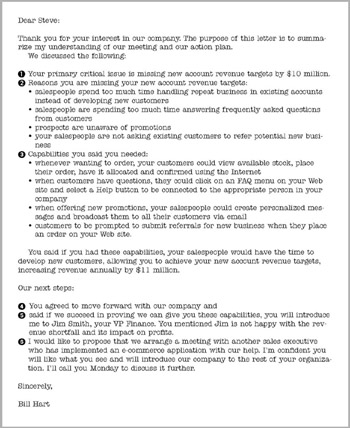
Figure 11.2: Sponsor Letter—Example
This is very similar to the letter I sent to the EDS sales manager I spoke about in the beginning of this chapter. You read the reaction from the division president when she said, “It’s apparent to me that you really understand our business.”
I ask managers to check these six elements in the Sponsor Letters their salespeople write. I find it’s a very good way to reinforce the Solution Selling process, particularly during the critical first few weeks after a company adopts the process. This is the time when habits are formed. Trained managers are able to evaluate the effectiveness of their salespeople based on the strength of their follow-up Sponsor Letters. After all, if salespeople can’t write good follow-up letters based on their conversations with prospective customers, what does that say about the quality of those conversations? Salespeople must be good businesspeople, able to define and diagnose business problems.
It is also important for salespeople to document the agreement to explore and to gain access to power. This will help to smoke out prospects who are not serious about evaluating your products or services and will save you a lot of time that would be better spent on serious prospects.
How well does the Sponsor Letter work? One reason we write a Sponsor Letter is because our buyer didn’t volunteer to take us to power. We have to bargain. The Sponsor Letter restates the vision that is the foundation of the bargain. This letter works so well that about 50 percent of the time, the Sponsor shows up at the proof session and at least one power person is also there.
Part One - Solution Selling Concepts
Part Two - Creating New Opportunities
- Chapter Four Precall Planning and Research
- Chapter Five Stimulating Interest
- Chapter Six Defining Pain or Critical Business Issue
- Chapter Seven Diagnose Before You Prescribe
- Chapter Eight Creating Visions Biased to Your Solution
Part Three - Engaging in Active Opportunities
Part Four - Qualify, Control, Close
- Chapter Eleven Gaining Access to People with Power
- Chapter Twelve Controlling the Buying Process
- Chapter Thirteen Closing: Reaching Final Agreement
Part Five - Managing the Process

EAN: N/A
Pages: 106
