Recommending and Substantiating Your Solution
|
Of the thousands of proposals I read each year, the majority do not recommend anything. Most of them merely describe a product or service in neutral, informative prose. Descriptions are nice, but they can come across as evasive in a proposal. It may appear to the customer that you don't really believe in what you are saying. In addition, descriptions typically consist of undifferentiated verbiage that provides a general understanding of the product or service, plus lots of features, usually presented as bullet points. That's not very effective. A solution links specific features of the product or service back to the customer's needs and outcomes, constantly answering the question, "So what?" In a solution, each feature has relevance. It either solves part of the customer's problem or delivers value, or both.
In most proposals, you need to explain your solution in enough detail that the customer sees it as a plausible approach to solving his or her problem. You also need to include enough evidence to substantiate the notion that your recommendations will work and that they will produce the results the customer is looking for. Here are some guidelines to help you do that well:
-
Stay focused on the controlling strategy you established in the executive summary. Remember that your value proposition is established incrementally. Repetition is the key to making certain the client sees it, understands it, and remembers it.
-
Be objective. Don't allow your enthusiasm to carry you away into using wild superlatives or making unsupported claims.
-
Use specific, concrete language. Use details. Avoid vague words and phrases that sound like marketing fluff, such as
-
Uniquely qualified
-
World-class
-
Leading edge
-
State-of-the-art
-
Best-of-breed
Simply saying that a system is "efficient" or "ideal for these purposes" is not enough. Go into detail: "This system achieves 99.96 percent up time, the best in the industry, as documented by the independent journal Manufacturing Monthly." Statistics, third-party validation, test results, awards, and other forms of evidence are more convincing than generic claims.
-
-
Support your claims with substantive evidence. Provide enclosures, if you have them, such as copies of review articles or testimonial letters. Case studies that showcase successful applications of your products or services are very effective. References to satisfied customers also help, particularly if they come from well-known firms in the same industry as your prospective client.
Describing a Product or Mechanism. In the solution section of your proposal, you may need to describe how equipment or mechanisms work. Here's a simple outline that will keep your discussion organized and make it easy for your reader to understand:
-
Introduction: Be sure to mention your controlling strategy or one of your win themes in the introduction
-
Define/identify the mechanism or equipment
-
Indicate its function or purpose, linking it to customer needs or issues
-
Describe its general physical characteristics (including a comparison or analogy to a more familiar object)
-
Divide it into its principal parts
-
-
Indicate why the mechanism is important to the reader: this is another good spot to introduce or reinforce your value proposition
-
-
Provide a part-by-part description
-
Part number one
-
What the part is (definition)
-
Function or purpose of the part
-
Physical characteristics (including comparison)
-
Division into subparts
-
Subpart number one
-
What the subpart is
-
Its function or purpose
-
Appearance
-
Detailed description
-
Relationship to other parts
-
Size
-
Shape
-
Methods of attachment
-
Material
-
Finish
-
-
-
Same as "a" above for subpart number two
-
-
-
Same as "A" above for part number two
-
-
Closing: Return here to the win theme
-
To bring the description to a close with an emphasis on function:
-
Briefly describe the mechanism in a complete cycle of operation
-
Mention variations and options of the mechanism
-
Indicate the importance of the mechanism to the customer's operating environment
-
-
To bring the description to a close with a more persuasive slant:
-
Compare the mechanism to other makes and models, in terms of features and advantages—this is a chance to "ghost" the competition by pointing out important differentiators or design features without disparaging your competitor
-
Recommend the use of the mechanism in the client's environment, or reference successful uses in similar environments
-
-
Describing Processes. Your proposals may also need to describe processes and operations, particularly when the solution is primarily a service:
-
Introduction: Announce your value proposition or a supporting win theme here
-
Define or identify the process
-
Formal definition: what is the process
-
Statement of significance: why is it done, why does it happen
-
Underlying principle which governs this process
-
-
Indicate the time, setting, operators, equipment, and preparations necessary
-
Time and setting: when and where it is done or how it happens in a natural setting
-
Personnel: who (or what for automated processes) performs it
-
Equipment: what is needed
-
Necessary conditions: the requisite circumstances
-
-
Indicate the point of view from which the process will be considered
-
List the main steps
-
-
The main steps
-
Step number one
Note each step is itself a process. Organize it by following the format outlined in the Introduction above.
-
Step number two, etc.
Note the simplest and most logical way to organize a process description is chronologically. For a cyclical process, simply choose a reasonable starting point and follow the complete cycle.
-
-
Closing: Return here to your strategy or to one of your win themes
-
Techniques for closing the description:
-
Simply stop after the final step—this is effective for a short description
-
Summarize the key steps again—this is effective for a lengthy, multipage description. However, if you use this approach, emphasize the value of following these steps or the importance of expert knowledge in executing the steps correctly.
-
Comment on the process's significance, particularly in the context of achieving the customer's objectives
-
Indicate the process's place in a larger scheme of operation
-
Mention other methods by which the process can be performed and why you are recommending this method (an opportunity to ghost the competition.)
-
Discuss the consequences of modifying time, setting, operators, equipment, or other conditions (another ghosting opportunity)
-
Predict or forecast improvements in productivity, cost efficiency, etc.
-
Recommend implementing or using the process
-
-
Link the Customer's Needs and Goals to Your Solution
Customers do not automatically recognize that the solution you are proposing will give them the results they want. You must clearly, explicitly link the elements of your solution to their needs and to the outcomes they seek. This is particularly important for a highly complex or technical recommendation. Imagine the client asking after each mention of a feature, "So what? Why should I care?" If your proposal answers those questions, it's on the right path.
Many presentations of the solution are descriptive, often consisting of long lists of bullet points that enumerate so-called "features" ad nauseam. Unfortunately, readers tend to skip over long lists of bullet points, because they assume that a list of ten or twenty bullet points probably contains a lot of irrelevant detail. By breaking up your description into thematic units, you can limit the number of features you bullet point to a manageable amount—somewhere between five and ten per category at the most.
When presenting your recommendations, don't mention a feature without linking it to the customer's issues and to the benefits that feature will provide. (Those benefits should be the goals or outcomes the customer seeks, of course.) Remember: a feature is a component of the solution, but a benefit is an impact on the client's operations that the client will find desirable.
To create solution presentations that are more persuasive and client focused, use the structure in Figure 12-12 as a basic guideline for organizing descriptions of products and services. Figure 12-13 provides an example of an effective solution description.
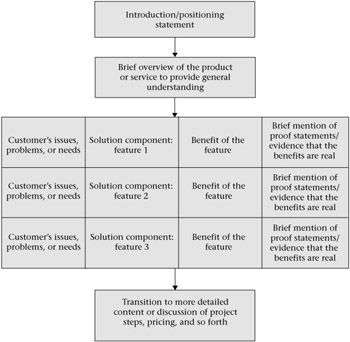
Figure 12-12: Guide for Organizing Solutions.
 |
The DataMaster System from ComStar
We at ComStar recommend using the DataMaster System as a platform for developing American Cellular's EtherSwitch system. The DataMaster system is a new generation of data management tools, designed specifically for the cellular marketplace. Its design incorporates all of the elements of traditional call management and billing systems, but is based on a new, modular platform that allows for easy customization to meet unique needs.
You indicated to us that you are looking for a vendor who can address four specific needs in your business:
Capacity to handle current and projected volume of transactions without requiring system add-ons or expansion
Enhanced customer support and service
A customizable solution
A complete solution, including service bureau options
The DataMaster system, in conjunction with our services, provides you with exactly what you want. We are confident that meeting your business needs, as listed above, is your most important objective.
Capacity to handle the volume of billing transactions your business needs
ComStar is the only provider of cellular billing systems with existing capacity to handle the volume you specify in your RFP. With our combination of software designed specifically for the cellular market and our extensive service bureau capabilities, we can provide American Cellular with the right mix of products and services regardless of the volume your business demands today or in the future.
Enhanced customer support and service
Your billing systems are a fundamental part of your total customer support and service system. By outsourcing the management of billing to a third party, you must feel confident that your customers will receive the highest-quality service and that the relationship will be transparent. ComStar has received awards from industry groups for the quality of our customer support. In addition, because the DataMaster system is customizable, it can provide your customers with exactly the kind of billing information they want. Finally, as your first line of customer support, we handle all customer inquiries in a timely fashion with a documented 97.9 percent closure rate on the first call.
A customizable solution
Everyone wants choices. Unless your business partner can offer you a wide range of options, you may feel that you are forced to take less than or something other than what you really need. ComStar offers a broader range of product and service offerings than any other provider in the wireless market. The DataMaster system was specifically designed as a modular, N-tiered application with a mathematically infinite number of potential configurations.
A complete solution
ComStar is a pioneer in creating and providing cellular billing systems, and we continue to be the industry leader. But we are also the largest provider of service bureau operations with the ability to handle the complete range of customer billing, service and support functions, including problem resolution, collections, marketing, and more. As a result, we can tailor a solution specifically to your needs.
As you can see, the use of the DataMaster platform addresses your four primary objectives. In addition, it delivers all of the technical functionality you have specified in your RFP. In some cases, we provide the functionality that you specify, but because that functionality will be delivered from an innovative platform, the system architecture may not conform exactly to the design specifications you have included in the proposal. These differences will be invisible to the user. However, we do want to be clear that in some instances we deliver the functional requirement but do it in a different part of the system or with a different logical flow of processing steps.
We believe it makes good business and technical sense for American Cellular to use DataMaster as the platform for your EtherSwitch. It will provide you with a comprehensive, flexible, high-quality product at a much lower cost than would be possible if the entire system were created as a custom product.
|
Figure 12-13: Sample Solution Description.
Writing Effective Case Studies
Case studies can be effective tools for building credibility, minimizing risk, and helping the decision maker develop a "vision" of the results you can produce.
Keep your case studies short, one or two pages at most. Focus them on the success your previous client achieved, not on the details of the project you managed or the product you delivered. (See Figure 12-14 for a sample case study.)
|
What our client needed: In the highly competitive executive recruiting business, success is based on who you know and what you know about them. REX Recruiting found that they were not able to keep track of their contacts and leads in a systematic way. As a result, opportunities to place executives were sometimes lost.
What we created: After investigating costly, high-end products designed for sales forces or customer service organizations, REX Recruiting contracted with Mustang Software to create a data storage and tracking tool that was right for them. REX Recruiting defined exactly what kind of information they wanted to store, how they wanted to use it, and how they needed to access it.
Mustang took it from there. Creating simple data screens that required no knowledge of databases, we created a user-friendly system that was compatible with REX Recruiting's Microsoft-centric environment. Each executive, each job opening, and each company for which REX has previously provided an executive is available in the system. For each of these categories the company defined significant attributes and details that needed to be tracked. The user can search on any of those categories or attributes or can combine any number of them to create a custom report format simply by clicking on the screen. When one of REX's recruiters receives an inquiry from a client, he or she can generate a report that lists all available candidates with the right qualifications. Recruiters can also generate candidate profiles and status reports to keep clients informed about the status of the search and document effort.
How it worked: REX Recruiting has seen 17 percent growth since the system was implemented, which is all the more remarkable since it coincided with a general downturn in the economy. With seven new offices on the west coast, REX has grown to be the largest firm specializing exclusively in executive placements.
|
Figure 12-14: Sample Case Study.
Try to use case studies about customers that are similar to the company or agency to which you are proposing. Match a municipality with a municipal or county government client. Use a bank with another bank or financial institution. And so on. Although using a case study about a company from the same industry is ideal, it's also helpful to at least use a client that is similar in size and that had a similar problem as your prospect.
To get the right emphasis in your case studies, structure them using the P-A-R format. P-A-R stands for Problem/Action/Results.
Problem or objective
Briefly describe the previous customer's situation, the problems they were facing, and/or the objectives they had in mind. The first part of the case study should provide your prospective customers with enough information that they can identify with the one being described.
It's most effective to name the previous customer, but you don't have to. You can use a general description: "A large, international biotechnology firm with complex requirements for warehousing and transporting volatile compounds and controlled substances."
Actions taken
What did you do to help them solve their problem? Be specific about the solution you provided, highlighting your differentiators.
Obviously, the actions you took should be very similar to the actions you are recommending. Otherwise, your case study will demonstrate that you are competent in ways that aren't fully relevant to the current situation.
Results obtained
Outline the results the customer obtained. Whenever possible, quantify the impact: 15 percent reduction in total project length, 20 percent lower operating costs in the outbound telemarketing function, 17 percent higher productivity among hourly employees.
If quantifiable results are not available, use a quote from a key executive within the customer organization.
Creating Persuasive Resumes
Research conducted among evaluators for the U.S. Department of Defense and the National Aeronautics and Space Agency found that they thought the following content was most important in a resume (listed in order of priority):
-
Recent, relevant experience
-
Education, particularly in specific skills or technologies applicable to this project
-
Professional licensing or accreditations
-
Professional affiliations
-
Publications
-
Patents
Experience is more important to most people than any other factor. When you write a resume for use in a proposal, emphasize the skills of the team members and how they apply to the project.
Keep the resumes short. Two or three paragraphs will usually be enough. But edit them or rewrite them so that they really match up to the opportunity being proposed. Using the same resume every time you include someone in a project is a bad idea.
Writing Persuasive Answers to RFP Questions
Customers and consultants issue formal RFPs to obtain a consistent body of information by which they can compare offers.
RFPs almost never identify the business issues that underlie the proposal as a whole, nor do they indicate why a particular question is being asked. But those factors matter. You'll improve your chances if you address the business issues that underlie the RFP as a whole and the critical questions in particular.
Product and service descriptions written in-house or by vendors are almost always factual, not persuasive. Often they are not customer centered in that they don't discuss functional value. Critique them carefully before using them. Eliminate jargon, or find ways to define it before it's used. Remember that your company's product and process names are jargon outside the company. Also, be wary of using undefined acronyms.
Writing an effective answer in your RFP response is more than a matter of "answering the mail." Use the following format to respond to questions or requirements that seem to be particularly significant. Obviously, it's not an appropriate format for answers that are extremely short or that require a simple, factual answer. If the customer asks, "When was your company founded?" you can feel confident in just writing "1976." For the few questions that are particularly significant, however, use this approach:
-
Acknowledge: Restate the customer's question or requirement in general terms, empathizing with the concern that probably lies behind this question. In the case of a requirement, position your response in terms of a broader principle, such as efficiency, customer satisfaction, and so on.
-
Persuade: Incorporate a value or benefit statement into the description as quickly as possible—something that the decision maker cares about. Do this even in RFP sections where the original question only asked, "How do you do something?"
-
Substantiate: Provide the factual answer next: describe the product or service, outline the steps of the process, provide the details necessary. Do not include every feature—focus on including only those features that matter to the given customer.
Here are two samples, showing different approaches to answering the same question. The sample in Figure 12-15 shows how a provider of medical insurance answered a question that was asked in nearly every RFP they received. The first answer was their original version; the second incorporates the three-part structure. Which of the two sounds more persuasive to you?
|
Question:
What information appears on the Explanation of Benefits? Can EOB information be customized by the client? Please provide a sample EOB.
Original Answer:
See the enclosed EOB.
Generally all EOB messages are predefined for all clients to meet readability, accuracy, and legal requirements. Limited customization is available, including the addition of logos and personalized remarks in the remarks area.
Revised Answer:
It's important for plan members to understand how their benefits were determined. The Explanation of Benefits is a vital tool in our overall effort to provide good communications and to avoid confusion or misunderstanding when plan members file a claim.
At American Health we have spent considerable effort to design and write our EOB forms for maximum readability and accuracy. In addition, our forms' layout and content has been developed to address certain legal requirements. Within that framework, we can provide some customization to the EOB form, such as adding your logo or providing personalized information in the remarks area of the form.
The enclosed EOB is a sample of what we will provide to your members.
|
Figure 12-15: RFP Responses Sample Answer 1.
The first answer sounds perfunctory, doesn't it? And do you detect a tone of negativity? The provider doesn't seem interested in customizing the EOB if it doesn't have to. The second answer says the same thing exactly, yet it manages to sound positive and cooperative. It's basically a matter of the structure of the answer.
The sample in Figure 12-16 comes from a proposal written by an I.T. services provider. You couldn't even call the original answer factual.
|
Question:
We need an integrator that can be responsive and available 24x7. Please provide the pricing and options for this type of coverage in Appendix G.
Original Answer:
Please see pricing in Appendix G.
Revised Answer:
With a business critical system, such as the one being proposed here, you need to know that you have support available around the clock. That's why SysTemPro has created a support program that gives you 24x7 coverage at an extremely affordable price.
In Appendix G, we detail the levels of support available to you within the framework of 24x7 and the pricing for each.
|
Figure 12-16: RFP Responses Sample Answer 2.
The Compliance Matrix: Simplifying the Evaluator's Job
What's a compliance matrix? It's a chart that makes it easy for the evaluator to determine which proposals are worth looking at and which can be discarded. Remember that the evaluator's first job is to reduce the number of proposals down to a manageable few. An easy way for a gatekeeper to do that is to glance through your proposal to see if it complies with the basic requirements. A compliance matrix shows the evaluator that your response is worth keeping and looking at in detail. The absence of one may suggest that it's not.
As in Figure 12-17, a compliance matrix should show the evaluator how well you meet the requirements of the RFP and should make it easy to locate more detailed information. In this case, the page numbers are hot links that jump directly to the relevant answers.
| HOW OUR PROPOSAL COMPLIES WITH YOUR REQUIREMENTS |
The compliance matrix below illustrates graphically the extent to which our solutions match up with Urban Bank's key requirements. Detailed answers and explanations for each question or requirement can be found in the following pages, as indicated by the page numbers.
Compliance Key:
EX
=
Exceeds the requirement
F
=
Fully complies
P
=
Partially complies
N
=
Noncompliant
EXTENT OF COMPLIANCE
QUESTION
EX
F
P
N
PAGE
COMMENTS
Urban Bank Corporation needs to streamline the proposal generation process.
21
Our recommendations will eliminate eleven steps from the current proposal process at Urban Bank.
Internet accessible and mobile proposal and presentation generation capability integrated with a product and price configuration system.
22
We offer a Web-based (not merely Web-enabled) system that includes presentation capabilities. We provide built-in integration with the pricing tools Urban is considering.
Produce consistently high-quality customized proposals, request for proposal responses, and customer presentations.
24
Our system produces the full range of documents in an easy-to-use format.
Automated interface to configuration systems.
25
Our system accepts output from configuration systems if formatted as an Excel or Word file.
Knowledge transfer.
26
Guidance leading to a prospect/customer needs analysis and solution.
27
Our system coaches the user to define the opportunity, including needs and solution.
Supplemental product support.
29
We provide exceptional technical and customer support.
Catalog product and service proposal language, promotional text, graphics, and promote the Urban Bank brand ID.
31
Our system serves as a library for all types of content and automatically formats documents to match Urban's identity requirements.
Figure 12-17: Compliance Matrix.
Creating Graphics for Your Proposal
There are lots of reasons to incorporate graphics in your proposal. Graphics—diagrams, flow charts, photos, organizational charts, bar charts, line drawings, or creative visualizations of key concepts—can be tremendous aids to communicating effectively. Many people understand complex ideas better if they are presented visually. For readers who tend to skim text, graphics often focus their attention and help stimulate their interest. Evaluators typically like graphics that help them see the points you are making quickly.
Here are some ideas for using graphics to enhance your document:
-
Think about graphics while you're outlining or organizing your document, before you have written any text. Graphics that are thrown in as an afterthought typically look like afterthoughts.
-
Avoid using clip art. Clip art is the frozen burrito of graphic design: a choice of last resort and one you usually end up regretting. It usually doesn't enhance your document.
-
Incorporate your customer's logo into your design. For example, use the customer's logo on the title page or in the header or footer of your proposal. Ask the client's permission first, and then ask them to provide you with a clean, digital image of the logo. Copying the logo from the Web site or scanning it from the letterhead can produce a jagged, poor-quality version.
-
If the customer has a "company color," incorporate it into your design. For example, use a line at the top of the page in their color to separate the header from body text, or print your major headings in their color.
-
Avoid highly technical graphics, complex diagrams, and charts. Simple graphics are better. They will attract more attention and will be easier to understand.
-
Graphics should be oriented horizontally on the page, just like the text. The reader should never have to turn your document sideways to look at your graphic.
-
Write an active caption that not only explains what the graphic is showing but also emphasizes a customer benefit. For example, rather than calling a product illustration "Figure 3: The Turboencabulator Model 2000," you could caption it "Figure 3: The Low-Maintenance Design of the Turboencabulator Model 2000."
-
In long proposals, it's a good idea to number the graphics sequentially. In formal proposals, you should also list them in a Table of Illustrations, right after the Table of Contents.
-
Discuss an idea in the text and then illustrate it graphically. That is usually more effective than showing the graphic first and then discussing it.
-
Never put all the graphics at the end of the document. If people have to flip back and forth between the text and the graphics, they won't get the full value of either.
To gain the maximum benefit from your graphics, use the kind of graphic that best suits a certain kind of message. Here are some ideas:
| The Point You Are Making | A Type of Graphic You Could Use |
|---|---|
| We fully comply with all of your requirements |
|
| Our system or approach offers better performance |
|
| Our system will meet your performance expectations |
|
| We will assign the right people to this project |
|
| We can meet the deadline |
|
| We have the right experience to do this job |
|
| We have a history of successful projects |
|
| We are committed to quality |
|
| We offer unique features, strengths, and/ or benefits |
|
Presenting Your Price and Value
You need to talk convincingly about price. If your pricing seems too low, your proposal may be rejected for lack of "cost realism." If it seems too high, the consequences are obvious. To address price convincingly, link your fees to the deliverables clearly and plausibly. Some RFPs include explicit instructions about presenting cost information. Some require cost details in a separate volume. Some give you no direction at all. If your proposal is unsolicited, of course, you can probably handle pricing issues as you wish. Regardless of how you handle them, you should always strive to put cost in the larger context of your solution's return on investment.
Use the following techniques to handle cost and price issues effectively:
-
Introduce price only after presenting the solution and its potential for positive impact in detail.
-
Don't talk about price in the first or last paragraphs of the cover letter.
-
Whenever possible, introduce pricing in a sentence that also talks about benefits and results. For example: "The cost for a system that can handle all of your payroll, budgeting, forecasting, and analysis needs is surprisingly low, probably less than $3,000 per month for a company the size of yours."
-
As in the preceding example, try to state the price in a complex or compound sentence, putting the actual price in a dependent clause.
-
Also as shown in (3), state the price in the smallest logical unit—$3,000 per month instead of $36,000 per year.
-
If you have the facts, quantify the impact of your solution. Tell the customer how much time or money they will save, exactly how much lower the total cost of ownership will be for your system compared to the competition, or how cost-effective it will be in comparison to the system currently in use.
-
Avoid providing detailed pricing on an item-by-item basis. Line item pricing encourages the detail-oriented to nitpick and makes it easier for unscrupulous customers to shop your proposal to your competitors.
|

EAN: 2147483647
Pages: 130