Macromedia Flash 8 for Windows & Macintosh Visual QuickStart Guide
Authors: Ulrich K
Published year: 2005
Pages: 77-78/204
Buy this book on amazon.com >>

Swapping One Symbol Instance for Another

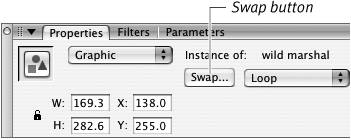
Flash allows you to replace one symbol instance with another while retaining all the modifications you've made in the symbol instance. If, for example, you want to change the look of a logo in certain places in your site but not everywhere, you can create the new logo as a separate symbol and swap it in as needed. (To change the look for every instance, edit the master logo symbol directly, as you learn to do in "Editing Master Symbols," later in the chapter.) You perform symbol swapping in the Properties tab of the Property inspector ( Figure 7.26 ).

Figure 7.26. The Swap button in the Properties tab lets you replace a selected symbol instance with an instance of a different symbol from the same document.

To switch symbols

1.

On the Stage, select the symbol instance you want to change.

2.

In the Properties tab of the Property inspector, click the Swap button.

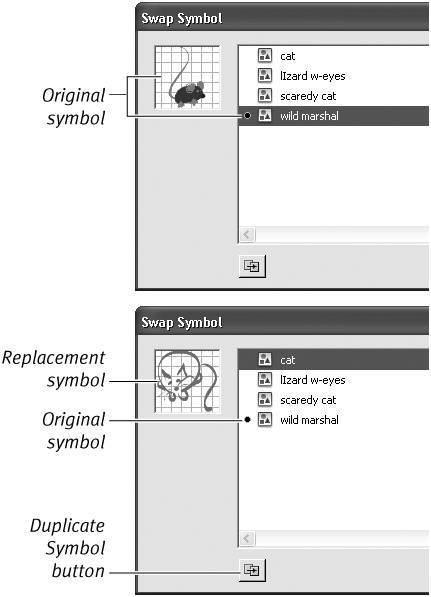
The Swap Symbol dialog appears, listing all the symbols in the current document's library ( Figure 7.27 ). In the Windows operating systems, Flash highlights the name of the symbol you're modifying and places a bullet next to its name in the Symbol list.

Figure 7.27. Select a replacement symbol from the list in the Swap Symbol dialog, and click OK to exchange one symbol for another.

3.

From the Symbol list, select the replacement symbol.

The original symbol remains bulleted; Flash highlights the new symbol and places it in the preview window.

4.

Click OK.

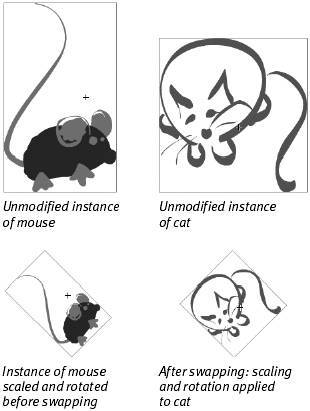
Flash places the new symbol on the Stage, locating the new symbol where the old one was located and applying any modifications you previously made for that instance ( Figure 7.28 ).

Figure 7.28. When you swap symbols, any modifications you have made for the selected instance you're swapping apply to the replacement instance.

Tips

  • To swap symbols quickly, double-click the new symbol in the Swap Symbol dialog. Flash replaces it and closes the dialog.

  • The Duplicate Symbol button in the Swap Symbol dialog lets you make a copy of whatever symbol is selected in the list. If you know you need to tweak the master version of the replacement symbol for this instance, but you also want to keep the current version, click the Duplicate symbol button, name it in the dialog that appears, and click OK. Make sure you select the duplicate as the replacement in the Swap Symbol dialog, and click OK. You can edit the duplicate's master symbol later.


Editing Master Symbols

After you create a symbol, you can refine and modify it in symbol-editing mode. Unlike modifications of a symbol instance, which affect just that instance on the Stage, leaving the master symbol in the library unchanged, modifications made in symbol-editing mode affect the master symbol and all instances of that symbol in your movie.

You can enter symbol-editing mode in several ways.

To enter symbol-editing mode from the Stage

1.

On the Stage, select the symbol you want to edit.

2.

To open the symbol editor, do one of the following :

  • Choose Edit > Edit Symbols, or press -E (Mac) or Ctrl-E (Windows) ( Figure 7.29 ).

    Figure 7.29. Choosing Edit > Edit Symbols takes you from document-editing mode to symbol-editing mode. If you have selected a symbol on the Stage, choosing Edit > Edit Selected also takes you to symbol-editing mode.


  • Choose Edit > Edit Selected.

  • From the pop-up list of symbols in the Edit Bar, choose the symbol you want to edit ( Figure 7.30 ).

    Figure 7.30. Choosing a symbol from the Edit Symbol pop-up menu in the Edit Bar takes you into symbol-editing mode.


Flash opens the symbol editor in the current window.

Tips

  • There are three ways to enter symbol-editing mode directly from the Library panel: double-click the icon next to a symbol's name ; double-click a symbol in the preview window; or select the symbol you want to edit, and from the Options menu, choose Edit. The symbol opens in symbol-editing mode in the active Flash document on your desktop.

  • After you've placed an instance of a symbol on the Stage, you may want to change the master symbol to make it fit with the items around it. The Edit in Place command lets you edit your master symbol in context on the Stage with all other items grayed out ( Figure 7.31 ). To evoke the Edit in Place command, choose Edit > Edit in Place; or, Control-click (Mac) or right-click (Windows) the symbol instance you want to edit, and, from the contextual menu that appears, choose Edit in Place. Any changes you make affect all instances of that symbol.

    Figure 7.31. The Edit in Place command allows you to see your symbol instance in context with other items on the stage. The symbol instance appears in full color ; the other elements on the Stage are grayed out. In this mode, changes made to the instance affect the master symbol and all the instances in the movie.

  • You can also enter Edit in Place mode quickly by double-clicking a symbol instance on the Stage.

  • You can edit a symbol in a completely separate window. Select an instance of the symbol on the Stage, Control-click (Mac) or right-click (Windows) to access the contextual menu, and choose Edit in New Window. The symbol opens in a separate window. The edit bar shows the name of the symbol being edited, but there is no Back button; to return to document-editing mode, close the window.


Macromedia Flash 8 for Windows & Macintosh Visual QuickStart Guide
Authors: Ulrich K
Published year: 2005
Pages: 77-78/204
Buy this book on amazon.com >>

Similar books on Amazon