Flylib.com

Books Software


Flag and Attach Documents to Transactions


Flag and Attach Documents to Transactions

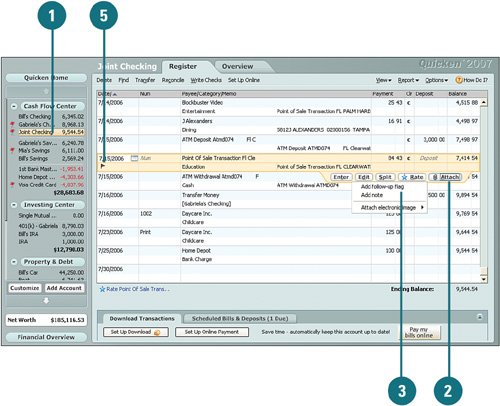
You can flag transactions in your account registers; for example, as a reminder to follow up on the transaction at a later time. In addition, you can attach documents to transactions in your account registers, such as an electronic or scanned receipt to keep with the transaction. There's no losing an attached receipt!

Flag Transactions

Open the account register that contains the transaction(s) you want to flag or attach documents.

To flag a transaction, select a transaction and click Attach .

Click Add Follow-Up Flag .

Type a note or message about the follow-up, select the color you want for the flag, and type a date when you want to be reminded of the follow-up. Then click OK .
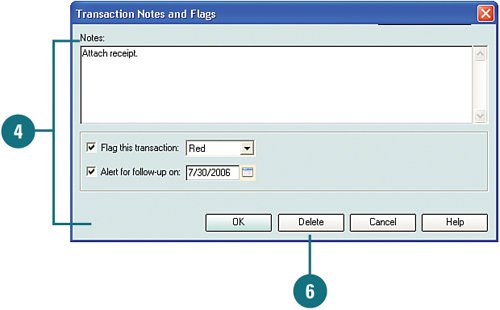
To review or delete a follow-up message, click the flag.

To delete the message, click Delete .

Attach Documents to Transactions

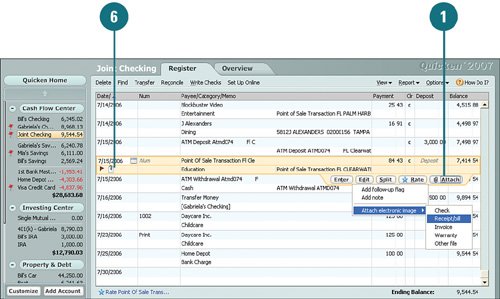
To attach a document, click Attach and select Attach Electronic Image. Then select the type of file you want to attach.

Select the type of attachment.

Click the source of the attachment you want to add.

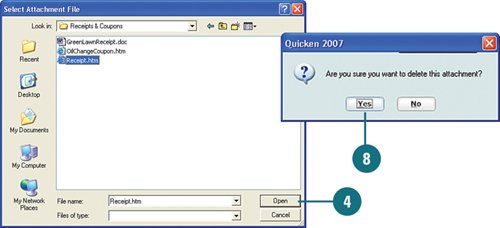
Locate and select the document you want to attach and click Open . The attachment appears in the Transaction Attachments window.

Click Done . The Attachment button appears next to the transaction.

To remove an attachment, click the attachment.

From the Transaction Attachments window, select the attachment you want to remove and click Delete . A message appears, asking if you want to delete the attachment.

Click Yes to remove the attachment or No to keep it.


Recording Transactions in Your Account Register Manually

If you don't have online access to download transactions into your account registers or you don't have a scheduled transaction set up, you can add transactions manually. The process works the same for all types of accounts. A credit card account is used in this task to show you how to add transactions manually. If you add transactions to investment or retirement accounts, the process is slightly different. See the "Record and Edit Investment Transactions" in the next task for more information.

Record Transactions in Your Account Register Manually

From the account bar, select the account to which you want to add a transaction.

Click in the Date column of an empty row and type the date of the transaction.

In Payee , type the payee name .

Click Category and select a category to assign to the transaction. Or if the category does not exist, type the name of the category you want to track for this transaction.

Click in the Memo column to type a note about the transaction.

Click in the Charge or Payment columns and type the amount of the transaction.

To flag this transaction to follow up on later, or to attach a document, click Attach .

Click Enter . Quicken adjusts your account balance and if you selected other accounts in step 4, the balance of any other accounts are adjusted as well.

See Also

See "Tracking Transactions with Multiple Categories" on page 71 for more information on splitting transaction categories.


See Also

See "Flag and Attach Documents to Transactions" on page 165 for more information on flagging transactions for follow-up and attaching documents to transactions.


Did You Know?

You can assign more than one category to a transaction . To track more than one category for a transaction, click Split . Then from the Split Transaction window, specify the categories you want to track. Be aware that if you select another account for the categoryfor example, if you are entering a payment that is being applied to your credit card, but is coming out of your checking accountQuicken automatically enters a transaction in the register of the other account.


Record and Edit Investment and Retirement Transactions in Your Account Register Manually

In the activity bar, from the Investing Center section, click the account for which you want to add scheduled transactions.

Click the Transactions tab.

Click in the Date column and type the date of the transaction.

Click the drop-down arrow in the Action column and select the reason for the transaction. If the action you want to use is not listed, type a new one.

Click the drop-down arrow in the Description column and select or type a explanation for the transactions.

Click the drop-down arrow in the category field and select or type a new category for the transaction.

Click in the Inv. Amount column and type the dollar amount of the transaction.

Review the information to ensure that it is correct, make changes, if needed, and add it to your register by clicking Enter . Your balance is adjusted accordingly .

Did You Know?

Assigning categories can help you track your spending. By assigning categories to your transactions, you can see exactly where your money is going when you run transaction reports . In addition, when it comes to tax time, you can utilize the information to file your taxes.