Retail Logistics: Changes and Challenges
Retail Logistics Changes and Challenges
John Fernie and Leigh Sparks
Overview
It is often taken for granted that products will be available to buy in the shops. The cornucopia of goods that is available in a hypermarket or a department store sometimes means that we forget how the products were supplied. We expect our lettuces to be fresh, the new Playstation to be available on launch day and our clothes to be in good condition and ready to wear. With the introduction of e-commerce we have come to demand complete availability and home delivery at times of our choosing.
Consumer beliefs and needs have altered. Our willingness to wait to be satisfied or served has reduced and we expect instant product availability and gratification. It should be obvious from this that the supply or logistics system that gets products from production through retailing to consumption has also needed to be transformed. Physical distribution and materials management have been replaced by logistics management and a subsequent concern for the whole supply chain (Figure 1.1).
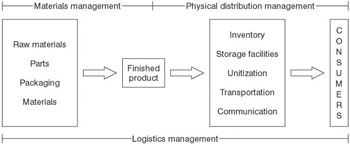
Figure 1.1: Logistics Management
This logistics transformation derives from cost and service requirements as well as consumer and retailer change (see Fernie, 1990; Fernie and Sparks, 1998). Elements of logistics are remarkably expensive, if not controlled effectively. Holding stock or inventory in warehouses just in case it is needed is a highly costly activity. The stock itself is expensive and might not sell or could become obsolete. Warehouses and distribution centres generally are expensive to build, operate and maintain. Vehicles to transport goods between warehouses and shops are expensive, in terms of both capital and running costs. There is thus a cost imperative to making sure that logistics is carried out effectively and efficiently, through the most appropriate allocation of resources along the supply chain.
At the same time, there can be service benefits. By appropriate integration of demand and supply, mainly through the widespread use of information technology and systems, retailers can provide a better service to consumers by, for example, having fresher, higher quality produce arriving to meet consumer demand for such products. With the appropriate logistics, products should be of a better presentational quality, could possibly be cheaper, have a longer shelf life and there should be far fewer instances of stock outs. Reaction time to spurts in demand can be radically improved through the use of information transmission and dissemination technologies. If operating properly, a good logistics system can therefore both reduce costs and improve service, providing a competitive advantage for the retailer.
The Logistics Task
Retailing and logistics are concerned with product availability. Many have described this as ‘getting the right products to the right place at the right time’. Unfortunately however that description does not do justice to the amount of effort that has to go into a logistics supply system and the multitude of ways that supply systems can go wrong. The very simplicity of the statement suggests logistics is an easy process. As the boxed example shows, problems and mistakes can be all too apparent. The real management ‘trick’ is in making logistics look easy, day in and day out, whilst reacting to quite volatile consumer demand.
Carelessness at Mothercare Leaves Cupboard Bare
Sales at Mothercare dived by 6 per cent in three weeks after its move to a new hi-tech distribution centre caused problems. The childrenswear retailer admitted that staff shortcomings meant its heralded autumn/winter clothing range had languished at the new Northamptonshire warehouse, causing huge stock shortages in its stores.
Chief Executive Chris Martin, who was recruited to turn around the chain, admitted the setback was ‘exceptionally frustrating’ given that like-for-like sales until this period had been up about 10 per cent, and that the new range had been well received.
It was doubly frustrating, he said, as management of the Daventry warehouse was sub-contracted to a third party, Tibbett & Britten. ‘Some of their staff just weren’t doing their job’, said a source.
Tibbett responded by placing a senior director at the building to sort out the problems and establish a proper flow of stock to the stores. Asked if he was considering legal action, Mr Martin said: ‘This is a five- year relationship. We are working it through together.’
He added that a fifth less stock than usual had been in the shops but stressed that it was ‘now coming through’. In a trading statement Mr Martin revealed that sales rose by 9.6 per cent for the 26 weeks to 28 September 2001, with like-for-like sales up by 7.6 per cent. Brokers at Charterhouse Securities cut their recommendation from hold to sell after the news, but Seymour Pierce retail analyst Richard Ratner said, ‘If they sort the warehouse problems out in the next few weeks I won’t be unduly concerned, particularly as the 2.1 percentage point improvement in margin was better than expected.’ Mothercare planned to continue with the roll-out of its larger Mothercare World format after Christmas 2001.
Source: Helen Slingsby, Guardian, Tuesday 9 October 2001
For example, if the temperature rises and the sun comes out in an atypical Scottish summer, then demand for ice-cream, soft drinks and even salad items rises dramatically. How does a retailer make sure they remain in stock and satisfy this transient demand? Or we might think about Valentine’s Day, when demand for certain products in the days before increases exponentially. If a retailer stocks Valentine’s cards and demand does not materialize, then the retailer has stock that will not sell. There is little demand for Valentine’s cards on 15 February. While over-stocks in this case will not perish, the cost of their storage and handling for the intervening year can be considerable.
The examples above demonstrate that retailers must be concerned with the flows of product and information both within the business and in the wider supply chain. In order to make products available retailers have to manage their logistics in terms of product movement and demand management. They need to know what is selling in the stores and both anticipate and react quickly to changes in this demand. At the same time they need to be able to move less demand-volatile products in an efficient and cost-effective manner.
The logistics management task is therefore initially concerned with managing the components of the ‘logistics mix’. We can identify five components:
- Storage facilities: these might be warehouses or distribution centres or simply the stock rooms of retail stores. Retailers manage these facilities to enable them to keep stock in anticipation of or to react to, demand for products.
- Inventory: all retailers hold stock to some extent. The question for retailers is the amount of stock or inventory (finished products and/or component parts) that has to be held for each product, and the location of this stock to meet demand changes.
- Transportation: most products have to be transported in some way at some stage of their journey from production to consumption. Retailers therefore have to manage a transport operation that might involve different forms of transport, different sizes of containers and vehicles and the scheduling and availability of drivers and vehicles.
- Unitization and packaging: consumers generally buy products in small quantities. They sometimes make purchase decisions based on product presentation and packaging. Retailers are concerned to develop products that are easy to handle in logistics terms, do not cost too much to package or handle, yet retain their selling ability on the shelves.
- Communications: to get products to where retailers need them, it is necessary to have information, not only about demand and supply, but also about volumes, stock, prices and movements. Retailers have thus become increasingly concerned with being able to capture data at appropriate points in the system and to use that information to have a more efficient and effective logistics operation.
It should be clear that all of these elements are interlinked. In the past they were often managed as functional areas or ‘silos’, and while potentially optimal within each function, the business as a whole was sub-optimal in logistics terms. More recently the management approach has been to integrate these logistics tasks and reduce the functional barriers. So, if a retailer gets good sales data from the checkout system, this can be used in scheduling transport and deciding levels and locations of stock holding. If the level of inventory can be reduced, perhaps fewer warehouses are needed. If communications and transport can be linked effectively, a retailer can move from keeping stock in a warehouse to running a distribution centre which sorts products for immediate store delivery: that is, approaching a ‘Just-In-Time’ system. Internal integration has therefore been a major concern.
It should also be clear, however, that retailers are but one part of the supply system. Retailers are involved in the selling of goods and services to the consumer. For this they draw upon manufacturers to provide the necessary products. They may outsource certain functions such as transport and warehousing to specialist logistics services providers. Retailers therefore have a direct interest in the logistics systems of their suppliers and other intermediaries. If a retailer is effective, but its suppliers are not, errors and delays in supply from the manufacturer or logistics services provider will impact the retailer and the retailer ’s consumers, in terms of either higher prices or stock-outs (no products available on the store shelves). This was the essence of the problem in the Mothercare example (page 3). If a retailer can integrate effectively its logistics system with that of its suppliers, such problems may be minimized. Much more importantly, however, the entire supply chain can then be optimized and managed as a single entity. This brings potential advantages of cost reduction and service enhancement, not only for the retailer, but also for the supplier. It should also mean that products reach the stores more rapidly, thus better meeting sometimes transient customer demand. In some instances it may mean the production of products in merchandisable ready units, which flow through the distribution systems from production to the shop floor without the need for assembly or disassembly. Such developments clearly require supply chain co-operation and coordination.
We may be describing highly complex and advanced operations here. Retail suppliers are increasingly spread across the world. A retailer may have thousands of stores in a number of countries, with tens of thousands of individual product lines. They may make millions of individual sales per day. Utilizing data to ensure effective operation amongst retailers, manufacturers, suppliers, logistics services providers, head office, shops and distribution centres is not straightforward. There is thus always a tension between overall complexity and the desire for the simplest possible process.
Summarizing the discussion above, the logistics task therefore can be described as: Managing the logistics mix in an integrated retail supply chain, while aiming to balance cost and service requirements, is the essential element of logistics management (Figure 1.2). As retailers have begun to embrace this logistics approach and examine their wider supply chains, many have realized that to carry out logistics properly, there has to be a transformation of approach and operations (Sparks, 1998).
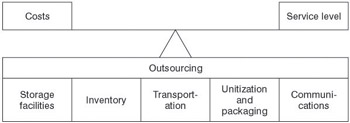
Figure 1.2: The Management Task in Logistics
The process of strategically managing the procurement, movement and storage of materials, parts and finished inventory (and the related information flows) through the organization and its marketing channels in such a way that current and future profitability are maximized through the cost effective fulfilment of orders.
(Christopher, 1998: 4)
Retail Logistics and Supply Chain Transformation
Retailers were once effectively the passive recipients of products, allocated to stores by manufacturers in anticipation of demand. Today, retailers are the active designers and controllers of product supply in reaction to known customer demand. They control, organize and manage the supply chain from production to consumption. This is the essence of the retail logistics and supply chain transformation that has taken place.
Times have changed and retail logistics has changed also. Retailers are the channel captains and set the pace in logistics. Having extended their channel control and focused on efficiency and effectiveness, retailers are now attempting to engender a more co-operative and collaborative stance in many aspects of logistics. They are recognizing that there are still gains to be made on standards and efficiency, but that these are probably only obtained as channel gains (that is, in association with manufacturers and logistics services providers) rather than at the single firm level.
In 1996 Alan McKinnon reviewed and summarized the key components of this retail logistics transformation. He identified six closely related and mutually reinforcing trends:
Increased control over secondary distribution
Retailers have increased their control over secondary distribution (ware- house to shop) by channelling an increasing proportion of their supplies through distribution centres (DCs). In some sectors such as food this process is now virtually complete. British retailers exert much tighter control over the supply chain than their counterparts in most other countries. Their logistical operations are heavily dependent on information technology (IT), particularly the large integrated stock replenishment systems that control the movement and storage of an enormous number of separate products.
Restructured logistical systems
Retailers have reduced inventory and generally improved efficiency through for example the development of ‘composite distribution’ (the distribution of mixed temperature items through the same distribution centre and on the same vehicle) and centralization in specialist warehouses of slower moving stock. In the case of mixed retail businesses common stock rooms have been developed, where stock is shared across a number of stores, with demand deciding to which store it is allocated.
Adoption of Quick Response (QR)
The aim has been to cut inventory levels and improve the speed of product flow. This has involved reducing order lead-time and moving to a more frequent delivery of smaller consignments both internally (between DC and shop) and externally (between supplier and DC). This has greatly increased both the rate of stock-turn and the amount of product being ‘cross-docked’, rather than stored at DCs.
QR (Lowson, King and Hunter, 1999) was made possible by the development of EDI (Electronic Data Interchange) and EPOS (Electronic Point of Sale), the latter driving the ‘Sales Based Ordering’ (SBO) systems that most of the larger retailers have installed. In other words as an item is sold and scanned in a shop, this data is used to inform replenishment and reordering systems and thus react quickly to demand. Sharing such data with key suppliers further integrates production with the supply function. Major British retailers have been faster to adopt these technologies than their counterparts in other European countries, although they still have to diffuse to many small retail businesses.
Rationalization of primary distribution (factory to warehouse)
Partly as a result of QR pressures and partly as a result of intensifying competition, retailers have extended their control upstream of the DC (that is, from the DC to the manufacturer). In an effort to improve the utilization of their logistical assets, many have integrated their secondary and primary distribution operations and run them as a single ‘network system’. This reduces waste and improves efficiency.
Increased return flow of packaged material and handling equipment for recycling reuse
Retailers have become much more heavily involved in this ‘reverse logistics’ operation. This trend has been reinforced by the introduction of the EU packaging directive. Although the United Kingdom currently lags behind other European countries, particularly Germany, in this field, there remain opportunities to develop new forms of reusable container and new reverse logistics systems to manage their circulation.
Introduction of Supply Chain Management (SCM) and Efficient Consumer Response (ECR)
Having improved the efficiency of their own logistics operations, many retailers have begun to collaborate closely with suppliers to maximize the efficiency of the retail supply chain as a whole. SCM (and within this, ECR) provides a management framework within which retailers and suppliers can more effectively coordinate their activities. The under- pinning technologies for SCM and ECR have been well established in the United Kingdom, so conditions have been ripe for such developments.
It is clear that many of these trends identified in McKinnon (1996) have been the focus for retailers in the intervening years. Issues such as primary distribution and factory gate pricing, consolidation centres and stockless depots and Collaborative Planning Forecasting and Replenishment (CPFR) have occupied much attention. The overall focus in retail logistics has been altered from an emphasis on the functional aspects of moving products to an integrative approach that attempts to develop end-to-end supply chains. This outcome is normally referred to as supply chain management.
Supply Chain Management
The roots of supply chain management are often attributed to Peter Drucker and his seminal 1962 article. At this time he was discussing distribution as one of the key areas of business where major efficiency gains could be achieved and costs saved. Then, and through the next two decades, the supply chain was still viewed as a series of disparate functions. Once the functions began to be integrated and considered as a supply chain rather than separately, several key themes emerged:
- a shift from a push to a pull: that is, a demand-driven supply chain;
- customers gaining more power in the marketing channel;
- an enhanced role of information systems to gain better control of the supply chain;
- the elimination of unnecessary inventory in the supply chain;
- a focus upon core capabilities and increased outsourcing of non-core activities to specialists.
To achieve maximum effectiveness of supply chains, it became clear that integration, or ‘the linking together of previously separated activities within a single system’ (Slack et al, 1998: 303) was required. Companies have had therefore to review their internal organization to eliminate duplication and ensure that total costs can be reduced, rather than allow separate functions to control their costs in a sub-optimal manner. Similarly, supply chain integration can be achieved by establishing ongoing relationships with trading partners throughout the supply chain.
In industrial markets supply chain integration focused upon the changes promulgated by the processes involved in improving efficiencies in manufacturing. Total quality management, business process re-engineering and continuous improvement brought Japanese business thinking to western manufacturing operations. The implementation of these practices was popularized by Womack, Jones and Roos’s (1990) book The Machine that Changed the World, which focused on supply systems and buyer–seller relationships in car manufacturing. In a retail context it is claimed that food retailers such as Tesco are increasingly embracing such lean principles for parts of their business (see Jones, 2002).
During the 1990s this focus on so-called ‘lean production‘ was challenged in the United States and the UK, because of an over-reliance on efficiency measures (‘lean‘) rather than innovative (‘agile‘) responses. Table 1.1 shows how lean and agile supply chains differ. Agility as a concept was developed in the United States in response to the Japanese success in lean production. Agility plays to US strengths of entrepreneurship and information systems technology. An agile supply chain (Figure 1.3) is highly responsive to market demand. Harrison et al (1999) argue that the improvements in the use of information technology to capture ‘real time’ data mean less reliance on forecasts and create a virtual supply chain between trading partners. When information is shared, process integration takes place between partners who focus on their core competencies. The final link in the agile supply chain is the network where a confederation of partners structure, coordinate and manage relationships to meet customer needs (Aldridge and Harrison, 2000).
|
Efficient/function (lean) |
Innovative/responsive (agile) |
|
|---|---|---|
|
Primary purpose |
Supply predictable demand efficiently at lowest cost |
Respond quickly to unpredictable demand in order to minimize stockouts, forced mark-downs, and obsolete inventory |
|
Manufacturing focus |
Maintain high average utilization rate |
Deploy excess buffer capacity |
|
Inventory strategy |
Generate high turns and minimize inventory |
Deploy significant buffer stock of parts |
|
Lead time focus |
Shorten lead time as long as it doesn’t increase cost |
Invest aggressively in ways to reduce lead time |
|
Approach to supplier selection |
Select primarily for cost and quality |
Select primarily for speed, flexibility and quality |
|
Source: adapted from Harrison, Christopher and Van Hoek, 1999 |
||
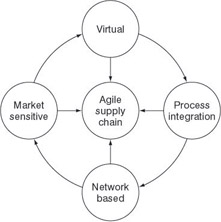
Figure 1.3: The Agile Supply Chain
Both approaches of course have their proponents. There is however no reason why supply systems may not be a combination of both lean and agile approaches, with each used when most appropriate (the so-called ‘leagile’ approach: Naylor, Naim and Berry, 2002; Mason-Jones, Naylor and Towill, 2000). In either case, emphasis is placed on the demands of supply chain management.
It can be suggested that the key concepts within Supply Chain Management (SCM) include the value chain, resource-based theory (RBT) of the firm, transaction cost economics and network theory. The thrust of all these concepts is the obtaining of competitive advantage through managing the supply chain (within and beyond the single firm) more effectively. They all explore possible benefits of a pan-firm orientation. Figure 1.4 is a supply chain model showing how value may be added to the product through manufacturing, branding, packaging, display at the store and so on. At the same time, at each stage cost is added in terms of production costs, branding costs and overall logistics costs. The aim for retailers (and their supply partners) is to manage this chain to create value for the customer at an acceptable cost. The managing of this so-called ‘pipeline’ has been a key challenge for logistics professionals, especially with the realization that the reduction of time not only reduced costs, but also gave competitive advantage.
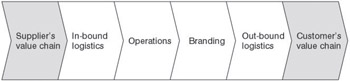
Figure 1.4: The Extended Value Chain
According to Christopher (1997) there are three dimensions to time-based competition that must be managed effectively if an organization is going to be responsive to market changes. These are:
- time to market: the speed at bringing a business opportunity to market;
- time to serve: the speed at meeting a customer’s order;
- time to react: the speed at adjusting output to volatile responses in demand.
Christopher (1997) uses these principles to develop strategies for strategic lead-time management. If the lead times of the integrated web of suppliers necessary to manufacture a product are understood, he argues that a ‘pipeline map’ can be drawn to represent each stage in the supply chain process from raw materials to customer.
In these maps it is useful to differentiate between ‘horizontal’ and ‘vertical’ time. Horizontal time is time spent on processes such as manufacture, assembly, in-transit or order processing. Vertical time is the time when nothing is happening, no value is added but only cost and products/materials are standing as inventory.
It was in fashion markets that the notion of ‘time-based competition’ had most significance, in view of the short time window for changing styles. In addition, the prominent trend in the last 20 years has been to source products globally, often in low-cost Pacific Rim nations, which lengthened the physical supply chain pipeline. These factors combined to illustrate the trade-offs that have to be made in supply chain management, and suggested an imperative to develop closer working relationships with supply chain partners. The box below and Figure 1.5 detail these processes through the example of Zara.
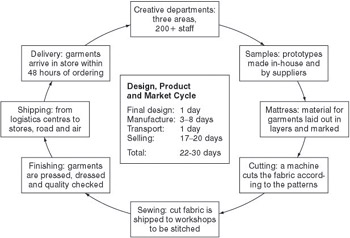
Figure 1.5: Zara’s Design, Product and Market Cycle
Sources: Christopher, 1998: 155–57; Burt, Dawson and Larke,2003; Retail Week 21 Nov 2003: 16–17.
Zara: Time-Based Competition in a Fashion Market
Zara is one of Spain’s most successful and dynamic apparel companies, producing fashionable clothing to appeal to an international target market of 18–35-year-olds. Zara’s rapid growth and ongoing success in such a fiercely competitive environment are based on the dual objectives of working without stocks and responding quickly to market needs. It does this as well as, or even more effectively than, its internationally acclaimed rivals such as Benetton or The Gap. Zara has developed one of the most effective quick-response systems in its industry.
The process of supplying goods to the stores begins with cross-functional teams working within Zara’s design department at the company headquarters in La Coruna. The designs reflect the latest in international fashion trends, with inspiration gleaned through visits to fashion shows, competitors’ stores, university campuses, pubs, cafes and clubs plus any other venues or events deemed to be relevant to the lifestyles of the target customers. The team’s understanding of directional fashion trends is further guided by regular inflows of EPOS data and other information from all of the company’s stores and sites around the world.
If a proposed design is accepted, commercial specialists proceed to negotiate with suppliers, agree purchase prices, analyse costs and margins, and fix a standard cross-currency price position for the garments. The size of the production run and launch dates are also determined at this point. A global sourcing policy, organized through the company’s buying offices in the UK, China and the Netherlands, and using a broad supplier base, provides the widest possible selection of fashion fabrics, while reducing the risk of dependence on any source or supplier. Approximately 40 per cent of garments – those with the broadest and least transient appeal – are imported as finished goods from low-cost manufacturing centres in the Far East. The rest are produced by quick response in Spain, using Zara’s own highly automated factories and a network of smaller contractors.
Only those operations that enhance cost-efficiency through economies of scale are conducted in-house (such as dyeing, cutting, labelling and packaging). All other manufacturing activities, including the labour-intensive finishing stages, are completed by networks of more than 300 small exclusive subcontractors, each specializing in one particular part of the production process or garment type. The system is flexible enough to cope with sudden changes in demand, though production is always kept at a level slightly below expected sales, to keep stock moving. Zara has opted for under-supply, viewing it as a lesser evil than holding slow-moving or obsolete stock.
Finished goods are labelled, price-tagged and packed at the company’s distribution centre in La Coruna. From there they travel by third-party contractors by road and/or air to their penultimate destinations. The shops themselves receive deliveries of new stock on a twice- weekly basis, according to shop-by-shop stock allocations calculated by the design department. The whole production cycle takes only two weeks. In an industry where lead times of many months are still the norm, Zara has reduced its lead-time to a level unmatched by any of its European or North American competitors.
The hub of the operation is the manufacturing and logistics centre near La Coruna. About 10,000 new items per year are turned out. New products are tested in particular stores before production runs are finalized, reducing failure rates to around 1 per cent, compared with the typical industry average of 10 per cent. The design, production and market cycle has been reduced to 22–30 days, in an industry where nine months has been the traditional lead time.
Significant investment in information technology drives the supply chain. The five-storey, 500,000 sq m logistics centre contains over 200 kilometres of moving rails, and automated routing systems deliver electronically tagged garments to the appropriate loading bays for dispersal via third party subcontracted distributors. Products are ready for dispatch eight hours after arrival. It is claimed that distribution is 98.9 per cent accurate, with shrinkage levels less than 0.5 per cent.
Zara’s pre-season inventory level (the production committed before the season begins) is 15–20 per cent compared with 40–60 per cent norms in the industry, with its in-season commitment, allowed by the fast response, flexible production process in the 40–50 per cent region. This approach allows a closer alignment of production to sales forecasts, reducing the need to clear unwanted stock. Store sales are recorded daily on hand-held computers and store orders are made at pre-determined times. This discipline, allied to pre-determined dispatch times at the logistics centre, provides control and reduces costs.
Another catalyst for many of the initiatives in lead-time reduction came from work undertaken by Kurt Salmon Associates (KSA) in the United States in the mid-1980s. KSA was commissioned by US garment suppliers to investigate how they could compete with Far East suppliers.
The results were revealing in that the supply chains were long (one and a quarter years from loom to store), badly coordinated and inefficient (Christopher and Peck, 1998). The concept of quick response was therefore initiated to reduce lead times and improve coordination across the apparel supply chain. In Europe, quick response principles have been applied across the clothing retail sector. Supply base rationalization has been a feature of the last decade, as companies have dramatically reduced the number of suppliers and have worked much more closely with the remaining suppliers to ensure more responsiveness to the marketplace.
Complex webs of relationships have been formed in many supply chains. This has led Christopher to claim that as an outcome of supply chain management ‘there is a strong case for arguing that individual companies no longer compete with other stand alone companies, but rather, that supply chain now competes against supply chain’ (1997: 22).
In many supply chains, tiers of suppliers have been created to manufacture specific component parts. Other supplier associations have been formed to coordinate supply chain activities. In these businesses the trend has often been to buy rather than make, and to outsource non-core activities. Benetton, which has been hailed as the archetypal example of a network organization, is however bucking this trend by increasing vertical integration and ownership of assets in the supply chain (Camuffo, Romano and Vinelli, 2001). While it is retaining its network structure, it is refining the network from product design through to distribution to its stores. While Benetton previously customized around 20 per cent of its ranges to satisfy national markets, it has reduced this to around 5 to 10 per cent in order to communicate one image of Benetton in global markets. The streamlining of its brands and in-store testing have allowed it to respond quicker to changing market trends.
Benetton is renowned for its relationship with small and medium-sized enterprises (SMEs) in north-eastern Italy. These SMEs supplied the labour-intensive phases of production (tailoring, finishing, ironing) while the company kept ‘in house’ the capital-intensive parts of the operation (weaving, cutting and dyeing). In the last decade it has established a high- tech production pole at Castrette, near its headquarters, to cope with increased volumes. The Castrette model has been recreated in foreign production poles in Spain, Portugal, Tunisia, Hungary, Croatia, South Korea, Egypt and India, with a SME network which focuses on specific products and skills in the area. Control also has been increased both upstream and downstream of production. The company now controls 85 per cent of its textile and thread suppliers to ensure speedy quality control and reduce lead times to workshops.
The Grocery Retail Supply Chain in the Uk
This development of supply chain management and the consequent implementation of relationship initiatives have been identified as the fourth and final stage of the evolution of grocery logistics in the UK (Fernie, Pfab and Marchant, 2000). This relationship stage relates to a more collaborative approach to supply chain management after decades of confrontation. The UK is often mooted to have the most efficient grocery supply chain in the world, and this is a key contributor to the profit margins of its grocery retailers.
This logistical transformation of UK retailing has occurred in a short period of time (Sparks, 1998). In the first stage of evolution (pre-1980) the dominant method of distribution to stores was by manufacturers that stored products at their factories or field warehouses for multiple drops to numerous small shops. As the retail multiple gained in prominence (especially after the abolition of resale price maintenance in 1964), retailers invested in regional distribution centres to consolidate deliveries from suppliers for onward delivery to stores. This was the first step change in the supply of fast-moving consumer goods (FMCGs) in that buying and distribution became a headquarters function in retailing, and the logistical infrastructure created a market for third-party logistics service providers.
To all intents and purposes, this marked the removal of suppliers from controlling the supply chain. This period of centralization throughout the 1980s enabled retailers to reduce lead times, minimize inventory and give greater product availability to customers in their stores. The 1990s witnessed a consolidation of this process. In many cases inventory had only been moved from store to RDC. By implementing JIT principles, retailers began to focus on their primary distribution networks (from supplier to RDC), demanding more frequent deliveries of smaller quantities. Clearly this created a problem for many suppliers in that they could not deliver full vehicle loads of product. To ensure that vehicle utilization could be maximized, consolidation centres have been created upstream of the RDC, and retailers have established supplier collection programmes to pick up products from suppliers’ factories on return trips from stores.
In the early years of this century, retail networks continue to be upgraded as ECR initiatives are enacted and grocery retailers accommodate the increase in non-food products through their distribution centres. Furthermore, the greater sharing of information, especially through Internet exchanges, has fostered Collaborative Planning, Forecasting and Replenishment (CPFR) initiatives to reduce supply chain response times.
It should be stressed that UK grocery retail logistics is relatively unique. Retailers not only control the supply chain but also have taken over marketing responsibilities that were once the sole domain of the manufacturer, such as product development, branding, advertising and distribution. The high level of retail brand penetration has enabled them to build up store loyalty and diversify into other businesses such as banking. Control of channels is a way of life for such companies.
In other countries a more fragmented store offering is apparent, and different store choice attributes are evident. For example, price and promotions are key drivers of consumer choice in the United States, Germany and France when compared with the UK. This means the consumer buys in bulk and the retailer ‘forward buys’ promotional stock that needs to be housed in distribution centres. Of course, in these markets land and property costs are relatively low compared with the UK, so that the savings in buying costs can outweigh the additional logistics costs. When Safeway in the UK adopted a high/low promotional strategy in order to compete with Asda (Wal-Mart), this led to significant disruption and changes in the operation of its RDC network.
Future Challenges
While members of the supply chain have sought ways to foster collaboration, the rise of e-commerce has posed another set of challenges for retailers. The rise and subsequent fall of many dot.com companies led to a high degree of speculation as to the reconfiguration of the business to consumer (B2C) channel. Ultimately, e-fulfilment, especially the ‘last mile’ problem of delivering goods to the final customer, holds the key to success in this channel. The business to business (B2B) channel, however, has more to offer members of the supply chain because of the number and complexity of transactions and the greater adoption of Internet technology by businesses compared with consumers.
There have been numerous B2B exchange marketplaces created since the late 1990s, with most of these exchanges being created in highly concentrated global market sectors with a ‘streamlined’ number of buyers and sellers, for example in the automobile, chemical and steel industries. The more proactive retailers developed B2B Internet exchanges as an extension of the EDI platforms created a decade earlier. This has enabled companies such as Tesco, Sainsbury and Wal-Mart to establish their own private exchanges with suppliers to share data on sales, product fore- casting, promotion tracking and production planning. There are major benefits to be derived from pooling EDI efforts into a smaller number of B2B platforms. For example it is easier to standardize processes for communication, reduce development costs and give members access to a larger customer base.
In 2000 several Internet trading exchanges were created, promising a revolution in product procurement. The two major exchanges, GlobalNet Xchange (GNX) and World Wide Retail Exchange (WWRE), have made some progress. Although the Global Commerce Initiative established draft standards for global Internet trading, many issues need to be resolved to ensure the seamless flow of data across the supply chain. The complexity of dealing with thousands of stock-keeping units (SKUs) has meant that retailers have had to be selective in the projects that can be routed through their private exchanges compared with these global exchanges. To date the focus of the GNX exchange has been on special promotions, perishables and own-label products: for example, 600 out of potential 2,000 suppliers of Sainsbury’s retail brand products are on GNX.
In the business to consumer (B2C) channel, the rise and fall of Internet retailers has brought a touch of realism to the evolving market potential of online shopping. In Europe, grocery retailers are powerful ‘bricks and mortar ’ companies and the approach to Internet retailing has been reactive rather than proactive. Most Internet operations have been small, and few pure players have entered the market to challenge the conventional supermarket chains. Tesco is one of the few success stories in e- grocery, having adopted an unconventional model (see box below).
Tesco.com: Delivering Home Shopping
Tesco.com has become the world’s largest Internet grocery system in a very short time. Unlike many of its competitors, it has opted for an in- store picking and home delivery operation, rather than starting with a dedicated distribution centre system. This choice came about for three reasons:
- Warehouse-based picking and delivery was not believed to be economic due to low penetration levels and drive times for vehicles being high.
- Customers confirmed that they did not want a reduced offer online as this destroyed the point of shopping at Tesco for them.
- Outside of London, the penetration rates possible did not make a warehouse a valid option, even if other costs (such as picking) were solved.
Since introduction there has been a very rapid roll-out to effectively cover the UK through the network of stores. Each store involved has dedicated local delivery vehicles. The system in operation has thrown up a few surprises:
- Fresh food has been a big seller online, whereas people had initially expected big, bulky replenishment items to be the most popular.
- People plan their online order better than their in-store trip (aided by the Clubcard and Internet item recall availability), so a higher proportion of spend is made with Tesco.
- The non-food item offer can be more extensive online than in-store so sales in this area can be expanded.
- Knowledge is gained from the online shopping process of what items customers wanted to buy, that were not actually in stock. This helps enhance the supply system.
Source: adapted from Jones, 2001
Why have ‘pure players’ failed in this channel? Laseter et al (2000) identify four key challenges:
- limited online potential;
- high cost of delivery;
- selection–variety trade-offs;
- existing entrenched competition.
Ring and Tigert (2001) came to similar conclusions when comparing the Internet offering with the conventional ‘bricks and mortar’ experience. They looked at what consumers would trade away from a store in terms of the place, product, service and value for money by shopping online. They also detailed the ‘killer costs’ of the pure play Internet grocers, notably the picking and delivery costs. The gist of the argument presented by these critics is that the standard Internet model is flawed.
The two main fulfilment models are illustrated in Figures 1.6 and 1.7. The store-based model makes use of existing distribution assets, as products pass through regional distribution centres (RDCs) to stores where orders are assembled for delivery to online customers (Figure 1.6). The advantages of the store model are the low initial investment required and the speed of rolling out the service to a wide geographical market. Customers also receive the same products online as available in stores. The problem here, however, is that ‘out of stocks’ and substitutions of products are more prevalent as online shoppers compete with in store counterparts for products.
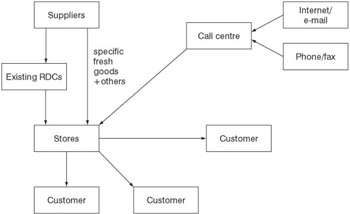
Figure 1.6: Logistics Model for Store-Based Picking of E-Commerce Orders
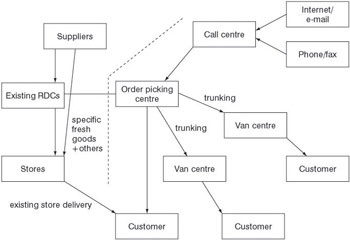
Figure 1.7: Logistics Model for the E-fulfilment Centre Route
The dedicated order picking model (Figure 1.7) utilizes e-fulfilment centres to pick and deliver orders to customers. The advantage of this system is that it is dedicated purely to e-commerce customers so stock- outs should be low and delivery frequencies should be higher. These picking centres, however, have less of a product range and they need to be working at capacity to justify investment costs.
Ultimately the picking centre model will possibly be the long-term solution to online grocery fulfilment. The problem is that the economics of order fulfilment and delivery are so poor in the short run that companies are abandoning this approach or going bankrupt (Webvan). In the UK Asda has closed two picking centres in London, and Sainsbury is developing a hybrid model. So why has the so-called least efficient fulfilment model proven successful? The answer is simple. You need to create market demand before you invest in costly infrastructure.
E-commerce is here to stay, and B2B and B2C channels will increase in importance once established standards for data transfer across the supply chain are realized. Already, the information revolution has been the catalyst for improving supply chain efficiency and for fostering stronger relationships between supply chain partners. Private Internet exchanges developed by leading retailers, such as Wal-Mart with its Retail Link network, have enabled them to respond quickly to consumer choice at store level. Indeed, much of the focus of this chapter has been on how competitive advantage can be achieved through companies co-operating and thus responding flexibly and quickly to market needs; hence the acronyms of JIT for lean supply chains and QR and ECR for agile supply chains.
Regardless of sector or industry, supply chain integration can only be achieved through greater collaboration and coordination of functions across supply chains. This means partnerships, alliances and networks that are created within and between organizations. Traditional functions can no longer be viewed in isolation or ‘silos’ independent from the workings of other parts of their own and other businesses. Cross-functional teamwork and inter-organizational co-operation will therefore hold the key to future developments in supply chain management.
In terms of future challenges it is worthwhile also to mention one other aspect of supply chains. One of the implicit reasons behind aspects of data communication in supply chains and the use of these data in such systems as are outlined above, is to reduce the demands for unnecessary product packaging and movement. It has long been recognized that costs, performance and services can be enhanced by appropriate movement of data and product. In essence this is a resource reduction strategy. More overtly, there has been increasing concern with the environmental impact of logistics, and companies have become increasingly concerned to ensure that their activities are appropriate. Through better use of data to under- stand activities, aspects of supply can be minimized. In addition, supply chains can be enhanced to ensure that resources are reused or recycled in the system, and that reverse channels of logistics can reclaim valuable resources from packaging and product. Much more needs be done in this regard, but this issue will be one of the challenges for the future.
It could be argued for example that many of the logistics efficiencies described above have been generated by operating systems that are insufficiently environmentally aware. Logistics can have a major adverse impact upon the environment. While improvements in vehicle design, engine efficiency, reusable handling systems and building standards have reduced the impacts, the distances products now have to travel have accentuated the problems. Environmental issues are thus one issue of future concern.
It has to be recognized that terminology in this area has been the subject of some confusion. A good starting point however is:
Reverse logistics is a process whereby companies can become more environ- mentally efficient through the recycling, reuse and reducing the amount of materials used. Viewed narrowly, it can be thought of as the reverse distribution of materials among channel members. A more holistic view of reverse logistics includes the reduction of materials in the forward system in such a way that fewer materials flow back, reuse of materials is possible, and recycling is facilitated.
(Carter and Ellram, 1998: 82)
In a retail context it is relatively straightforward to think of elements that fit these definitions. Many retailers operate a recycling policy for consumers to use and for aspects of their stores’ waste. In some countries there may be legal or fiscal encouragement. Some recycling may be internalized in the company. Other material is sold on for external recycling purposes.
In the grocery industry, the use of plastic trays and boxes to carry and distribute fresh product has become standard. Many DCs contain specialist centres for cleaning and reusing such equipment. This is an example of a reverse logistics system in that a channel has had to be created in order to move the containers back down the chain. In reality, the vehicles delivering to store often back-haul containers to distribution centres or to manufacturers.
One of the key drivers for change is government. In March 1997 the Packaging Waste regulations came into force (see Fernie and Hart, 2001). These are the UK government’s implementation of the requirements to meet the EU Directive on Packaging and Packaging Waste. The aim is to recover at least 50 per cent of the annual packaging waste created in the UK. The main obligations on retailers are to:
- register with the authorities or join a registered collective scheme;
- provide data on packaging handled, recovered and recycled;
- recover and recycle certain percentages of packaging waste;
- provide a Certificate of Compliance.
The amount a business has to recover and recycle depends on its position in the channel. Retailers can meet their obligations by either individually complying (primarily large companies) or joining a collective scheme (14 approved compliance programmes are registered nationally). Members of a collective scheme do not have to meet individual obligations, as the scheme assumes this responsibility on behalf of its members. Such regulations are not likely to disappear and are probably going to become more stringent in the future.
Conclusions
This consideration of the changes and challenges in retail logistics allows us to summarize the key issues in retail logistics and supply chains.
First, it should be clear by now that the modern logistics and supply systems are heavily dependent on the use of information technology. Logistics now is as much about information movement as it is about product movement. Anyone who believes that retail logistics is all about boxes and lorries needs to rethink. Of course it remains true that products have to be distributed. Vehicles and boxes are still involved. But increasingly it is the control of data and information that remains the key to a successful logistics system.
Second, the discussion above should have indicated that modern retail logistics is no longer a separate or functionally based activity. Within a company, warehousing and transport can not exist as separate operations. Instead logistics is all about integration, not only within a company, but also increasingly outside the business with suppliers, logistics service providers and customers. Partnership is a strong component of modern retail logistics, and an ability to work with other individuals and other companies is fundamental to success.
Third, it should have become apparent that the ‘reach’ of retail logistics has expanded enormously. Companies used to manage local suppliers and products to and from local warehouses. Nowadays, retailers are much more global in their outlook. Products are sourced from around the world and so the interactions and movements involved in logistics are now equally international.
Finally however, we must not forget that logistics is about the movement of product, and much work is undertaken on improving the mechanics of this task. For example, a modern supermarket contains good examples of packaging and standardization, the best of which make handling easier. Vehicle fleets may be equipped with GPS (Global Positioning Satellite) systems and advanced tachograph and communications equipment, allowing real-time driver and vehicle performance monitoring. Such detailed analysis remains a key component of supply chain integration.
With the pressure on to enhance service and reduce costs in supply chains, together with their enhanced complexity, there can be little doubt that retailers will be subjected to considerable logistical challenges in the years to come.
References
Aldridge, D and Harrison, A (2000) Implementing agile methods in retail supply chains: a scenario for the future, International Journal of Agile Manufacturing, 3 (2), pp 37–44
Burt, S L, Dawson, J A and Larke, R (2003) Inditex-Zara: re-writing the rules in apparel retailing. Paper presented at the Second SARD Workshop, UMDS, Kobe, April 2003
Camuffo, A, Romano, P and Vinelli, A (2001) Back to the future: Benetton transforms its global network, MIT Sloan Management Review, 43 (1), Fall, pp 46–52
Carter, C R and Ellram, L M (1998) Reverse logistics: a review of the literature and framework for future investigation, Journal of Business Logistics, 19 (1), pp 85–102
Christopher, M (1997) Marketing Logistics, Butterworth-Heinemann, Oxford
Christopher, M (1998) Logistics and Supply Chain Management, FT/Prentice Hall, London
Christopher, M and Peck, H (1998) Fashion Logistics, chapter 6 in Logistics and Retail Management, ed J Fernie and L Sparks, Kogan Page, London Department of Trade and Industry (DTI) (2001) @ Your Home: New markets for customer service and delivery, Retail Logistics Task Force, Foresight, London
Drucker, P (1962) The economy’s dark continent, Fortune, April, pp 265–70 Fernie, J (1990) Retail Distribution Management, Kogan Page, London Fernie, J and Hart, C (2001) UK packaging waste legislation: implications for food retailers, British Food Journal, 103 (3), pp 187–97
Fernie, J, Pfab, F and Marchant, C (2000) Retail grocery logistics in the UK, International Journal of Logistics Management, 11 (2), pp 83–90
Fernie, J and Sparks, L (1998) Logistics and Retail Management, Kogan Page, London
Foresight Retail Logistics Task Force (2000) @ Your Service: Future models of retail logistics, DTI, London
Harrison, A, and van Hoek, R (2002) Logistics Management and Strategy, Financial Times/Prentice Hall, Harlow
Harrison, A, Christopher, M and van Hoek, R (1999) Creating the Agile Supply Chain, Institute of Logistics and Transport, Corby Jones, D T (2001) Tesco.com: delivering home shopping, ECR Journal, 1 (1), pp 37–43
Jones, D T (2002) Rethinking the grocery supply chain, in State of the Art in Food, ed J-W Grievink, L Josten and C Valk, Elsevier, Rotterdam [Online] www.leanuk.org/articles.htm (accessed 30 Oct 2003)
Laseter, T, Houston, P, Ching, A, Byrne, S, Turner, M and Devendran, A (2000) The last mile to nowhere, Strategy and Business 20, September, pp 40–48
Lowson, B, King, R and Hunter, A (1999) Quick Response: Managing the supply chain to meet consumer demand, Wiley, Chichester
Mason-Jones, R, Naylor, B and Towill, D R (2000) Lean, agile or leagile? Matching your supply chain to the marketplace, International Journal of Production Research, 38 (17), pp 4061–70
McKinnon, A C (1996) The development of retail logistics in the UK: a position paper, Technology Foresight: Retail and Distribution Panel, Heriot- Watt University, Edinburgh
Naylor, J B, Naim, M M and Berry, D (1997) Leagility: integrating the lean and agile manufacturing paradigm in the total supply chain, International Journal of Production Economics, 62, pp 107–18
Retail Week (2003) At the heart of a retail giant, Retail Week, Nov 21, pp 16–18 International Journal of Retail and Distribution Management, 29 (6), pp 266–73
Sparks, L (1998) The retail logistics transformation, Chapter 1 ( pp 1–22) of Logistics and Retail Management, ed J Fernie and L Sparks, Kogan Page, London
Womack, J P, Jones, D and Roos, D (1990) The Machine that Changed the World: The story of lean production, Harper-Collins, New York
Preface
- Retail Logistics: Changes and Challenges
- Relationships in the Supply Chain
- The Internationalization of the Retail Supply Chain
- Market Orientation and Supply Chain Management in the Fashion Industry
- Fashion Logistics and Quick Response
- Logistics in Tesco: Past, Present and Future
- Temperature-Controlled Supply Chains
- Rethinking Efficient Replenishment in the Grocery Sector
- The Development of E-tail Logistics
- Transforming Technologies: Retail Exchanges and RFID
- Enterprise Resource Planning (ERP) Systems: Issues in Implementation

EAN: 2147483647
Pages: 119
