Flylib.com

Books Software


HOW TO CHANGE A FILE S ICON


HOW TO CHANGE A FILE'S ICON

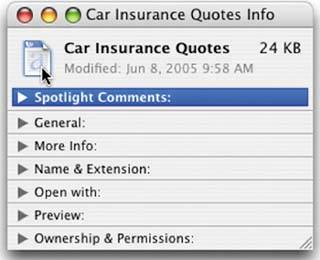
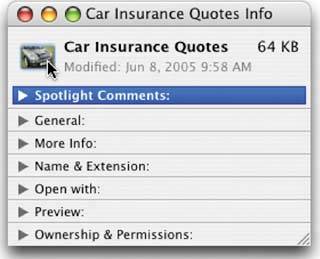
Just as in previous versions of the Mac OS, if you don't like a file's icon, you can change it. (Check out www.iconfactory.com or www.xicons.com. They both have fantastic selections of photo-quality Mac OS X icons ready to download.) To copy an icon from one file to another, just click on the icon you want to copy and press Command-I to bring up its Info dialog. At the top, click on the tiny icon to the left of the file's name then press Command-C to copy that icon into memory. Then go to the file whose icon you'd like to replace, press Command-I to bring up its Info dialog, click on its existing tiny little icon, then just press Command-V to paste the new icon over the old icon. That's it! Piece of cake. Can of corn. Etc.

Before

After


DON'T LIKE YOUR NEW CUSTOM ICON? CHANGE IT BACK

If you've added a custom icon to one of your files and later grow tired of it (custom icons sometimes do get old, just like songs on the radio. You love 'em the first time you hear 'em, but then after hearing it for about the 200th time, the song you once loved is now so… played ), then just click on the icon, press Command-I, click on the icon in the top-left corner then press Command-X, and the file's original icon will pop back into place (no radio pun intended).

Before

After


SEE YOUR FILE'S HIDDEN INFO

Want more info on your files than the standard Icon view provides (after all, it just gives you the file's name in Icon view)? Then turn on Show Item info. This adds an extra line of information below many files and folders that can be very useful. For example, now not only do you get a folder's name, but just below the name (in unobtrusive light-blue, 9-point type), you'll see how many items are in that folder. If the file is an image, the Item Info shows you how big it is. MP3 files show how long the song is, etc. To turn on Item Info for your current Finder window, press Command-J to bring up its View Options. Then turn on the checkbox for Show Item Info. If you want to show the item info for every window (globally), then choose the All Windows button at the top of the dialog.


EJECTING DISCS FROM THE SIDEBAR

You'll notice when you insert some kind of removable media into your Mac (removable media is geek-speak for CDs, DVDs, FireWire or USB drives, digital camera memory cards, etc.), a micro-icon (I'm not sure that's what they're really called) appears to the right of its name in the sidebar of your Finder window. These are actually buttons , and they're there to save you time and trouble. For example, next to removable drives , that little icon is an Eject button. Click it, and it ejects that drive or CD or whatever (this beats the heck out of dragging the disc down to the Eject icon in the Dock). If you insert a blank CD or DVD, you'll see a little " nuclear " warning sign. This is a Burn icon that lets you burn (write) info to that disc.


INSTANTLY FIND THE ORIGINAL FOR ANY ALIAS

Since an alias is just a copy of the file's icon (not the actual file itself), you may need to find the original at times. To do that, just click on the alias, press Command-R, and the "real" file will appear onscreen in its Finder window.