Conduct Mandatory Needs Analysis
To alter the belief that training is the solution to all woes, our team needed to educate managers on how to recognize a training issue. Few people in the company
understood
how to determine whether training was the right solution. In many cases the training they asked for exacerbated their problems because it wasn't supplying
employees
with what they really needed to do their jobs ”better tools or processes.
We were
educating
the learning and development staff, but we didn't want to leave them in the
awkward
position of having to tell managers that the training they
requested
was not going to solve their problems.
The
fastest
way to determine if training is the right choice is to put a gun to people's heads and ask them to do their jobs. If they can, they don't need training. However, it's not the most tactful approach, so to assist business unit
leaders
in determining their training needs, and to act as a defensive measure against unwarranted training
requests
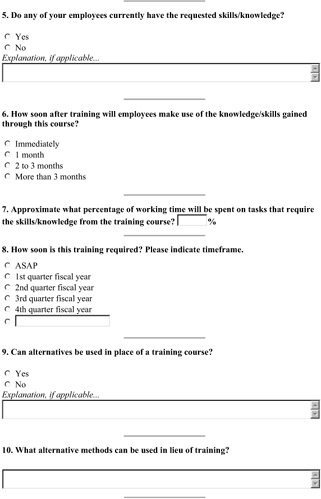
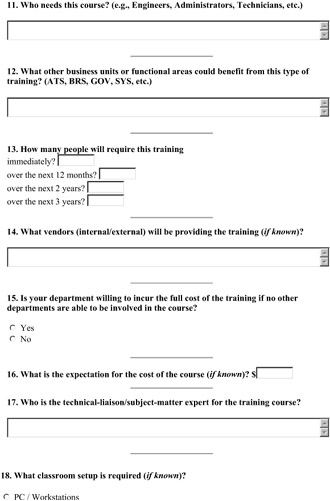
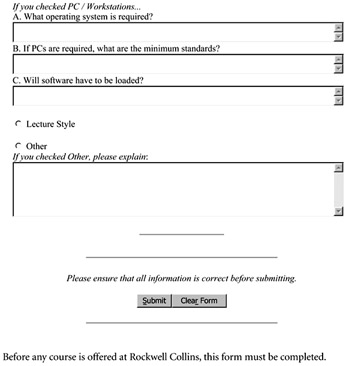
, we instituted a mandatory needs analysis form (see Figure 4-1). Before any
appeal
for training could be
processed
, managers had to complete this online form outlining the specifics of their training need. It asked for the business objectives they expected to support with the training, skill gaps associated with the training, the link between training and job performance, and specific examples of problems the training was expected to address.
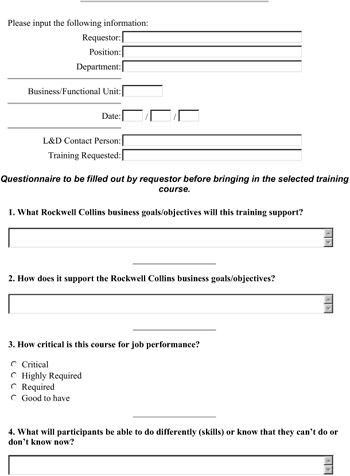
Figure 4-1:
Training Needs Analysis Form.
The form was designed to show whether a training request was a
legitimate
one. It also
served
as a mini-tutorial for managers on training-needs analysis. It gave them clearly defined parameters for training. If training is not the solution, the form will make that clear before the request ever arrives in the learning and development office. We found that this simple requirement dramatically reduced the number of requests for training.
Validate Training
We mapped our process for identifying learning needs in a flowchart that determines whether the need is
verified
by a learning consultant and learning council, whether a specific course is identified, and whether it meets business needs for that particular business unit. Within that process we identified
tasks
within work elements associated with the training, the
core
competencies and gaps that the learning addresses, and the measurable learning objectives. A measurable objective has five elements:
-
A defined audience
-
The circumstances under which the objective will be met
-
The action required to meet the objective
-
The behavior that must be met
-
The level of mastery required
For example: The participant, when given a text editor, will create a circuit netlist with 80 percent accuracy. By defining and adhering to this formula, we
guaranteed
that the learning
offered
by the learning and development team was measurable and performance based.
Define Learning Methods
If, after applying this formula, training is deemed an appropriate response, the right learning platform and methodology must be
chosen
. Whether learning should be self-paced,
group
based, event driven, or an on-the job continuous process determines what structure the course should take. For example, we determined that
self-paced
formats ”Internet- and intranet-based courses, video, CD-ROM ”are best used if learning objectives are well defined, content has a clear beginning and end point, learning can be accomplished independently, minimal collaboration is required, and learning objectives are primarily knowledge based instead of skill based. Group-based methodologies ”traditional and virtual classrooms, satellite and chat ”are best used if collaboration is essential, content area is complex or vague, and the learning objectives are focused on skill development.
By defining these methodologies, we made it easy to break down the needs of the learner and craft an appropriate environment in which the learner could best
absorb
new content. See Figures 4-2a through 4-2e for examples of graphics that can aid in making these determinations.