Flylib.com

Books Software


Development of the Project Management Competence in the Project-Oriented Organization


Development of the Project Management Competence in the Project-Oriented Organization

Project management can be perceived as a core competence of the POO, as it creates a competitive advantage. To ensure this competitiveness , permanent further development of the project management competence is necessary. Project management competencies of organizations, teams , and individuals have to be developed.

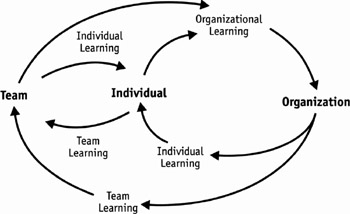
The relationships between individual, team, and organizational learning in the POO are shown in Figure 8.
click to expand
Figure 8: Relationships between Individual, Team, and Organizational Learning in the POO

Instruments to develop the project management competencies of individuals are (self-) assessment, training (classroom and on the job), and coaching combined with training. Instruments to develop the project management competencies of teams are (self-) assessment, training and coaching, reflection, and supervision. Instruments to develop the project management competence of the POO are project management benchmarking and organizational development projects.


Conclusion

Even project management is an important business process competence, for the other specific processes of the POO have to be analyzed and further developed also. The spider web model of the POO, showing these processes, can be applied as a maturity model for the POO.


References

Gareis, R., and M. Huemann. 1988 . A Process-Oriented PM-Approach . IRNOP III: Conference of the International Research Network on Organizing by Projects , July 6–8 , University of Calgary .

Senge, P. 1994 . The Fifth Discipline Fieldbook: Strategies and Tools for Building a Learning Organization . New York : Doubleday.

Weik, A., and K. Roberts. 1993 . Collective Mind in Organizations Heedful Interrelating on Flight Decks . Administrative Quaterly 38 : 357–381 .

Willke, H. 1998 . Systemisches Wissensmanagement (Systemic Knowledge Management) . Stuttgart : Lucius & Lucius.


Chapter 13: The Role of Trust in Project Management

Francis T. Hartman, Ph.D., PMP University of Calgary

Introduction

A series of projects are being undertaken in a program intended to develop a theoretical model of the mechanics of trust and then to test that model. The initial studies identifying the need to better understand trust and that trust carries a price tag have been completed. The initial Trust model has been developed and the first two individual projects to test and further develop this Trust mechanics model are under way.

The research program has a general objective of enhancing project performance through a better understanding of the key underlying drivers for enhanced project delivery. The focus on trust was developed following a review of five years of research at the University of Calgary. Trust was a factor in all of the projects whether they studied alliances, distributed teams , team effectiveness, time to market, cost reduction, resource usage and allocation, progress reporting, or value engineering to mention a few. Trust is a commonly recurring theme in research reporting and recurs frequently in papers.

The research into trust in project management is intended to help understand the trust phenomenon , and to learn from this understanding how people and organizations need to work together in order to deliver projects more effectively.

The research program is using different approaches to test and develop a Trust model and to see how this model affects project management. Some examples of how this work will be undertaken are introduced and discussed.