Flylib.com

Books Software


Keeping Current


Keeping Current

graphics/new2003_icon.gif

The Office programs help you utilize the Internet to its fullest. Conversely, the Internet helps you keep your Office applications running smoothly as well. For example, from any Office program, you can select Help, Office on Microsoft.com to view the latest information about the topic on which you're requesting help.

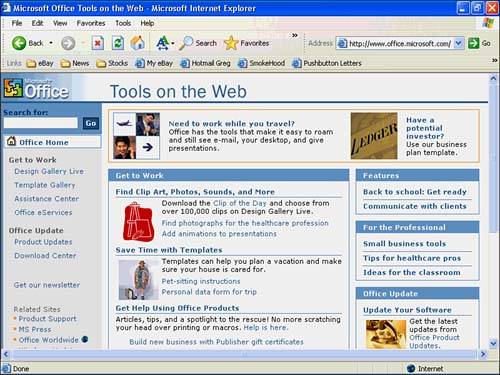
In addition, you can use the Web to download the latest updates, bug fixes, and patches to your Office programs. When you browse http://office.microsoft.com/, you will see a Web page similar to the one in Figure 21.4. (Figure 21.4 lists information about Office XP, the Office version that predates Office 2003, because no Office 2003 Web pages were publicly available at the time of this writing.) You will be able to read the latest news about Office products; see how others use Office; and download sample files, templates, and updates to your software.

Figure 21.4. Microsoft maintains a huge Office-based Web site.
graphics/21fig04.jpg

If you click on the Web page's Product Updates link, you'll be able to install an automatic update feature that instructs Office to check the Internet regularly. If updates are posted that will bring your installation up to date, the update process starts automatically so that you can keep current.

graphics/lightbulb_icon.gif

Notice that the Office Web site not only has news and advanced advice and help for your Office programs, but the site also provides links to clip art, photos, and sounds. If you want to add sound to the opening or closing screens of your PowerPoint presentations, for example, you can check the Office site to see whether any sound clips interest you. If so, you can download those clips and start them at the beginning or end of your presentation. The Office Web site also has numerous templates that you can use as a foundation for all kinds of special-purpose Office documents you might want to create, such as invoice worksheets, greeting card “like Web sites, and collectibles and hobby- related Access database applications.


Word Sends Email

Too many times, someone using Word needs to send an email, so that person does the following:

  1. Starts Outlook.

  2. Waits for Outlook to begin.

  3. Creates a new email message in Outlook.

  4. Types the message.

  5. Sends the message from Outlook.

  6. Returns to Word and continues typing the document.

To Do: Send Email from Word

There's a better way and it's built right into Word. Although the actual process described in these six steps still occurs, the user 's job is much easier if he or she does this:

  1. graphics/new2003_icon.gif

    Selects File, New to display the New Document task pane shown in Figure 21.5.

    Figure 21.5. You can send an email from within Word.

    graphics/21fig05.jpg

  2. Click the E-Mail Message link. A new email message opens, complete with fields for the sender and subject just as though you'd created a new, blank email message within Outlook.

  3. Complete the email message. Clicking the To field will display your Outlook contacts just as though you'd created this email within Outlook.

  4. Click the Send button to send the message. Word sends the message to the recipient, dialing your Internet provider if needed first to establish a connection.

  5. Word then returns to the position in your document where you last left it.


To Do: Send Office Documents as Email

Perhaps you don't want to send a regular email, but you want to send your Office program's document to a friend or associate over the Internet. You can send your current Word document, Excel worksheet, Access database, or PowerPoint presentation to any email recipient in your Outlook Contacts list or to anyone whose email address you know by following these steps:

  1. Once you complete the Office document, worksheet, database, or presentation you want to send to someone, select File, Send to. Depending on what Office program you're sending from, you will be able to send this document in one of several ways.

  2. Select how you want to send the document. For example, you can often send Word documents as email attachments or as the actual body inside the email. You can only send an Access database as an email attachment.

  3. Depending on what kind of email attachment you send, Office might ask you for a data type that it can convert your file to. For example, if you send an Access database to an email recipient, Access displays the Send dialog box shown in Figure 21.6. Select the data type you want Access to convert the database to before sending the database to your recipient.

    Figure 21.6. Select the format you want to convert the database to before sending it as an email attachment.

    graphics/21fig06.jpg

  4. Once you select the conversion data type, your Office program sends the email and returns to where you were before you sent the email.

graphics/bookpencil_icon.gif

The format you select depends on how your recipient will use the database and what kind of program the recipient has. You might have to ask which of the conversion file formats your recipient prefers to receive from the list available to you.