Rules Followed In This Dictionary
Definitions containing non-letters ” like @, #, / and numbers ” are in ASCII order. Definitions with real letters are in alphabetical order. I use ASCII because it gives order to hyphens, periods, forward slashes , numbers , etc. Here is the order you'll find in this dictionary:
Blank Space = ASCII 32
! = ASCII 33
# = ASCII 35
& (Ampersand) = ASCII 38
- (Hyphen or dash) = ASCII 45
. (Period) = ASCII 46
/ (Forward slash) = ASCII 47
0 (zero) = ASCII 48
1 = ASCII 49
2 = ASCII 50
3 = ASCII 51
4 = ASCII 52
5 = ASCII 53
6 = ASCII 54
7 = ASCII 55
8 = ASCII 56
9 = ASCII 57
: ( colon ) = ASCII 58
; (semi colon) = ASCII 59
A (capital A) = ASCII 65
Capital letters to ASCII 90
\ (back slash) = ASCII 92
Lower case letters
start with a = ASCII 97
My dictionary conforms to American spelling. To convert American spelling to British and Canadian spelling typically requires adding a second "L" in words like signaling and dialing (they're American) and changing "Z" in words like analyze to analyse. Center in American is Center. In Britain, Europe, Australia and Canada, it's Centre. This dictionary contains more British, Australian and European words (and their correct spellings) than previous editions ” a result of several overseas lecture tours .
All high-tech industries make up new words by joining words together. They typically start by putting two words next to each other. Later, they join them with a hyphen. Then, with age and familiarity , the hyphen tends to disappear. An example: Kinder garten. Kindergarten. and now Kindergarten. A word that's evolving is electronic mail. At first, it clearly was electronic mail. Then it moved to e-mail and now it seems to be morphing to email, i.e. it's becoming a real word. The hyphen "rule" is not a rule. It's determined by time, and thus not easy to be "right." For example, all the literature refers to "C Band" in the radio world and C-Band in the optical world. It may very well be a construct to make the distinction, much like we use "frequency" in the electrical and radio domains, and "wavelength" in the optical domain. Some of this stuff doesn't have anything to do with rules of English. Rather, it comes down to the preferences and objectives of the standards bodies and others.
Sometimes it's a matter of personal choice. Some people spell database as one word. Some as two, i.e. data base. I prefer it as one, since it has acquired its own logic by now.
Sometimes it's a matter of how it looks. I prefer T-1 (T-one), not T1, simply because T-1 is easier to recognize on paper. I define co-location as co-location. Websters spells it collocation, with two Ls, one more than mine. I think mine is more logical. And since Mr. Webster is dead, he can't argue with me. I like email. But readers have told me they prefer e-mail. You'll probably find it spelled both ways in this dictionary, since it's not easy to be thoroughly consistent in an industry (and dictionary) changing so fast.
Plurals give trouble. The plural of PBX is PBXs, not PBX's. The plural of PC is PCs, not PC's, despite what the New York Times says. The Wall Street Journal and all the major computer magazines agree with me. The plural possessive is PBXs' and PCs', which looks a little strange , but is correct. In this dictionary, I spell the numbers one through nine. Above nine, I write the numbers as arabic numerals, i.e. 10, 11, 12, etc. That conforms to most magazines' style.
Sometimes the experts don't even get it right. Take something as common as 10Base- T. Or is it 10BaseT? 10Base-T is an IEEE standard. So you'd think they'd know. Forget it. Go to their web site, www.ieee.org. You'll find as many hits for 10Base-T as for 10BaseT. Ray Horak and I checked every known and unknown expert in the Western world (i.e. those living within a block or two of Ray). We now believe the correct spelling is 10Base-T.
Sometimes, I don't simply know. So I may list the definition twice ” once as two separate words and once as one complete word. As words and terms evolve , I change them in each edition. I try to conform each new edition to "telecomese" and "Internetese" as it's spoken and written at that time.
Bits and Bytes per Second.
Telecom transmission speed has confused many of my readers. I hope this will help:
The telecom and computer literature is loaded with references to Bps and bps. You'll see them as Kbps, kBps or KBps, or Kbits/sec. You'll see them as Mbps or MBps. You'll see them as Gbps or GBps. There is no consistency in the industry's "literature," i.e. brochures , articles, spec sheets, etc. Let me explain:
First, k means kilo or a thousand. M means mega or one million. And g means giga, which is a thousand million, or 1,000,000,000. The term kbps means a thousand bits per second. And that's a telecom transmission term meaning that you're transmitting (and/or receiving) one thousand bits in one second. The term mbps means one million bits per second. Note the k and the m are small, i.e. non-capital letters.
There is an exception to this neat rule. Fibre Channel and other transmission systems used in SANs (Storage Area Networks) measure transmission speeds in Bps (Bytes per second). Here, the terminology is driven by the application, which is the transfer of data between storage systems.
Now to computing speeds: The term KBps (with a big K and a big B) means one thousand bytes per second. MBps (with a big M and a big B) means one million bytes per second. They refer to speeds inside the computer, e.g. from your hard disk to your CPU (central processing unit ” your main microprocessor). There's a big difference between a bit and a byte. A byte is typically (but not always) eight bits.
That's the way it's meant to be. But, there's a lot of sloppy writing out there. You'll see MBps or MB/s also meaning one million bits per second as a telecom transmission speed. You really have to figure out if the writer means telecom transmission ” i.e. anything outside the computer ” or whether the writer is referring to speed insider the the computer in which case it's bytes and a computer term. You can usually tell from the context.
Measuring the speed of a communications line is not easy. And tools to measure lines are still very primitive. The Internet added a whole new dimension to complexity. Since the Internet is a packet switched network, every transmission goes a different way. So, one transmission that might be one million bits per second might, a minute later, be 800,000 bits per second. There are sites on the Internet that measure your connection speed, by sending you a big file, and then waiting for you to send back some message that you've received the file. But they report numbers all over the space from one moment to another. About the only certain thing you know is that the speed of a circuit is always measured by the slowest part of the circuit. Look at the Internet. You might be getting horribly slow downloads, despite being on a T-1. That might be due to a horribly overloaded server at the other end or it might be due to the fact that your T-1 is overloaded with other users at the office, also downloading. These days with faster lines what's often a gating factor is the speed of your PC. It may be simply not be fast enough for your PC's browser to keep up with the speed of your incoming bits. In which case you need a faster PC. It happened at our home when we got fast new cable modem. We all had to upgrade to faster PCs.
Virtually all telecom transmission is full duplex and symmetrical. This means if you read that T-1 is 1,544,000 bits per second, it's full duplex (both ways simultaneously) and symmetrical (both directions the same speed). That means it's 1,544,000 bits per second in both directions simultaneously . If the circuit is not full duplex or not symmetrical, this dictionary points that out. For now, the major asymmetrical (but still full duplex) circuit is the xDSL family, starting with ADSL, which stands for asymmetric, which means unbalanced. The DSL "family" no longer starts with "A," and most of it (but not all of it) is still asymmetrical. The one major exception, SDSL (Symmetrical Digital Subscriber Line) is clearly symmetrical. Cable modems and satellite Internet connections are typically asymmetrical , also.
There's one more complication. Inside computers, they measure storage in bytes. Your hard disk contains this many bytes, let's say sixty gigabytes (thousand million bytes). That's fine. But they're not bytes the way we think of them in internal computer transmission terms. They're different and they have to do with a way computer stores material ” on hard disks or in RAM. They're what I call "storage bytes." When we talk about one KB of storage bytes, we really mean 1,024 bytes. This comes from the way storage is actually handled inside a computer, and calculated thus: two raised to the power of ten, thus 2 x 2 x 2 x 2 x 2 x 2 x 2 x 2 x 2 = 1,024. Ditto for one million, two raised to the power of twenty, thus 1,048,576 bytes.
Which Words Get Defined?
Which words get defined in this dictionary? These are my rules: All the important terms in the field are defined. No proprietary products, i.e. those made by only one firm, are defined. No proprietary terms are defined. I am the first to admit that my rules are not precise. Writing a dictionary is very personal. I read over 100 magazines a month. I study. I cogitate. I try to understand. Eventually, my wife calls, "Enough with the words, already. It's 2:00 AM. Time to sleep."
A or An? Here's The Logic
I admit my fallibility. This edition of this book is riddled with "a" when it should be "an" and "an" when it should be "a." I've never been confused. I always believe "an" is used before vowels , and "a" before consonants. Not so, says my friend, Jay Delmar, who edits technical documentation. Here's his explanation.
Concerning the problem of what article ("a" or "an") should be used with a word or an acronym, it all depends on how the acronym is pronounced, that is, whether it's pronounced as a string of letters or as a word. In some cases, the article would be the same. In others, the form would have to switch. Usually "an" is used before vowels, but some consonants require it as well, and some vowels require an "a." It all depends on the sound. Whether a letter is intrinsically a vowel or a consonant doesn't really matter; what matters is if it's pronounced as a vowel or a consonant in the particular context.
If an acronym is pronounced as a string of letters, the following shows the appropriate article to use with the first letter of the acronym:
An A An H An O A V
A B An I A P A W
A C A J A Q An X
A D A K An R A Y
An E An L An S A Z
An F An M A T
A G An N A U
If an acronym is pronounced as a word, the article might need to change:
An RS-232, but a RAM (pronounced "ram")
An STP, but a SRDM (pronounced "sardem") and a SLC (pronounced "slick")
An FTP, but a FAIC (pronounced "fackey")
An HIC, but a HICUP (pronounced "hiccup")
According to The New York Public Library Writer's Guide to Style and Usage, "The article a is used before all consonant sounds, including a sounded h, a long u, and an o with sound of w (as in one). The article an is used before all vowel sounds except a long u and before words beginning with a silent h." This definition has never helped me because I've never really understood why in "an STP" the "s" sound is a vowel sound and in "a SRDM" the s sound is a consonant sound. Basically, I rely on my ear.
The real trouble, of course, is that unless one is really, really familiar with the acronym, one doesn't know how it's actually used: pronounced as a string of letters or as a word. I thought SIPL would be "an SIPL" (an ess-eye-pea-ell) until fairly recently. I didn't know it was pronounced "a sipple"-or "a sighpull" (I've heard it both ways). Jay makes sense. I'm going to try to be more in line with his concepts in upcoming editions. But this one may have a few inconsistencies.
Thank Yous for Help On This Dictionary
Among the manufacturers, special thanks to Anixter, Aspect Communications, AT&T, Intel/Dialogic, Ecos Electronics, General Cable, Intel, Lucent, Micom, Microsoft, Worldcom, NEC, March Networks, Mitel, New York Telephone (now Verizon), Northern Telecom (now Nortel), Racal Data, Ricoh, Sigma Designs, Sharp and Teknekron. Among the magazines I borrowed (or stole ), the best were PC Magazine and Teleconnect, Call Center, Computer Telephony (now Communications Convergence) and Imaging Magazines. Special thank yous also to internetworking expert, Tad Witkowicz at CrossComm, Marlboro MA.; to Russ Gundrum, Network Engineering Manager - Transport at Southwestern Bell in Bellaire, TX; to Stephan Beckert of The Strategis Group in Washington, D.C.; to Ken Guy erstwhile of Micom, Simi Valley (near LA); to Robert M. Slade, who does a wonderful job reviewing books (including this one); Frank Derfler of of the US Air Force, then PC Magazine, then just by himself, was especially helpful; Chris Gahan of 3Com; to Bob Rich of Boeing's System Engineering Group, who's studying for his MCSE; to Glenda Drizos, Enhanced 911 Project Leader at Sprint PCS, Overland Park, Kansas. Special thanks to Jeff Deneen, erst- while of the Norstar Division of Northern Telecom in Nashville; Stephen Doster erstwhile of Telco Research in Nashville; bugging expert Jim Ross of Ross Engineering, Adamstown, MD; wiring experts John and Carl Siemon of The Siemon Company, Watertown CT; to Jim Gordon and Parker Ladd at TCS Communications, Nashville, TN, the people who do work- force management software for automatic call distributors ; to Jun Sun of Cisco, the people who make the Internet routers; to Judy Marterie and the electricity wiring, grounding and test experts at Ecos Electronics Corporation in Oak Park, Il; to Brian Newman of MCI, who understands wireless; to John Perri of SoftCom, NYC; to John Taylor of GammaLink, a Sunnyvale, CA company which produces beautiful fax products (but which is now owned by Dialogic); to Charles Fitzgerald at Microsoft and Herman D'Hooge at Intel who jointly helped created Windows Telephony; to everyone else at Microsoft (including Mark Lee, Toby Nixon, Bill Anderson, Lloyd Spencer and Mitch Goldberg) and Waggener Edstrom (Microsoft's PR agency) who produce such great White Papers and keep pushing the state of telecommunications standards further; to Bill Flanagan who's written fine books on T-1 and voice and data networking.
Special thanks also RFIDJournal.com for their help on RFID definitions, to Jane Laino of Digby 4 Group, NYC, the best telecom consultants in the world; to Jeffrey Welch, consultant of Fenton Michigan, Jon L. Forsyth, Manager at Cambridge Strategic Management Group, Cambridge, MA.; to Henry Baird of Seattle consultants Baird & Associates; to Sharon O'Brien formerly of Hayes Microcomputer Products in Norcross (Atlanta); to Howard Bubb, John Landau, Jim Shinn, Nick Zwick and Sam Liss at leading voice processing component manufacturer, Dialogic Corporation of Parsippany, NJ; to David Perez and Nick Nance of COM2001.com, San Diego, CA; to Al Wokas of MediaGate, San Jose, CA; to Nayel Shafei of Qwest Communications; to Alison Golan of networking company, Interphase Corporation in Dallas, which allowed me to steal some of the definitions from their excellent booklet, "A Hitchhiker's Guide to Internetworking Terms and Acronyms;" to Rusty Powell, a very talented Senior Editor at Alcatel USA in Plano, TX.
Special thanks also to Ian Angus at the Angus TeleManagement Group in Ajax, Ontario, who embarrassed me into expanding my Canadian coverage; to Andrew Reichman, who works in E911 data processing in the Pacific Northwest; to Glenn Estridge, one of the world's leading experts on dense wave division multiplexing and the whole wonderful world of fiber optics; to John Arias, a seriously good technician Bell Atlantic who came to fix a busted lne and left educating me on the intricacies of cable naming at his company; to Ed Margulies at Miller Freeman, New York, NY who's written so many fine books on computer telephony; to Charlie Peresta, P.E., PMP, Telecommunications Manager, Intellisource who helped me with some of the telecom energy terms.
I'm very grateful to Dan Thomas, VP Marketing of Telemobile Inc., Torrance, CA who helped me a lot with wireless local loop definitions.
I'm very grateful to The ATM Forum of Mountain View, CA (www.atmforum.com) for allowing me to use many of their definitions from their really well-done ATM Forum Glossary. I'm also grateful to Donovan Bezer, who works as a law clerk at the NJ Ratepayer Advocate (consumer counsel for phone customers) and who helped me understand the government/judicial treatment of the term ISP.
I'm very gateful to the unbelievably talented people at UBS Warburg ” Pip Coburn, Faye Hou, Qi Wang, David Bujnowski, Weiyee In, Boris Markovich, Sean Debow and Rafael Volet. These people put out the best research on telecom and technology on Wall Street. They also published a small, but great dictionary, called Telexicon, which I've consulted. As they say in my business, if you steal from one person, it's called plagiarism. If you steal from many, it's called research. I do research. And their Telexicon was most useful in my research. Thank you guys.
I'm very grateful to Muriel Fullam, Matt Kelsey, Frank Brogan and Ray Horak. Without all these wonderful people, this dictionary wouldn't be as good as it's turning out. If I sound surprised, you're right. It's now the largest-selling telecom, networking and Internet dictionary in the world.
Huge thank you to Gavin Wedell, who did a major polishing job on the 19th edition. His resume says it all "Highly motivated, fast learning and creative individual with a thorough understanding of the business and technology paradigm. Strengths in writing, analysis and oral communication." Fortunately he also knew a lot about technology since he had recently graduated from the University of Technology in Sydney, Australia and was on a respite before plunging back into another degree, this time on psychology and philosophy
A big "Thank You" to the dozens of people and dozens of companies who helped. If I left you out, I apologize.
I wrote this dictionary on a series of ever- newer , ever-faster Toshiba Tecra laptops (very reliable machines) using The Semware Editor, a very beautiful text editor, which Sammy Mitchell of Marietta, GA wrote, and which I wholeheartedly recommend ” www.semware.com. I just upgraded to their Windows 4.0 GUI version. It works like a charm . The Toshiba laptop for this dictionary was the wonderful Tecra M1. It's a 1.7 GHz Pentium 4 Mobile machine with a gigabyte of RAM and two hard drives ” a main 60 gigabyte drive and a removable (i.e. backup) 40 gigabyte drive. Steve Schone of Micro Solutions in Danbury, CT has sold and serviced all my Toshiba laptops. This one is Harry19, thus my nineteenth from Steve. His service is first-rate. www.micsol.com. Call him on 203-748-4633 and tell him Harry sent you.
ABOUT HARRY NEWTON
Editor-in-Chief
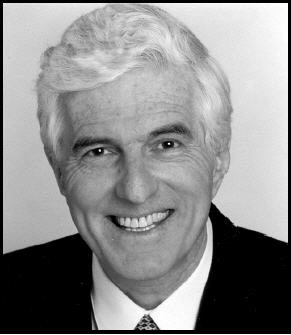
Harry Newton 50 Central Park West
New York, NY 10023
Tel 212-206-7140 Fax 775-254-3491
Web site: www.HarryNewton.com
Email: Harry@HarryNewton.com
Personal web site: www.HarryNewton.com
Investing web site: www.InSearchOfThePerfectInvestment.com
Harry Newton keeps busy writing this dictionary, writing a daily column on investing (www.InSearchOfThePerfectInvestment.com), writing a book on investing (called "In Search of the Perfect Investment") and being an angel investor in technology startups . He does some public speaking. He really likes that. He does a little consulting. And he's now acting as an expert witness .
In an earlier life, Newton and his brilliant partner, Gerry Friesen, co-founded six successful magazines ” Call Center, Computer Telephony, Imaging, LAN (now Network Magazine), Teleconnect and Telecom Gear. They also co-founded the immensely successful shows Call Center Demo and Computer Telephony Conference and Exposition, which at its peak attracted 26,000 people to the Los Angeles Convention Center. They also published over 40 books on networking, imaging, telecom and computer telephony. Friesen and Newton sold their publishing company to Miller Freeman (now part of CMP) in September, 1997. Friesen retired to California. Newton tried to retire, but failed.
Newton is always willing to listen to a new idea for a new business, but says he does a mean due diligence, which means he says NO a lot. Here are his criteria:
-
It should be a "hard" technology. That means it should be hard and expensive for someone else to duplicate.
-
The management team had better be incredible. That means they should have broad skills, integrity and a serious desire to succeed and make money.
-
They had better be obsessed with sales and marketing. What the world doesn't need is another technology playpen ” a place for angels and venture capitalists to endlessly dump money into so the entrepreneurs can invent more "cool" products.
-
The valuation ought to be reasonable, i.e. to allow for considerable upside.
-
The company ought to believe in regular and open reporting to its shareholders. No one expects instant success. There will be stumbling blocks along the way. If those stumbling blocks are hidden away they become insurmountable. Open , they become surmountable.
RAY HORAK
Senior Contributing Editor
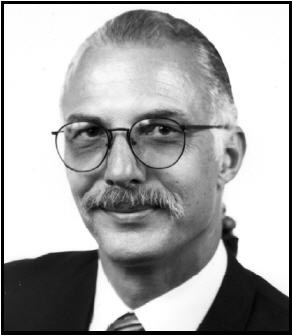
Ray Horak, President
The Context Corporation 1500A East College Way, PMB 443
Mt. Vernon, WA 98273
Telephone: 360-428-5747
Fax: 360-416-3378
Email: ray@contextcorporation.com www.contextcorporation.com
Ray Horak is a consultant, lecturer and author who develops and delivers seminars on telecommunications technologies, services and management systems. He speaks annually before telecom, networking and IT professionals in public and private seminars , workshops and conferences.
He has an ability to unravel the intricacies of voice, data, video systems and networks. Ray's seminars provide technical depth, without overwhelming or confusing the attendees. Ray provides the right amount of technical detail in commonsense, understandable, plain-English. I rediscovered Ray through a seminar he taught for TCA (TeleCommunications Association) years ago. I asked Ray to work with me on this dictionary because he believes in explaining complex technologies in a way normal business people can understand.
Ray's public seminars are offered through Network World Technical Seminars in the U.S., and through Terrapinn in Africa. He's looking for seminar sponsors in Europe and Asia. He also teaches seminars and workshops at a number of major industry conferences, including ComNet and Networld+Interop. Ray also teaches in-house courses for manufacturers, software developers, distributors, R&D organizations, venture capitalists, and end user organizations. I can't tell you who his clients are, but they are among the most prestigious.
Ray is a regular contributor to numerous leading industry trade publications , having written well over 100 technical articles and white papers. He also is a member of several Editorial Boards, including "The Journal of Telecommunications in Higher Education." Ray also has written his own best-selling book, "Communications Systems and Networks," published by Wiley Publishing and now in its Third Edition. It's a perfect companion to this dictionary. Get it from www.amazon.com, www. barnesandnoble .com, www.borders.com, or from any reputable online or brick-and-mortar bookseller. Ray also writes "In The Classroom," a popular semi-monthly column for www.Commweb, which is the master portal for CMP Media. Every column is a mini-tutorial on a subject like ATM, ADSL, Frame Relay, T-carrier, or VoIP. The column also is interactive, so you can ask questions...and you can expect answers from "Professor Ray," as they call him.
Ray was an Adjunct Faculty member of The University of San Francisco (USF), McLaren Graduate School of Business, and currently serves on the USF Telecom Program Advisory Board. He also serves on the Advisory Committee of the Skagit Valley College (Mount Vernon, WA) Electronics/Telecommunications Technology Program.
Ray's experience in communications dates way back to 1970, when he joined Southwestern Bell. His experience also includes AT&T, Bell Labs, and CONTEL, where he was region Vice President. He founded several companies for CONTEL before serving as General Manager for the company's Houston Executone operation. CONTEL was later acquired by GTE and then Verizon.
Ray has been on his own for the last 15 years as President of The Context Corporation, an independent consultancy and training organization in Mt. Vernon, Washington.
According to Ray, his greatest literary accomplishment was an article he wrote for Teleconnect in June 1990. A long- time friend from his CONTEL days read it and called him, after having lost touch with him for 15 years or so. They got together during one of his seminar tours, and discovered that they were still in love. They stayed in touch. He and the friend, Margaret, were married on Friday, December 13, 1996, in defiance of superstition. They figured they had nothing to fear. After all, they beat the odds by getting back together in this lifetime. They claim to be the happiest two people on the face of the Earth.
![Newton[ap]s Telecom Dictionary](/icons/blank_book.jpg "Newton[ap]s Telecom Dictionary")