Chapter VII Objective and Perceived Complexity and Their Impacts on Internet Communication
VII Objective andPerceived Complexity and Their Impacts on Internet Communication
Qimei Chen
University of Hawaii, USA
Abstract
In this chapter, a general framework has been proposed to address the relationship between objective complexity and perceived complexity and their impacts on Internet communication effectiveness. Previous literature on objective complexity, perceived complexity, optimal complexity and cognitive complexity was reviewed. Based on the literature review, feasible measures of objective complexity, perceived complexity and optimal complexity are proposed. Finally, seven propositions are generated to chart the relationship within different types of complexity and between different types of complexity and communication effectiveness. The author hopes that by capturing the objective complexity using a system-centered approach while capturing the perceived complexity using a user-centered approach, a more holistic understanding of the complexity phenomenon will be assured.
Introduction
The evolution of information technology creates a lot of changes in the real and virtual world. Increasing numbers of businesses are investing in the development and management of online resources directed to consumers. Similarly, consumer use of online services and information resources is increasing rapidly. Indeed, fleeted by both the hardware and software advances, the World Wide Web (WWW) is perhaps the most fast developing new medium in history.
The Web has experienced such exponential growth in such a short period of time that it has become an essential resource for everything from breaking news to research, from software to shopping. Accompanying the development of the Internet technology, information could be unprecedentedly accessed without the physical restrictions of time and space (Palmer & Griffith, 1998). The pervasive presence of URL addresses on advertisements, magazines, and products means that consumers have more sites to choose from every day. The increasing complexity of Web sites with their on-demand features and potential for personal response to individual visitors calls for more than standard measures of this new medium. The recent failure of .com also cautions online vendors to carefully leverage their online information flow.
E-commerce essentially shifts dust transactions to the virtual market. A typical goal for virtual enterprises is development and maintenance of a complex information product defined as a highly interconnected and interdependent package of information. However, development and maintenance of the information shouldn’t only based on enterprises’ own preference. Flauder (1999) reports that 39 percent of test shoppers failed in their buying attempts because sites were too difficult to navigate. Hence, consumers’ cognitive needs and preferences should be considered to increase the effectiveness of communication. Consequently, there is a need to bring new theory to facilitate online player’s communication with their online consumers (Chircu & Kauffman, 2000).
Previous study has shown that one essential element of this communication is the way information is displayed, which can significantly influence the way that consumers perceive and process information. For instance, Russo (1975) showed that conversion of total product price display to unit price displays reduced consumer food expenditures by allowing consumer to effectively compare per unit prices across brands. The implementation of the National Labeling and Education Act (NLEA) allows consumers to acquire more meaningful information from redesigned nutrition labels (Moorman, 1996). The new design made the information on these labels more complete, more comprehensible and less potentially deceptive. Weiss (1999) reports that the complexity of the information format influences consumers’ buying behavior. He found that providing a standard price format for the electricity industry allowed consumers to make more informed purchasing decision.
Similarly, the way that information is arranged on the Web site can be expected to impact consumers in effectively comparing competing offers in a manner that would reduce the cognitive effort required to evaluate the online information. Compared with a print ad’s limited physical space and a TV commercial’s rigid time limit, a Web site is virtually free from both limitations (Chen & Wells, 1999). While the Web site’s “unlimited shelf space” (Stewart, 1998) gives marketers more freedom to put whatever they want online, it also increases the risk of over-complicating their Web site and consequently leads to consumer alienation. By comparison, a Web site with optimal level of complexity for its purpose therefore is likely to increase the communication effect of the Web site and enhance consumer satisfaction and retention. This research, hence, aims to provide a conceptual framework to measure optimal complexity by taking both objective and subjective complexity into consideration.
Theoretical Background
There are several important bodies of literature that need to be examined here to provide the theoretical background for the research framework developed in this study. In the following section, the theoretical background of objective complexity; perceived complexity, cognitive complexity, and optimal complexity will be discussed.
As an important element, complexity is frequently mentioned in system design (Lawler & Elliot, 1996), public affairs (Al-Menayes & Sun, 1993), social psychology (Satish & Streufert, 1997), behavioral science (Goswami, 1998; Sweller, 1998), information technology (Banker, Davis & Slaughter, 1998; Hurt & Hibbard, 1989; Jacobson, 1992), human resources (Meyer, Shinar, & Leiser, 1997), and advertising (Anderson & Jolson, 1980; Chamblee, Gilmore, Thomas, & Soldow, 1993; George 1998; Morrison & Dainoff, 1972).
The definition of complexity varies depending on the domain and the purpose of research. Even within the same domain, complexity could be defined differently. For instance, to measure the complexity of advertising copy, Morrison and Dainoff (1972) tested the effect of visual complexity of an advertisement. The complexity is defined in terms of the geometric characteristics of the picture. Anderson and Jolson (1980), on the other hand, measure the technique complexity of advertising copy, while Chamblee et al. (1993) employ the measurement of lexical complexity of ad’s copy.
Despite the abundant literature discussing the issue of complexity, little attention has been paid to the differences between objective complexity and perceived complexity. To gap this lack of research, I arranged the following session based on the categorization of complexity.
Objective Complexity
To most of the Internet users, the Internet itself is a stimulus that provides surfing experiences to fulfill the users’ task, i.e., the issue of objective complexity could be approached using both the data displayed and the task performed. Hence, the two most relevant discussions on objective complexity to our current purpose are Berlyne’s stimulus complexity and Wood’s task complexity.
- Berlyne’s Stimulus Complexity: Berlyne (1958) carried out a series of studies on visual figures. He considered stimulus complexity using the different complexity forms — irregularity of arrangement, amount of material, heterogeneity of elements, irregularity of shape; incongruity, and incongruous juxtaposition.
Berlyne’s theory has broad influence in lots of studies. For instance, Meyer et al. (1997) study complexity of displayed data using measurement based on Berlyne’s (1971, 1974) stimulus complexity theory. The complexity of displayed data is defined in terms of three factors: (a) the number of points in the display (display with fewer data points are less complex); (b) the configuration of the display (i.e., 12 data points may appear on one line of 12, two lines of six, three lines of four, or four lines of three points); and (c) the regularity of the displayed data (whether they are dispersed erratically).
- Wood’s Task Complexity: Wood (1986), on the other hand, coins different sets of constructs to define complexity of task. He argues that task complexity, which “describes the relationships between task inputs, will be an important determinant of human performance through the demands it places on the knowledge, skills, and resources of individual task performers” (p. 66). Three types of task complexity are defined in his construct: component, coordinative, and dynamic.
Component complexity of a task is defined as a direct function of the number of distinct acts need to be executed in the task performance and the number of distinct information cues must be processed in the performance of those acts. Coordinative complexity refers to the nature of relationships between task inputs and task products. The forms and strength of the relationships between information cues, acts, and products, as well as the sequencing of inputs, are all aspects of coordinative complexity. In addition to the static complexity of the acts and information cues needed to perform a task, individuals must frequently adapt themselves to changes in the cause-effect chain or means-ends hierarchy for a task or during the performance of the task. The third dimension of task complexity, which is named dynamic complexity, is due to changes in the states of the world which has an effect on the relationships between task inputs and products. In dynamically complex tasks the parameter values for the relationships between task inputs and products are non-stationary. Changes in either the set of required acts and information cues or the relationships between inputs and products can create shifts in the knowledge or skills required for a task (Wood, 1986). Wood’s (1986) concept of complexity has been well adopted in the decision science field. For instance, Banker et al. (1998) adopt this multidimensional definition of complexity (Wood, 1986) to map dimension of software complexity into component, coordinative and dynamic dimensions.
Perceived Complexity
I have described two models of objective complexity in the previous section. Objective measurement alone, however, is usually handicapped by inaccuracy. Objective measures often downplay the distinction between objective and subjective constructs, though subjective constructs are supposed to be more important in online consumer research due to the following reasons. (1) Web surfers’ preference toward a Web site is theorized to be based on subjective as opposed to objective complexity (Beach & Mitchell, 1978), and (2) other research suggests that subjective measures are often in disagreement with their objective counterparts (Abelson & Levi, 1985; Adelbratt & Montgomery, 1980; Wright, 1975). Introducing measures of the Web surfers’ own perceived complexity, independent of the objective one that actually exists, has been suggested as a way of mitigating criticisms that the intended framework is tautological (Abelson & Levi, 1985).
Cognitive science researchers have long been recognizing the importance of the perceived complexity. For instance, Rao (1985) points out that as perceived complexity of tasks went up, so did the amount of information acquired and the level of processing. Researchers in other fields such as information science also allude to the importance of perceived complexity. For instance, Davis (1989) has found that perceived ease of use of a system is one of the fundamental determinants of system use.
The present online consumer research can be roughly categorized into two streams: the system-centered approach versus a user-centered approach (Unz & Hesse, 1999). System-centered research is largely concerned with objective characteristics or formal features of Web sites (Bucy, Lang, Potter, & Grabe, 1999; Ghose & Dou, 1998; Ha & James, 1998; Stout, Villegas, & Kim, 2001), whereas the user-centered approach tends to focus on user response to and perception of the Web site (Chen & Wells, 1999; Eighmey, 1997; Eighmey & McCord, 1998). These two streams both provide meaningful insights into the understanding of this new media, although a more comprehensive understanding would have been warranted if the researchers had taken both approaches into consideration. This research hence aims to address this important issue by taking both of the approaches into consideration, i.e., the objective complexity will be proposed under a system-centered approach while the perceived complexity will be proposed under a usercentered approach. Specifically, objective complexity serves as a convenient benchmark for e-marketers to design its Web component, while perceived complexity more reliably reflects the consumers’ perception. As such, it is meaningful to explore the relationship between the objective and perceived complexity as well as their individual and combined impacts on the communication effectiveness of a Web site. In addition, considering both the objective and the perceived complexity might help marketers to chart the optimal complexity—the congruency between Web user characteristics (e.g., Web experience, focused attention) and Web site characteristics (e.g., structural components of the Web site).
Optimal Complexity
Optimal level complexity has been explicitly and implicitly researched by several previous studies in a variety of areas. For instance, Wood (1986) suggests the possibility of a curvilinear relationship between complexity and performance, which has important implications for the design of tasks. He further suggests that if the goal in task design is to maximize outcomes such as performance and job satisfaction, task should be designed which include optimal levels of complexity for particular groups of individuals.
Russo and Leclerc (1991) found presenting too little information may not let individuals fulfill their information needs. On the other hand, presenting too much information can hinder an individual’s ability to efficiently comprehend and analyze information (Estelami, 1997; Russo, 1975). Previous studies have shown that focusing on improving information displays can have a greater impact than simply supplying additional information (Bettman, 1979; Magat & Viscusi, 1992; Payne et al., 1993; Russo, 1977; Selart, Garling, & Montgomery, 1998).
Some researchers (Sieber & Lanzetta, 1964; Streufert, Suedfeld, & Driver, 1965) found a curvilinear relationship between perceived environmental complexity and information search with the latter declining after a certain level of the former. However, other researchers like Lussier and Olshavsky (1974) found no evidence of a decline in searching or processing as the environment became more and more complex. LeMay and Aronow (1977), however, found a strictly linear relationship in a small scale study of laid out area in a suburban shopping center. Their subjects looked longer at figures of increasing complexity than at simpler figures. Other studies which reveal similar findings were conducted by Scammon (1977), Einhorn (1971), Streufert (1970) and Deane, Hammond and Summers (1972).
Bettman (1979) attempts to explain this apparent contradiction by suggesting that time is the crucial factor. A limited amount of time to make a choice forces decreases in search and level of processing but if the consumer can devote as much time as desired, then the relationship continues to be strictly positive.
Berlyne (1958) found in his study that the more complex stimulus receive longer inspection from subjects. Meanwhile, he also indicated that the “more complex” figures were not tremendously complex. Much more complex patterns than the ones he used in the study might conceivably have been shunned rather than preferentially inspected. North and Hargreaves’ (1996) study on subjects’ responses to music in aerobic exercise and yogic relaxation classes support the prediction of Berlyne’s theory that there should be an inverted U-relationship between ratings of liking and complexity: with increasing complexity, liking initially increases, but then decreases substantially.
Since communication effectiveness anchors on the users’ liking toward their experience, as well as on the search efforts they are willing to make, in this research, I take on the tradition that aestheticians have often asserted that an intermediate degree of complexity (“Unity in diversity”) makes for maximum appeal, and hence, maximum communication effectiveness. I contend that the exact degree of the optimal complexity should be charted dynamically based on the level of objective and perceived complexity and may vary depending on personality traits. The most important personality trait needing to be considered is consumers’ cognitive complexity.
Cognitive Complexity Consumer as Limited Information Processor
In the area of consumer behavior research, the consumer is paradigmatically viewed as a limited information processor. The most prevalent contemporary view in the consumer behavior literature is that a consumer is a “limited information processor,” i.e., “that consumers have limited capacities to process information” (Bettman, Johnson, & Payne, 1991, p. 57). This view is based upon three attentional theories, i.e., Filter theory (Broadbent, 1958; 1971), Capacity theory (Kahneman, 1973) and Resources theory (e.g., Navon & Gopher, 1979; Norman & Bobrow, 1975), originated from auditory and visual perception research. The consumer behavior literature adopted these viewpoints and treated consumers as limited information processors (De Heer, 1999).
Further, the conflict between human’s limited cognitive capacity (Miller, 1956) and the information intensity varies among people with different levels of cognitive complexity requirement. Cognitive complexity has been viewed as a structural variable impacting how one construes objects from the environment. Cognitively complex individuals have been described as more likely to seek information in order to interact in the environment (Levanthal, Singer, & Jones, 1965), more likely to seek diversity in the environment (Bieri et al., 1966), more capable of integrating information, and more likely to be “‘promiscuous information gathers’ who have high rates of exposure to persuasive communications, whether consistent with current belief, or not” (Reardon, 1981, p. 128).
For information processing in a short time, Miller (1956) points out that when the amount of input information is increased, the observer will begin to make more and more errors. Hence, there is a limit of accuracy of an individual’s absolute judgments. He uses “Channel Capacity” to represent the greatest amount of information that an individual can be given about the stimulus on the basis of absolute judgments. Consumers’ cognitive complexity level decides their ultimate level of channel capacity. Hence, the relationship between a Web site’s objective complexity and perceived complexity as well as their individual and combined impacts on the Web site’s communication effectiveness may very well be moderated by individuals’ cognitive complexity.
Research Questions
The problem of complexity has received relatively little attention until recently, but the studies that did address this issue (e.g., Casali & Gaylin, 1988; Schutz, 1961; Spence & Lewandowsky, 1991) show that complexity affects performance on various tasks. The following research questions are proposed based on the literature review detailed in the last section, addressing the impact of complexity on online communication effectiveness:
- To propose a reliable and affordable instrument for measuring objective complexity of Web sites.
- To propose a reliable and direct instrument for measuring perceived complexity of Web sites.
- To propose the relationship between objective complexity and perceived complexity of Web sites.
- To propose the impacts of objective complexity and perceived complexity on Web sites’ communication effectiveness.
- To dynamically chart the optimal complexity based on objective and perceived complexity.
Figure 7-1 tentatively illustrates the proposed framework of this research. The objective complexity measure is proposed based on Berlyne’s (1971, 1974) stimulus complexity theory and Wood’s (1986) task complexity theory. Objective measurement alone, however, is usually handicapped by inaccuracy. In the situation where “Everybody wants to be able to measure (Web site) complexity, but nobody quite knows how it should be done” (Maddox, 1990, p. 705), what is lacking, however, is a simple, generalizable measure of perceived complexity that can be used in assessing the complexity of a Web site from the consumers’ (as oppose to designers’) perspective. Introducing measure of the Web surfers’ own perceived complexity, independent of the objective components actually imbedded, has been suggested as a way of keeping the intended framework from being tautological (Abelson & Levi, 1985).
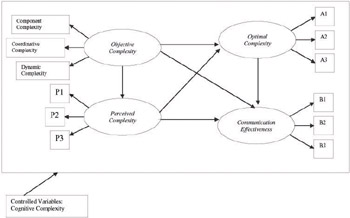
Figure 7-1: Proposed framework
Recommendation of Operationalization of Variables
Operationalization of carefully built-up constructs is an important part of research in consumer behavior. It has also traditionally been one of the more intractable problem faced by researchers. This step is particularly important to the future exploration of the issue of complexity. In the following sections, feasible measures for capturing the concept of objective and perceived Web site complexity are proposed based on the structure of the framework proposed in the earlier section. In so doing, this study represents a small step forward in this direction by conceptualizing feasible scales to measure objective and perceived Web site complexity in marketing situations.
Objective Complexity Measure: Component, Coordinative and Dynamic Complexity Dimensions
In this framework, objective complexity is defined as a Web site with multiple dimensions (Boulding, 1970) in the form of component, coordinative, and dynamic complexity (Wood, 1986). Component complexity refers to the number of distinct information cues, i.e., Web design elements, that must be processed in the performance of a task, i.e., Web surfing, while coordinative complexity describes the form, strength, and interdependencies of the relationships between the information cues. Dynamic complexity arises from changes in the relationships between information cues over time, particularly during task performance. Because objective complexity obscures the perception and understanding of information cues, it is believed to significantly degrade task performance (Banker et al., 1998). This psychological view, I believe, is particularly appropriate for studying objective level of complexity of Web sites. A Web site, as an entity composed of lots of design elements, has multiple dimensions parallel to the component, coordinative and dynamic complexity dimensions proposed by Wood (1986). Figure 7-2 outlines the sample measures of component complexity of Web sites.
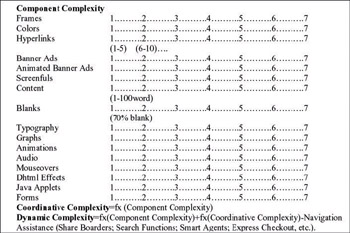
Figure 7-2: Proposed objective complexity measure
These measures adopted the method used in Berlyne’s previous complexity research— objective complexity measure is proposed based on the amount of material measure in Berlyne’s stimulus complexity (1971; 1974) and on several other marketing-related complexity studies, such as advertising (e.g., Anderson & Jolson, 1980; Morrison & Dainoff, 1972) study. Specifically, the design elements such as the number of frames, the number of colors, the number of banner ads, the number of animated ads, the number of screenfuls, etc., are used to proximate the amount of material measure. Based on Wood’s (1986) complexity dimension, the scales, therefore, are given to count the amount of the occurrence of the elements (component complexity), the relationship between these occurrences (coordinative complexity) and impact of the navigation states on the relationships between these occurrences (dynamic complexity).
Component complexity of a Web site is a direct function of the number of distinct implementations that are executed in the Web site and the number of distinct information cues that must be processed in these design implementations. A formula which captures the component complexity of Web site could be proposed as:
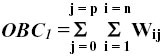
where n = number of distinct implementations in each design element j, Wij = number of information cues to be processed in the performance of the ith implementation of the jth design element, p = number of design elements in the Web page, and OBC1 = component complexity.
While component complexity captured the objective occurrence of the designed elements, it was limited by the assumption that the design elements are all independent. The basic rationale of component complexity is that the larger amount of the occurrences (smaller amount of the blank) will introduce more component complexity. While this assumption serves the purpose of objectivity, it loses sight of the possible interaction between those elements. Hence, another dimension of objective complexity, coordinate complexity, should also be considered. Coordinative complexity refers to the nature of the relationship between design elements, which proximates the irregularity of arrangement, heterogeneity of elements, incongruity measures proposed in Berlyne’s (1971, 1974) stimulus complexity theory. A formula that captures the coordinative complexity of Web site is:
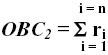
where n = number of distinct implementations in each design element, ri = number of precedence relations between the ith implementation and all other implementations in the Web site, and OBC2 = coordinative complexity.
In addition to the static complexity of the implementations of design elements and information cues needed to perform a Web surfing task, the navigation function of the Web sites requires individuals frequently to adapt to the changes as they are surfing through layers of Web sites. This third dimension of Web site objective complexity, which I call dynamic complexity adapted from Wood (1986), is due to changes in the states of the navigation, which has an effect on the relationships between design elements. This definition is consistent with the concept of incongruous juxtaposition in Berlyne’s (1971; 1974) stimulus complexity theory. A simple index of dynamic complexity would, therefore, be the sum across specific surfing frames for any or all of the indices for the two dimensions of (static) complexity. The usage of navigation aid such as share boarders, site map, smart agent assistance, is viewed as a way to decrease the cognitive efforts required from the users. Therefore, the employment of navigation aid serves to decrease the complexity of the Web site. In formulating the dynamic complexity, I subtract the navigation aid from the total dynamic complexity score (a pretest may be conducted to ask users to weigh the navigation aid based on how much easier each aid makes their surfing task). A formula for calculating these differences from the OBC1 and OBC2 indexes is given below:

where OBC1 = component complexity measured in standardized units, OBC2 = coordinative complexity measured in standardized units, f = the number of layers over which the Web site is measured, NAV = navigation aid, d = number of the navigation aids employed in the site, and OBC3 = dynamic complexity.
Perceived Complexity Measure
Hurt and Hibbard (1989) use the self-report measurement approach to measure the perceived characteristics of microcomputer innovations. The self-reporting procedure is easy and inexpensive to administer and normally has high reliability (Hurt, Joseph, & Cook, 1977). In this study, Rao’s (1985) measurement of the perceived complexity of the task are modified and adopted to measure the perceived complexity (Figure 7-3). Stress was laid on the fact that the response needed is the respondents’ own perception of the complexity of the Web site they visited.
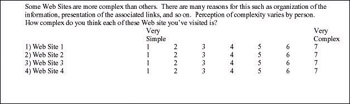
Figure 7-3: Proposed perceived complexity measure
Optimal Complexity Measure
One way to capture the optimal complexity of the Web site is to dynamically chart the optimal level based on objective and perceived complexity. In addition, I propose the use of a perceived optimal level of complexity measure to gauge this construct as a validation. Following items are adopted and modified from Franz and Robey’s (1986) study (Figure 7-4).
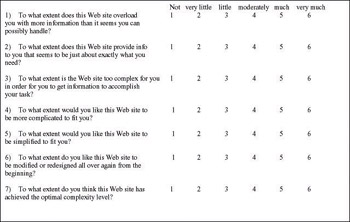
Figure 7-4: Proposed optimal complexity measure
Relationships Between Variables
As alluded to in previous sections, the reason that I introduced measure of the Web surfers’ own perceived complexity, independent of the objective components, is in response to the need for using a combination of both the system-centered approach and the user-centered approach. As the perceived complexity measures consumers’ subjective evaluation of the Web site, the relationship between objective and subjective measures of complexity is presumed to be strongly, however, not perfectly correlated while both objective complexity and subjective complexity will have an invert-U relationship with optimal complexity, i.e., moderate level of perceived complexity depicts maximum optimal complexity and that moderate level of objective complexity depicts maximum optimal complexity. Hence, I propose the following propositions.
P1: Perceived complexity does not equal, but highly correlates to objective complexity.
P2: An invert-U relationship exists between objective complexity and optimal complexity.
P3: An invert-U relationship exists between perceived complexity and optimal complexity.
These proposed relationships have been charted in Figure 7-5.
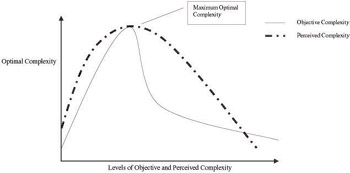
Figure 7-5: Proposed relationships between objective, perceived, and optimal complexity
Further, communication effectiveness is conceptualized as consumers’ information search and subsequent liking of their Web surfing experiences. This identification is deemed appropriate as search has been identified in previous studies as consequences of consumers’ online loyalty (Srinivasan, Anderson, & Ponnavolu, 2002; Urbany, Kalapurakal, & Dickson, 1996). Several studies have shown that complexity of task environment positively impacts on the communication effectiveness. Rayne (1976) conducted two experiments with tasks of different levels of complexity and used two processes tracing techniques, explicit information search and verbal protocols. Staelin and Payne (1976) reported on three marketing studies and investigated the relationships between different information-seeking patterns and task characteristics. Rubin (1977) also investigated information seeking in different contexts and found greater information search in a complex context. Schwartz (1977) found that task environment complexity as well as cognitive complexity were positively correlated with the amount of information acquired. Radzicki (1975) found the same relation between amounts of information acquired and perceived risk, as well as task complexity.
Some researchers report that, with increases in task complexity or difficulty, information search increases up to a maximum level and then decreases as the consumer proves unable to handle the information load (Sieber & Lanzetta, 1964; Streufert, Suedfield, & Driver, 1965). Berlyne (1971, 1974, 1975) also discovers that there is an inverted-U relationship between ratings of liking and complexity. Although previous research points to the inverted-U relationship between complexity and communication effectiveness, none of the investigation addresses the different types of complexity and their relationship with communication effectiveness. In this study, based on the previous proposition, both objective complexity and perceived complexity are expected to have inverted-U relationships with communication effectiveness, while optimal complexity is expected to have an almost linear relationship with the communication effectiveness. Hence:
P4: An inverted-U relationship exists between objective complexity and communication effectiveness.
P5: An inverted-U relationship exists between perceived complexity and communication effectiveness.
P6: A linear relationship exists between optimal complexity and communication effectiveness.
These proposed relationships have been charted in Figure 7-6.
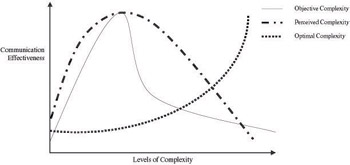
Figure 7-6: Proposed relationships between objective, perceived, optimal complexity and communication effectiveness
Finally, the greater the cognitive complexity of an individual, the more abstract the conceptual schemes used on processing information, and the greater the amount of information search exhibited (Rao, 1985). Fertig (1969) and Miller (1969) investigated the relationship between cognitive complexity and amount of information acquired and found a strong positive correlation. So did Larreche (1975) in an applied marketing situation, Karlins and Lamm (1967) in a social work scenario, and Schneider and Giambra (1971) in two laboratory experiments. Schroder, Driver and Streufert (1967) investigated the relationship in a large number of experimental settings and found that, in every case, cognitively complex individuals were significantly more active in searching for information than less complex ones. Hence:
P7: Web users’ cognitive complexity moderates the relationship between perceived complexity/objective complexity and optimal complexity; it also moderates the relationship between perceived complexity/objective complexity and communication effectiveness.
For example, consumers with higher cognitive complexity is expected to demand a higher objective and perceived complexity levels to reach the maximum optimal complexity level in comparison to consumers with lower cognitive complexity. Figure 7-7 depicts the proposed moderating effects of cognitive complexity on the relationship between objective complexity and optimal complexity.
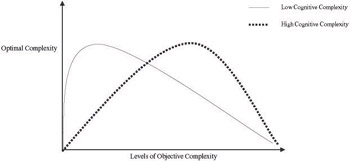
Figure 7-7: Proposed moderating effects of cognitive complexity on the relationship between objective complexity and optimal complexity
Future Trends and Conclusions
In this book chapter, a general framework has been proposed to address the relationship between objective complexity and perceived complexity and their impacts on Internet communication effectiveness. Previous literature on objective complexity, perceived complexity, optimal complexity and cognitive complexity was reviewed. Based on the literature review, feasible measures of objective complexity, perceived complexity and optimal complexity are proposed. Finally, seven propositions are generated to chart the relationship within different types of complexity and between different types of complexity and communication effectiveness.
Findings from this investigation have significant implications for marketing theory. First, the investigation suggested feasible instruments that can be tested in future theory-oriented studies. Second, this investigation challenges the conventional view of complexity. It shows that complexity is a complicated concept and is necessary to be viewed from the aspects of objective, perceived and optimal complexity. Third, this research enriches the theory by demonstrating that even within the aspect of objective complexity, finer dimensions such as component complexity, coordinative complexity and dynamic complexity needed to be considered. Finally, this research enriches marketing theory by incorporating insights from information systems research and psychology research. In this investigation, this cross-disciplinary approach proves to be pivotal in instrument development and future model testing.
Findings from this investigation have significant implications for marketing practice. First, this investigation opens a new realm of viewing and managing online communication effectiveness. As proposed in the study, perceived complexity from consumers are highly but not perfectly correlated with objective complexity. Hence, e-businesses need to measure both types of complexity simultaneously in order to identify the optimal complexity properly. Second, the proposed measuring instrument encourages exploring online communication effectiveness in new depth. For instance, the specific dimensions of objective complexity convey detailed information that helps explain specific facets. Third, the present research suggests one important moderating variable, cognitive complexity. Consumers with higher cognitive complexity are likely to demand a higher objective and perceived complexity levels to reach the maximum optimal complexity level in comparison to consumers with lower cognitive complexity. This finding prompts retailers to be sensitive to differences in consumer characteristics.
This chapter, however, is constrained by the limitation of being highly exploratory in nature. All the instruments and measures proposed in this study are based strictly on conceptualization instead of empirical test. The current study, nevertheless, points out the importance of bridging both user-centered approach and system-centered approach in the investigation of the new media. Future researchers may want to employ survey or experimental designs to further explore the complexity issue based on the measures and frameworks proposed in this study. Furthermore, some of the present conceptual insights may be extended beyond online communication to all the other complexity areas such as system design, public affairs, social psychology, behavioral science, information technology, human resources, and advertising where objective complexity and perceived complexity are likely to be different and hence demand separate measures.
References
Abelson, R. P., & Levi, A. (1985). Decision making and decision theory. In G. Lindsay & E. Aronson (Eds.), The handbook of social psychology (3rd ed., Vol. 2, pp. 231-309). New York: Random House.
Adam, D. A., Nelson, R. R., & Todd, P. A. (1992). Perceived usefulness, ease of use, and usage of information technology: A replication. MIS Quarterly, 16(2), 227-247.
Adelbratt T., & Montgomery, H. (1980). Attractiveness of decision rules. Acta Psychologica, 45, 177-185.
Al-Menayes, J. J., & Sun, S. W. (1993). Processing complex information: What are the cognitive units and how are they related? Gazette, 52(1), 57-82.
Anderson, R. E., & Jolson, M. A. (1980). Technical Wording in Advertising: Implications for Market Segmentation. Journal of Marketing, 44(1), 57-66.
Banker, R. D., Davis, G. B., & Slaughter, S. A. (1998). Software development practices, software complexity, and software maintenance performance: A field study. Management Science, 44(4), 433-450.
Barfield, W., & Robless, R. (1989). The effects of two- and three-dimensional graphics on the problem-solving performance of experienced and novice decision-makers. Behavior and Information Technology, 8(5), 369-385.
Baroudi, J. J., & Orlikowski, W. J. (1988). A short-form measure of user information satisfaction. Journal of Management Information Systems, 4(4), 44-59.
Beach, L. R., & Mitchell, T. R. (1978). A contingency model for the selection of decision strategies. Academy of Management Review, 3(3), 439-449.
Berlyne, D. E. (1958). The influence of complexity and novelty in visual figures on orienting responses. Journal of Experimental Psychology, 55(3), 289-296.
Berlyne, D. E. (1971). Aesthetics and psychobiology. New York: Appleton-Century-Crofts.
Berlyne, D. E. (1974). Studies in the new experimental aesthetics: Steps towards an objective psychology of aesthetic appreciation. New York: Halstead Press.
Berlyne, D. E. (1975). Dimensions of perceptions of exotic and pre-renaissance paintings.
Canadian Journal of Psychology, 29, 151-172.
Bettman, J. R. (1979). An information processing theory of consumer choice. Boston, MA: Addison-Wesley Publishing Company, Inc.
Bettman, J. R., Johnson, E. J. & Payne, J. W. (1991). Consumer decision making. In T.S. Robertson & H. H. Kassarjian (Eds.), Handbook of consumer behavior. Englewood Cliffs, NJ: Prentice-Hall.
Bieri, J., Atkins, A. B., Leaman, S. R., Miller, H., & Tripod, T. (1966). Clinical and social judgement: The dissemination of behavioral information. New York: Wiley.
Boulding, K. E. (1970). Economics as a science. New York: McGraw-Hill.
Broadbent, D. E. (1958). Perception and communication. London: Pergamon Press.
Broadbent, D. E. (1971). Decision and stress. London: Academic Press.
Bucy, E., Lang, A., Potter, R., & Grabe, M. (1999). Structural features of cyberspace: A content analysis of the World Wide Web. Journal of the American Society for Information Science, 50(13), 1246-1256.
Casali, J. G., & Gaylin, K. B. (1988). Selected graph design variables in four interpretation tasks: A microcomputer-based pilot study. Behavioral and Information Technology, 7, 31-49.
Chamblee, R., Gilmore, R., Thomas, G., & Soldow, G. (1993). When copy complexity can help ad readership. Journal of Advertising Research, 33(4), 23-28.
Chen, Q., & Wells, W. D. (1999). Attitude toward the site. Journal of Advertising Research, 39(5), 27-38.
Chin, W. W., & Todd, P. A. (1995). On the use, usefulness, and ease of use of structural equation modeling in MIS research: A note of caution. MIS Quarterly, 19(2), 237-247.
Chircu, A. M. & Kauffman, R. J. (2000). Reintermediation strategies in business-to-business electronic commerce. International Journal of Electronic Commerce, 4(4), 7-42.
Coupey, E. (1994). Restructuring: Constructive processing of information displays in consumer choice. Journal of Consumer Research, 21, 83-99.
Coupey, E., & DeMoranville, C. W. (1996). Information processability and restructuring: Consumer strategies for managing difficult decisions. Advances in Consumer Research, 23, 225-230.
Davis, F. D. (1989). Perceived usefulness, perceived ease of use, and user acceptance of information technology. MIS Quarterly, 13(3), 319-339.
De Heer, J. (1999). Why are consumers viewed as limited information processors? Working Paper.
Deane, D.H., Hammond, K.R., & Summers, D.A. (1972). Acquisition and application of knowledge in complex inference tasks. Journal of Experimental Psychology, 92, 20-26.
DeSanctis, G., & Poole, M. S. (1994). Capturing the complexity in advanced technology use: Adaptive structuration theory. Organization Science, 5(2), 121-147.
Dudycha, L. W., & Naylor, J. C. (1996). Characteristics of the human inference process in complex choice behavior situations. Organizational Behavior and Human Performance, 1, 110-128.
Durand, R., & Lambert, Z. (1979). Cognitive differentiation and alienation for consumers. Perceptual and Motor Skills, 49, 99-108.
Eighmey, J. (1997). Profiling user responses to commercial Web sites. Journal of Advertising Research, 37(3), 59-66.
Eighmey, J., & McCord, L. (1998). Adding value in the Information Age: Uses and gratification of sites on the World Wide Web. Journal of Business Research, 41, 187-194.
Einhorn, H. J. (1971). Use of nonlinear, noncompensatory models as a function of task and amount of information. Organizational Behavior and Human Performance, 6, 1-27.
Estelami, H. (1997). Consumer perceptions of multi-dimensional prices. Advances in Consumer Research, 24, 392-399.
Fielding, R. T., Whitehead, J. E., Anderson, K. M., Bolcer, G. A., Oreizy, P., & Taylor, R. N. (1998). Web-based development of complex information products. Communication of the ACM, 41(8), 84-92.
Franz, C.R., & Robey, D. (1986). Organizational context, user involvement, and the usefulness of information systems. Decision Sciences, 17(4), 329-356.
George, Z. M. (1998). The World Wide Web as an advertising medium: A study of communication effectiveness. Ph.D. Dissertation, University of Georgia.
Ghose, S., & Dou, W. (1998). Interactive functions and their impacts on the appeal of Internet presence sites. Journal of Advertising Research, 38(2), 29-43.
Goswami, U. (1998). Is relational complexity a useful metric for cognitive development? Behavioral and Brain Science, 21(6), 838-840.
Ha, L., & James, E. L. (1998). Interactivity reexamined: A baseline analysis of early business Web sites. Journal of Broadcasting and Electronic Media, 42(4), 457-469.
Huizing, A., Koster, E., & Bouman, W. (1997). Balance in business reengineering: An empirical study of fit and performance. Journal of Management Information System, 14(1), 93-118.
Hurt, H. T., & Hibbard, R. (1989). The systematic measurement of the perceived characteristics of information technologies I: Microcomputers as innovations. Communication Quarterly, 37(3), 214-223.
Hurt, H. T., Joseph, K., & Cook, C. D. (1977). Scales for the measurement of innovativeness. Human Communication Research, 4(1), 58-65.
Igbaria, M., Parasuraman, S., & Baroudi, J. J. (1996). A motivational model of microcomputer usage. Journal of Management Information Systems, 13(1), 127-143.
Jacobson, B. (1992). The ultimate user interface. Byte, 17(4), 175-182.
Kahneman, D. (1973). Attention and effort. Englewood Cliffs, NJ: Prentice-Hall.
Lambert, Z. (1980). Consumer alienation, general dissatisfaction, and consumerism issues: Conceptual and managerial perspectives. Journal of Retailing, 56(2), 3-24.
Lawler, J. J., & Elliot, R. (1996). Artificial intelligence in HRM: An experiment study of an expert system. Journal of Management, 22(1), 85-27.
LeMay, M., & Aronow, E. (1977). Some determinants of lingering behavior in a suburban shopping center. Perceptual and Motor Skills, 45, 1201.
Leventhal, H. R., Singer, P., & Jones, S. (1965). Effects of fear and specificity of recommendation upon attitudes and behaviour. Journal of Personality and Social Psychology, 2, 20-29.
Lussier, D., & Olshavsky, R. W. (1974). An information processing approach to individual brand choice behavior. Annual Conference of the Operations Research Society of America/The Institute of Management Science, San Juan, Puerto Rico.
Maddox, J. (1990). Complicated measures of complexity. Nature, 344(6268), 705.
Magat, W. A., & Viscusi, W. K. (1992). Informational approaches to regulation. Cambridge, Mass.: Massachusetts Institute of Technology.
McCabe, T. J. (1976). A complexity measure. IEEE Transactions on Software Engineering, SE2(4), 308-320.
Meyer, J., Shinar, D., & Leiser, D. (1997). Multiple factors that determine performance with tables and graphs. Human Factors, 39(2), 268-287.
Miller, G. A. (1956). The magic number seven plus or minus two: Some limits of our capacity for information-processing. Psychological Review, 63(2), 81-87.
Miller, G. A. (1969). Psychology as a means of promoting human welfare. American Psychologist, 24, 1063-1075.
Moorman, C. (1996). A quasi experiment to assess the consumer and informational determinants of nutrition information processing activities: The case of the Nutrition Labeling and Education Act. Journal of Public Policy and Marketing, 15(1), 28-44.
Morrison, B. J., & Dainoff, M. J. (1972). Advertisement complexity and looking time. Journal of Advertising Research, 9(4), 396-400.
Munson, J. C., & Khoshgoftaar, T. M. (1989). The dimensionality of program complexity. Proceedings of International Conference on Software Engineering, Washington, DC: IEEE Computer Society Press, 245-253.
Navon, D., & Gopher, D. (1979). On the economy of the human processing system. Psychological Review, 86, 214-255.
Norman, D. A., & Bobrow, D. G. (1975). On data-limited and resource-limited processes. Cognitive Psychology, 7, 44-64.
North, A. C., & Hargreaves, D. J. (1996). The effects of music on responses to a dining area. Journal of Environmental Psychology, 16, 55-64.
Ohanian, R. (1990). Construction and validation of a scale to measure celebrity endorsers’ perceived experience, trustworthiness, and attractiveness. Journal of Advertising, 19(3), 39-52.
Olsen, M. (1969). Two categories of political alienation. Social Forces, 47, 288-299.
Palmer, J. W., & Griffith, D. A. (1998). An emerging model of Web site design for marketing. Communications of the ACM, 41(3), 44-51.
Payne J. W., Bettman, J. R., & Johnson, E. J. (1993). The adaptive decision maker. Cambridge, MA: Cambridge University Press.
Planchon, J. M., & James, W. L. (1991). Cognitive complexity and alienation: A re-examination. Journal of Business Research, 23, 189-198.
Ramanujan, S., & Cooper, R. B. (1994). A human information processing approach to software maintenance. OMEGA, 22, 185-203.
Rao, S. (1985). An empirical comparison of sales forecasting models. Journal of Product Innovation Management, 4, 232-242.
Rayne, A. (1976). Précis writing: An approach to basic composition. College Composition and Communication, 27, 403-406.
Reardon, K. K. (1981). Persuasion in context. Beverly Hills: Sage Publications.
Russo, J. E. (1975, June). An information processing analysis of point-of-purchase decisions. Center for Human Information Processing, University of California, CHIP 51.
Russo, J. E. (1977, May). The value of unit price information. Journal of Marketing Research, 14, 193-201.
Russo, J. E. (1987). Toward intelligent product information systems for consumers. Journal of Consumer Policy, 10, 109-138.
Russo, J. E., & Leclerc, F. (1991). Characteristics of successful product information Programs. Journal of Social Issues, 47(1), 73-91.
Satish, U., & Streufert, S. (1997). The measurement of behavior complexity. Journal of Applied Social Psychology, 27(23), 2117-2122.
Scammon, D. L. (1977, December). “Information load” and consumers. Journal of Consumer Research, 4, 148-155.
Schroder, H. M., Driver, M. J., & Streufert, S. (1967). Human information processing. Individuals and groups functioning in complex social situations. New York: Holt, Rinehart and Winston, Inc.
Schutz, H. G. (1961). An evaluation of methods for presentation of graphic multiple trends—Experiment III. Human Factors, 3, 108-119.
Schwartz, E. L. (1977). Spatial mapping in the primate sensory projection: Analytic structure and relevance to perception. Cybernetics, 25, 181-194.
Selart, M., Garling, T., & Montgomery, H. (1998). Compatibility and the use of information processing strategies. Journal of Behavioral Decision Making, 11, 59-72.
Seybold, P. B., & Marshak, R. T. (1998). An executive guide and technology roadmap for your Customers.com® initiatives. Making it easy for customers to do business with you—Customers.com® handbook. Patricia Seybold Group, Inc. Retrieved from http://www.crmfoundation.com/technology_roadmap1.pdf
Sieber, J. E., & Lanzetta, J. T. (1964). Conflict and conceptual structure as determinants of decision making behavior. Journal of Personality, 2, 622-641.
Spence, I., & Lewandowsky, S. (1991). Displaying proportions and percentages. Applied Cognitive Psychology, 5, 61-77.
Srinivasan, S. S., Anderson, R., & Ponnavolu, K. (2002). Customer loyalty in e-commerce: An exploration of its antecedents and consequences. Journal of Retailing, 78, 41-50.
Staelin, R., & Payne, J. (1976). Studies of the information seeking behavior of consumers. Cognition and social behavior. Elbaum and Associates.
Stewart, M. (1998, December 7). My big bet on the Net. Newsweek, 53.
Stout, P. A., Villegas, J., & Kim, H. (2001). Enhancing learning through use of interactive tools on health-related Websites. Health Education Research, 16(6), 721-733.
Streufert, S. (1970). Complexity and complex decision-making: Convergences between differentiation and integration approaches to the prediction of task performance. Journal of Experimental Social Psychology, 6, 494-509.
Streufert, S., Suedfeld, S., & Driver, M. (1965). Conceptual structure, information search and information utilization. Journal of Personality and Social Psychology, 2, 736-740.
Sweller, J. (1998). Can we measure working memory without contamination from knowledge held in long-term memory? Behavioral and Brain Science, 21(6), 845-847.
Thompson, R. L., Higgins, C. A., & Howell, J. M. (1991). Personal computing: Toward a conceptual model of utilization. MIS Quarterly, 15(1), 125-143.
Unz, D.C., & Hesse, F.W. (1999). The use of hypertext for learning. Journal of Educational Computing Research, 20, 279-295.
Urbany, J. E., Kalapurakal, R., & Dickson, P. (1996, April). Price search in the retail grocery market. Journal of Marketing, 60, 91-105.
Weiss, J. P. (1999). Consumer reactions to different pricing formats: A study of the residential electricity supply industry. Working paper.
Wood, R. E. (1986). Task complexity: Definition of the construct. Organizational Behavior and Human Decision Processes, 37, 60-82.
Wood, R. E., Mento, A. J., & Locke, E. A. (1987). Task complexity as a moderator of goal effects: A meta-analysis. Journal of Applied Psychology, 72(3), 416-425.
Wright, P. (1975). Consumer choice strategies: Simplifying vs. optimizing. Journal of Marketing Research, 14(1), 429-433.
Zuse, H. (1990). Software complexity: Measures and methods. Amsterdam: de Gruyter.
Section I - Consumer Behavior in Web-Based Commerce
- Chapter I e-Search: A Conceptual Framework of Online Consumer Behavior
- Chapter II Information Search on the Internet: A Causal Model
- Chapter III Two Models of Online Patronage: Why Do Consumers Shop on the Internet?
- Chapter IV How Consumers Think About Interactive Aspects of Web Advertising
- Chapter V Consumer Complaint Behavior in the Online Environment
Section II - Web Site Usability and Interface Design
- Chapter VI Web Site Quality and Usability in E-Commerce
- Chapter VII Objective and Perceived Complexity and Their Impacts on Internet Communication
- Chapter VIII Personalization Systems and Their Deployment as Web Site Interface Design Decisions
- Chapter IX Extrinsic Plus Intrinsic Human Factors Influencing the Web Usage
Section III - Systems Design for Electronic Commerce
- Chapter X Converting Browsers to Buyers: Key Considerations in Designing Business-to-Consumer Web Sites
- Chapter XI User Satisfaction with Web Portals: An Empirical Study
- Chapter XII Web Design and E-Commerce
- Chapter XIII Shopping Agent Web Sites: A Comparative Shopping Environment
- Chapter XIV Product Catalog and Shopping Cart Effective Design
Section IV - Customer Trust and Loyalty Online
- Chapter XV Customer Trust in Online Commerce
- Chapter XVI Turning Web Surfers into Loyal Customers: Cognitive Lock-In Through Interface Design and Web Site Usability
- Chapter XVII Internet Markets and E-Loyalty
Section V - Social and Legal Influences on Web Marketing and Online Consumers

EAN: 2147483647
Pages: 180
