Miscellaneous Types
The miscellaneous types group contains three primitive types: base64Binary, boolean, and hexBinary. Figure A-5 shows the relationship among these types in the XSD types hierarchy.
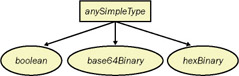
Figure A-5: The remaining three XSD built-in types are all primitive types.
base64Binary
The base64Binary type represents the set of all Base64-encoded data of up to infinite length where the entire binary stream must be encoded with Base64 Content-Transfer- Encoding as defined in Section 6.8 of RFC 2045. It lexically covers the set of all finite- length sequences of binary octets.
| Base Type | Derived Type | SQL Server Type | .NET Type |
|---|---|---|---|
| anySimpleType | N/A | BINARY, VARBINARY, or IMAGE | System.Byte[] |
| Applicable Facets | enumeration, length, maxLength, minLength, pattern, whiteSpace | ||
| Example | <b64>0Ae5FTIw</b64> | ||
boolean
The boolean type represents the set of values 1, 0, true, and false.
| Base Type | Derived Type | SQL Server Type | .NET Type |
|---|---|---|---|
| anySimpleType | N/A | BIT | System.Boolean |
| Applicable Facets | pattern, whiteSpace | ||
| Example | <bool>true</bool> | ||
hexBinary
The hexBinary type represents the set of all hex-encoded data of up to infinite length. It lexically covers the set of all finite-length sequences of binary octets. Note that uppercase is preferred when using the hex digits A to F.
| Base Type | Derived Type | SQL Server Type | .NET Type |
|---|---|---|---|
| anySimpleType | N/A | BINARY, VARBINARY, or IMAGE | System.Byte[] |
| Applicable Facets | enumeration, length, maxLength, minLength, pattern, whiteSpace | ||
| Example | <hex>0A2CF9</hex> | ||

EAN: 2147483647
Pages: 172