Restructuring
OVERVIEW
We trained hard. But is seemed that every time we were beginning to form into teams, we would be reorganised. I was to learn later in life that we tend to meet any new situation by reorganising. And what a wonderful method it can be for creating the illusion of progress while producing confusion, inefficiency, and demoralisation.
Gaius Petronius Arbiter, The Satyricon, 1st century AD
These words spoken two millennia ago might be very familiar to some of you. They certainly are to us, and we believe they are as insightful now as they were then. However, even though these words have been much quoted, organizations do not necessarily take any notice of them!
Although some managers are now getting this process right, most people’s experience of restructuring is negative. People often roll their eyes and say ‘Not again’, ‘It failed’, ‘Why didn’t they manage it better?’, and ‘Why can’t they leave us to just get on with the job?’
Restructuring as a theme for change might seem a little strange because restructuring as a key strategic objective is not particularly meaningful. Surely we should be looking at the reasons behind the change. There are a number of important points here:
- It seems that restructuring becomes the solution to a variety of organizational issues, and in that sense we need to look at the restructuring process itself as it impacts on so many people’s lives.
- Given that managers and staff are restructured so often, it is important to understand the dynamics of restructuring, what typically goes wrong and what a good process looks like.
- In our view restructuring should be the last option considered by management rather than the first option. It is often a method for not addressing the organizational issues that it seeks to resolve.
This chapter looks at:
- the reasons for restructuring;
- the restructuring processes:
- strategic review and reasons for change;
- critical success factors, design options and risk assessment;
- learnings from previous projects and best practice;
- project planning and project implementation;
- monitoring and review;
- restructuring from an individual change perspective – the special case of redundancy;
- enabling teams to address organizational change.
In the UK the Chartered Institute of Personnel and Development (CIPD) is running an ongoing research project ‘Organising for Success in the 21st century’ (www.cipd.org.uk) looking at current and future themes of restructuring in organizations today. It stresses the importance to companies of this process:
[W]hen DuPont announced its reorganisation in February 2002, its stock price rose 12%, putting a valuation on the new organisation design of $7 billion (4.5 billion). Less fortunate was the reception of Proctor and Gamble’s … launched in 1999 by the company’s new chief executive, Durk Jager, this reorganisation had a $1.9 billion (1.2 billion) budget over six years. Within 18 months, the perceived difficulties … had cost Jager his job.
On a macro level, the survey found that during the 1990s the top 50 UK companies moved from having on average one major reorganization every five years to having one every three years. On a micro level, individual managers had personally experienced seven reorganizations within their organizations. Not all of the seven were major organization-wide change, some were more local. Nonetheless managers encountered various challenges as a result: managing the changes within themselves, managing the changes within their staff, ensuring that both large-scale and minor changes were aligned to the wider organizational strategies, and last but by no means least, delivering on business as usual and ensuring staff were motivated to deliver on business as usual.
REASONS FOR RESTRUCTURING
We are concerned in this chapter with the dynamics of change and restructuring, less so with why the organization or part thereof is being restructured. Restructuring can occur for numerous reasons:
- downsizing or rightsizing (market conditions or competitiveness);
- rationalization or cost-cutting (market conditions or competitiveness);
- efficiency or effectiveness (drive towards internal improvement);
- decentralization or centralization (drive towards internal improvement);
- flattening of the hierarchy (drive towards internal improvement);
- change in strategy (strategy implementation);
- merger or acquisition (strategy implementation);
- new product or service (strategy implementation);
- cultural change (strategy implementation);
- internal market re-alignment (strategy implementation);
- change of senior manager (leadership decision);
- internal or external crisis (unforeseen/unplanned change).
We believe that restructuring should only take place as a result of a change in strategy. It should have a clear rationale and should be done in conjunction with other parallel changes such as process change and culture change. Of course this is not always the case. Sometimes other events kick off restructuring processes, such as a new boss arriving, a process or product failure, an argument, a dissatisfied client or an underperforming person or department. In these cases it is sometimes difficult for employees to curb their cynicism when changes in structure seem to be a knee-jerk reaction, which lacks direction, appears cosmetic and fails to lead to any real improvement.
We look at specific cases of restructuring such as mergers and acquisitions, cultural change, rebranding and IT-based change in the other application chapters.
THE RESTRUCTURING PROCESS
Whereas some of the other change scenarios we discuss in this book are more problematic (for instance, culture change and merger/acquisition), on the surface a restructuring of the organization should be a relatively straightforward affair. If we recollect the organizational change metaphors, the restructure could be quite neatly placed into the machine metaphor.
The key beliefs of the machine metaphor are:
- Each employee should have only one line manager.
- Labour should be divided into specific roles.
- Each individual should be managed by objectives.
- Teams represent no more than the summation of individual efforts.
- Management should control and there should be employee discipline.
This leads to the following assumptions about organizational change:
- The organization can be changed to an agreed end state by those in positions of authority.
- There will be resistance, and this needs to be managed.
Change can be executed well if it is well planned and well controlled.
Within this metaphor we could perhaps draw on Kurt Lewin’s three-step process of organizational change. You will remember that Lewin proposed that organizational change has three steps. The first step involves unfreezing the current state of affairs. This means defining the current state, surfacing the driving and resisting forces and picturing a desired end state. The second step is about moving to a new state through participation and involvement. The third step focuses on refreezing and stabilizing the new state of affairs by setting policy, rewarding success and establishing new standards. Clearly an organizational restructuring process could follow this model. There is a current state that needs unfreezing and a perceived end state that is required. The main focus therefore is the need to ensure that movement between the former to the latter state is as smooth and quick as necessary.
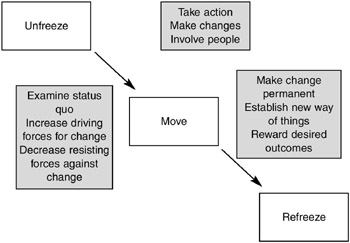
Figure 5.1: Lewin's three-step model
Source: Lewin (1951)
However, our experience when facilitating organizational change is that a restructuring process will not be successful if it is focused solely on generating organizational structure charts and project plans. It is disappointing to note that the CIPD research (CIPD, 2003) suggests that organizations typically devote much more time during restructuring to areas other than human resources. The finance and systems functions accounted for double the time and attention that HR issues received. Anyone managing or experiencing restructuring knows that there are many other factors to consider. The politics of the situation and the psychological needs of managers and staff play a key role. It is also important to ensure that the restructuring process is positioned as a framework to enable the organization to do something it has not done before, rather than simply as a tool for changing the structure around.
It is therefore useful to remind ourselves of Nadler and Tushman’s congruence model, which derives from the political and organism metaphors. One of the key aspects of the congruence model is that if you change something in one part of the organizational system, the whole system and other component parts are affected. If you do not factor this into your change equation you may well face unintended consequences. For example, restructuring in one part of the organization means that people in other areas may well have to develop a whole new set of relationships. Very often little is done to communicate the changes, let alone actively work to foster new working relationships.
The authors have witnessed numerous restructures in a variety of public and private sector organizations, and have concluded that perhaps the best way to approach the restructuring process is as a mixture of the machine and organism metaphors. Beckhard and Harris’ change formula is useful here:

- C = Change
- A = Level of dissatisfaction with the status quo
- B = Desirability of the proposed change or end state
- D = Practicality of the change (minimal risk and disruption)
- X = ‘Cost’ of changing.
According to this formula, important factors in any restructuring are threefold. First, the reasons, timing and rationale for the restructure must be made very clear. Second, the end goal or vision must be communicated in an appealing way. Third, the whole exercise must appear doable by being well planned and well implemented. For the majority of individuals the overwhelming experience is one of upheaval. The cost of changing is high. It is therefore imperative that the benefits are accentuated and then planned for in the most authentic and genuine way as possible.
In Figure 5.2 we outline our generic approach to restructuring, which can be tailored to individual circumstances. We highlight areas of potential problems and also suggest ways of making it a more effective process.
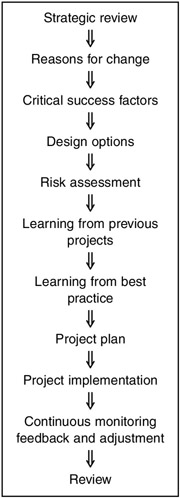
Figure 5.2: A generic approach to restructuring
Strategic review and reasons for change
Any attempt to restructure needs to have a clear communicable rationale. This will typically come from a review of strategy that highlights the need to address a specific issue relating to the internal or external business environment. In the CIPD research cited above, restructuring was often done to improve customer responsiveness, gain market share or improve organizational efficiency. Key drivers in the private sector were ‘typically performance declines, mergers and acquisitions and a change of chief executive. In the public sector, key drivers are the need for new collaborations and legislative and regulatory change, though chief executive changes are again important.’
Critical success factors
Planning a structure requires the generation of critical success factors, design options and a risk assessment. The purpose of a restructure is to align the organization to better achieve its strategy. Critical success factors are important to define, because if they are met, they will ensure success for the new structure and by implication the strategy. Although identification of these key factors is an important prerequisite to any restructuring, this task is not necessarily clear-cut. The factors themselves will depend on the organizational strategy, its culture, its market, its infrastructure and its internal processes.
We give an example from a local government authority that needed to reorientate itself to have a much greater customer and citizen focus. One of the explicit strategies was to restructure the organization in a way that would dissolve the traditional departmental boundaries and their associated destructive tensions and unhelpful silo mentality.
CRITICAL SUCCESS FACTORS FOR A LOCAL AUTHORITY
Public service users (and relevant stakeholders) not providers are the focus
Will this structure result in clear, measurable deliverables to the customers and citizens?
To what extent have we consulted with our customers?
New working relationships are accommodated such as community leadership, neighbourhood working and political management arrangements
Does the structure reflect and support key changes in the political arrangements and thinking?
A realistic interaction is demonstrated between policy planning in all its forms, business development and financial planning at every level
Does the structure enable clear links between the different types of plans and the relevant timescales?
Better prioritization of objectives and decision making on workloads and resourcing can take place
Does the structure enable clarity around the authority’s strategic objectives?
Are there linkages across the organization?
Is there clarity as to who is accountable for what?
Are there supporting processes that manage potentially conflicting priorities?
Individuals are clear about their responsibilities and accountabilities and can act in an empowered way
Does the structure enable better application of the performance management system?
Are individual and team development needs identified and resourced to meet business outcomes?
A performance and feedback culture is developed across the organization, internally and externally
Does the structure help strengthen the performance and feedback culture?
Design options
Once it has been decided what factors it is important for the restructure to meet, it is important to demonstrate that these are better achieved through this structure rather than any other one.
Design options are the different ways in which the particular organization can be structured. It is not within the scope of this book to discuss in depth the different types of organizational structure – readers are encouraged to read an overview in Organization Theory edited by D S Pugh (1990). However we are interested not only in the general impact of restructuring but also in any specifics relating to a move from one type of structure to another. Miles and Snow (1984) detailed the evolution of organizational structure and its relationship to business strategy:
- An entrepreneurial structure when there is a single product or service, or local/regional markets.
- A functional structure when there is a limited, standardized product or service line, or regional/national markets.
- A divisional structure when there is a diversified, changing product or service line, or national/international markets.
- A matrix structure when there are standard and innovative products or services, or stable and changing markets.
- A dynamic network when there is the need for product or service design or global changing markets.
The majority of organizations are structured according to an entrepreneurial, functional, divisional or matrix structure. All have their advantages and their limitations, as outlined in Table 5.1.
|
Structure |
Entrepreneurial |
Functional |
Divisional by product, geography or both |
Matrix |
|---|---|---|---|---|
|
Main features |
Organized around one central figure. Totally centralized; no division of responsibility |
Organized around tasks to be carried out. Centralized. |
Divisions likely to be profit centres and may be seen as strategic business units for planning and control purposes. Divisions/ business units headed by general managers who have responsibility for their own resources. Decentralized. |
Double definition of profit centres. Permanent and full dual control of operating units – though one will be generally more powerful than the other. Authority and accountability defined in terms of particular decisions. |
|
Situations where appropriate |
Simple companies in early stages of their development |
Small companies, few plants, limited product or service diversity. Relatively stable situations. |
Growing in size and complexity. Appropriate divisional/ business splits exist. Organizations growing through mergers and acquisition. Turbulent environments. When producing a number of different products or services. Geographic splits with cultural distinctions in company’s markets. |
Large multi- product, multinational companies with significant interrelationships and interdependencies. Small sophisticated service companies. |
|
Advantages |
Enables the founder, who has a logical or intuitive grasp of the business, to control its early growth and development |
Controlled by strategic leaders/ chief executive. Relatively low overheads. Efficient. Clearly delineated external relationships. Specialist managers develop expertise. Relatively simple lines of control. Can promote competitive advantage through the func |
Spreads profit responsibility. Enables evaluation of contributions of various activities. Motivates managers and facilitates development of both specialists and generalists. Enables adaptive change. CEO concentrates on corporate strategy. Growth through a Can be entrepreneurial. Divestment can be managed more easily. |
Decisions can be taken locally, decentralized within a large corporation, which might otherwise be bureaucratic. Optimum use of skills and resources – and high- quality informed decisions, reconciling conflicts within the organization. Enables control of growth and increasing complexity. Opportunities for management development. |
|
Limitations |
Founder may have insufficient knowledge in certain areas. Only appropriate up to a certain size. |
Succession problems – specialists not generalists are created. Unlikely to be entrepreneurial or adaptive. Profit responsibility exclusively with CEO. Becomes stretched by growth and product diversification. Functional managers may concentrate on short-te strategic developments. Problems of ensuring coordination between functions – rivalry may develop. Functional experts may seek to build mini- empires. |
Conflict between divisions for resources. Possible confusion over locus of responsibility (local or head office). Duplication of efforts and resources. Divisions may think short-term and concentrate on profits. Divisions may be of different sizes and some may grow very large. Evaluation of relative performances may be difficult. Coordination of interdependent divisions and establishing transfer pricing may be difficult. |
Difficult to implement. Dual responsibilities can cause confusion. Accounting and control difficulties. Potential conflict between the two wings, with one generally more powerful. High overhead costs. Decision making can be slow. |
|
Source: summarized from Thompson (2001) |
||||
Risk assessment
As you can detect from the limitations described for each of the organizational structures, there are risks attached to the restructuring process. Those identified here are obviously generic risks; however each organization will need to identify the specific risks associated with moving from one structure to another. The management therefore needs to understand fully the nature of these risks. As a concrete example we have included in the box excerpts from a risk assessment generated for a medium-sized company that had decided to move from a function-oriented organization to a divisionalized structure incorporating five product-based business units together with a centralized ‘shared services’ and financial control unit.
RISKS OF NEW STRUCTURE
Structure and interdependencies
Business unit structures will require some level of consistency (shape, size, roles and responsibilities, reporting lines, etc) amongst themselves to ensure that they can be adequately serviced from the centre.
Being very clear about the boundaries of the businesses we are in. That is, boundaries of the markets and boundaries between the business units.
There needs to be clarity of role and responsibility between the central services, shared services and business units.
Shared services/central service effectiveness
Shared services and, to a slightly lesser degree, central services need to be closely aligned culturally and process-wise with the business units that they interact with, to encourage efficient and effective management across the boundary.
How support services are devolved, shared and centralized requires careful planning to ensure cost-effective, efficient and productive functions.
Corporate identity
The corporate identity will be dissipated and may not be replaced.
In some areas staff’s ‘affinity’ will be significantly diminished – how can this be managed?
Synergies
Synergies may be harder to exploit (eg deploying e-commerce solutions across business units).
Cost
Costs are likely to increase if we move to devolved support functions – what are the specific proposals that will increase income?
Cost inefficiency is a risk – the structure will inevitably lead to some duplication of costs across the business units. The structure is not ideal from a cost point of view.
Root cause
We may not address some true causes of problems that we have by thinking that we are dealing with them by restructuring.
The task for the management team was to generate an honest list, assess the degree of risk (probability x impact) and agree actions to minimize the risks. In addition, and as an example of good practice, a risk assessment was also completed for the process of managing the change as well as the changes themselves, as listed in the box.
RISKS INHERENT IN MANAGING CHANGE
Management of change
The organization will spend another six months to a year with the ‘eye off the ball’.
There is a lack of change/implementation expertise and skills.
The executive management team tends to get ‘bored with the detail’ quickly and therefore may lose interest and impetus and let both the transition and the transformation peter out.
Communications
Staff may see this as ‘yet another restructure’ not tackling the real problems, and therefore become demotivated.
People
We need to ensure the best people possible for each job. We need to ensure that we keep the people we want to keep.
Management of synergies
Loss of knowledge – we need to capture and transfer knowledge of, for example, strategy formulation and implementation.
We need to ensure best practice in one part of the company is transferred across the company.
Roles, responsibilities and interdependencies
Risk of business units declaring ‘UDI’ and not fully engaging with central services and company-wide issues.
We need to ensure those in the centre are motivated and their performance measured. We need to establish levers other than the policeman role and the threat of regulators etc.
Learning from previous projects and best practice
Clearly you do not have to reinvent the wheel when it comes to restructuring. Given the propensity for restructuring that most organizations have, you and your colleagues will have a reservoir of knowledge as to what has worked before. You will also know quite a lot about what has not worked! Now is the time to check back to see what the learnings are from previous change projects. If your organization has not formally retained this knowledge, a requisite variety of managers and staff can quite easily generate such a list. We include an example list (see box). The headings are the central themes that emerged during the session. These were the most relevant issues for the organization under review. Yours might well be different.
In terms of best practice there are many resources: this book for example, a wide range of literature, professional bodies and consultancy firms. It is important to get the right balance between what has worked elsewhere and what will work in your organization. And there is no guaranteed formula for that.
LEARNINGS FROM PREVIOUS CHANGE PROJECTS
Change management/project management
Preparation
Utilize previous learning from projects.
Check for false assumptions.
Always, always do a potential problem analysis.
Look for design faults at an early stage and throughout.
Significant top-level commitment.
Communication
Induction for all in the change.
Ensure earliest possible involvement of stakeholders.
Take the board with you.
Ensure cohesion across organization.
Harness energy and enthusiasm across organization.
Objectives
Lack of focus produces failures.
Link the hard and soft interventions and measures.
Have clear objectives.
Differentiate between the what and the how.
Specific behaviour objectives help.
Implementation
It helps to have people who have been through similar projects before.
Network of people and resources.
Dedicated project management.
Multidisciplinary approach.
Build the change management team.
Monitoring
Build in a process of automatic review.
Always evaluate, financially and otherwise.
To ensure sustainability have follow-through.
Leadership and strategy
Vision, mission and values need to be overt, obvious, communicated and followed.
Ensure alignment to strategy.
People
Don’t let line managers duck the issues – build responsibilities and accountabilities into the process.
Requires involvement of people – as part of buy in, and they can actually help!
Requires communication with people.
Be honest with people.
All the new teams need to be motivated and built.
Get the right people in the right jobs.
Profitability
Always cost the initiative.
Be clear where the value is added.
Separate infrastructure investment from return on investment.
Check for false assumptions.
Project planning and project implementation
Leadership
The restructuring process can create considerable turbulence within an organization, its managers and its staff. In the box is a copy of a note to a chief executive shortly after a restructuring process had begun. It clearly identifies the state of confusion that people throughout the organization were experiencing.
MEMO TO CEO DESCRIBING THE EFFECT OF CHANGE ON STAFF
People were still very much in the throes of the changes – many clearly still affected on an emotional level by the restructuring process and all highlighting areas that need clarifying going forward.
People thought that there was a tremendous energy surrounding the changes – seeing lots of activity and lots of change being managed at a rapid pace. The downside to this was the sense that it was too fast and out of control, certainly outside of their control.
The majority of people felt positive at the ideas introduced at a high level by the strategy. Some saw it as new and exciting, others as providing one clear direction and having a certain theoretical clarity. However the overwhelming feeling was a sense that whilst the Vision was fine, there was a real lack of clarity around how it would be translated into a living workable strategy. They needed something not only motivating to aim for but also something quite specific.
Coupled with people’s sense of the pace of change, many reported that not only was the direction somewhat hazy, but they saw different managers going off in different directions.
There was a certain resignation to the fact that the organization was going round and round – a ‘here we go again’ attitude – a sense that they had been here before and wondering whether this time would be any different.
They recognized that the direction might be clearer from the top; perhaps they were not in the right place to be seeing the bigger picture. Some people complained of having too little information, whilst others complained of having too much information. Although one could say that staff going through change may never be satisfied – or that management will always get it wrong (damned if you do, damned if you don’t) – the key question is ‘How do we deliver the right message, at the right time, to the right people, through the right medium?’
Coupled with this theme of communication was the perceived need to provide answers to the many questions people have when they are experiencing (psychologically) the chaos of change. Often people were left with no one to ask, or asking questions of managers who either didn’t know or were themselves preoccupied with their own reactions to changes they were going through.
In summary, and from an emotional perspective, the effect of combining the various themes described above is quite a heady one. People have reported feelings of being lost and confused, anxious and worried, degrees of uncertainty and puzzlement, an inability to piece the jigsaw together and, to some, the tremendous strain of having to wait whilst the changes were revealed. Points to note here include the feeling of having no control over their destiny and also watching as others (often their managers) were suffering the traumatic effects of the changes which they themselves might have to suffer at some stage.
This is often at the very time that ‘business as usual’ efforts need to be redoubled. The tasks of those leading the restructure are to ensure that business as usual continues; that people are readied for operating within the new structure; and that the transition from the one structure to the new structure is smooth and timely.
Attention to both the task and people sides of the process is imperative. Depending on people’s predisposition, normally one will take precedence over the other. There is a need to ensure that plans are in place for all the necessary processes that are part of the change:
- Communication plans: what, to whom, when and how.
- Selection/recruitment plans: clear guidelines for both those undergoing selection, their managers and interested onlookers. These should include criteria for selection, information about the process, timescales and rationale behind the process.
- Contingency plans: necessary if key people are unavailable at critical times or if timescales look like slipping.
Future direction and strategy
For many people the strategy and future direction behind a restructure is hazy. This is very often a case of too much vision and not enough pragmatism, but sometimes a case of too much pragmatism and not enough vision! A balance is needed.
In any restructure it is imperative to describe a positive future as well as to explain fully the rationale behind it, how it links to the strategy, how it will work in practice, how it differs from what went before, how it is better than what went before and what the benefits will be from it.
Communication
Communication in any change is absolutely essential. However communications are often variable. There is sometimes too much communication, but more often too little too late. An added problem is communication by e-mail. This is such a useful mechanism when managers need large numbers of people to receive the same information at the same time, but it is so impersonal and so heartless when delivering messages of an emotional and potentially threatening nature.
A more tailored or personalized approach is better. The greater the access to people who know the answers to the important questions, the better. FAQs (frequently asked questions) are useful to compile and communicate, but do not expect this to be the end of the story. Just because you think you have told someone something it does not mean to say he or she has heard it or assimilated it or believed. People do strange things under stress, like not listen. And they need to see the whites of your eyes when you respond!
Key questions in people’s minds will be:
- What is the purpose of the restructure?
- How will it operate in practice?
- Who will be affected and how?
- What are the steps along the way, including milestones and timescales?
- How will new posts be filled and people selected?
- What happens to the others?
- Where do you go to get help and how do you get involved?
- What is the new structure and what are the new roles?
- What new behaviours be required?
- Will training and development be provided?
Communication needs to be well planned, and these plans need to be clear about how to get the right information to the right people at the right time through the right medium (for the recipient). This includes well-presented briefing notes for managers if they are to be the channel for further communication. It is also worth checking for understanding before these messengers are required to communicate the message.
Change in any form can trigger a number of emotional responses. If the messages can be personalized the recipient is more likely to receive them in a positive frame of mind. Personalized messages such as face-to-face and one-to-one communications are especially relevant when an individual may be adversely affected by the change.
Different communities of interest have different needs when it comes to communications. Some people will need to be involved, some consulted and some told. It is important that the right people get the appropriate level of communication. It is important for them and it is important for those around them. If your manager is seen to be ignored, what does it say about the value of your work section?
Thought needs to be given to the recipients of the communication. Those responsible for communicating need to ask:
- What are their needs for information?
- What is their preferred form of communication?
- When is the best time for them to be communicated with?
For example, people in a contact centre just may not have the time to read endlessly long e-mails informing them of changes in other parts of the business. However, they would probably like to be told face to face of events that will involve changes to their management structure, or the introduction of a new way of working.
To prevent the rumour mill growing it is important that communication is timely, and reaches each of the chosen communities at the agreed time. Start–stop–start again communications do not help either. A continuing flow of communication will engender more confidence in the change process.
Implementation process
The complexity of the restructuring task is often underestimated. Timescales are often not met. Staff directly affected by the change and potentially facing redundancy are subjected to undue stress because the whole process takes too long to complete.
Managing people’s expectations is key. If you announce a plan, it needs to be adhered to, or changes to plan clearly communicated.
Supporting mechanisms
In order to make the restructuring as smooth as possible and ensure that the new structure gets up and running quickly, a number of support mechanisms need to be in place.
Visible managerial support
A key response of people going through the process is that their management was often ineffectual at managing change during this period. This is not necessarily the manager’s fault. Many experience having to go through a selection process for themselves, many do not seem to get adequately briefed as to the nature of the changes, and some either lose their jobs or get appointed new into new positions and so do not or cannot provide the necessary support through change.
Management styles across an organization can also be variable. Often there is a reduced management visibility at these times rather than an increased visibility.
People can see a restructure as just that – a change in structure, rather than an internal realignment that would help them and the business focus on, for example, their customers and with a different way of doing things. It is the role of the manager to translate the purpose of the restructure into an understandable and viable way of doing things differently.
Continued communication of the purpose
There needs to be an ongoing planned and ‘personalized’ communication programme to ensure the right people get the right information at the right time in the right format for them. People need to be told and involved in how the organization will be operating differently in the future. In these two-way communications staff and managers’ perspectives need to be listened to, and where valid, need to be addressed.
Clear selection process
During any selection process certain things need to be in place: first, a selection process plan that is agreed, is sensible, has an inner integrity, is consistent, equitable and scheduled; and second, clear guidelines for those undergoing selection, their managers and interested onlookers. These should include criteria for selection, information about the process, timescales, and rationale behind the process.
Senior management attention
In most instances where senior management are involved their presence is generally appreciated, even if the restructure is perceived as a negative change. The more people see the commitment of senior management the better, be it attending meetings, visiting departments, branches or contact centres to explain rationale, and face the staff.
Constructive consultation
Different organizations will have different ways of involving staff in changes. We believe that if middle managers and staff have a say in the planning of change, some of the inconsistencies and incongruities emerging from the change are picked up and addressed at a much earlier stage. If there is more input and involvement at an earlier stage from those managers who have a responsibility to manage the changes, this too has an impact on the success of the change.
Monitoring and review
Monitoring and review is not something just to be done at the end of the process and written up for the next time. If you have adopted the machine approach to restructuring, perhaps you might think that once the plan is in place, all it needs is a robotic implementation. Of course organizations are not entirely mechanistic, and individuals and groups going through change can react in all sorts of ways. The restructuring plan needs to be monitored constantly to see how both the task and people aspects of the plan are progressing. Feedback loops need to be built into the plan so that senior managers and those responsible for implementation have their fingers on the pulse of the organization.
In our discussion of individual change (see Chapter 1) we remarked that a certain amount of resistance to proposed changes is to be expected. Just because people resist change does not mean to say that you are doing it wrong! It is a naturally healthy human reaction for individuals and groups to express both positive and negative emotions around change. Managers can help this process along by encouraging straight talk.
Also, just because people resist change it does not mean to say that they have got it wrong! They might well see gaps and overlaps, or things that just are not going to work. Listening to the people who will have to make the new structure work is not only a nice thing to do, it is a useful thing to do and constitutes effective use of management time.
The process of monitoring and review should begin at the planning stage and be an important part of the whole process, right through to the point where you evaluate the effectiveness of the new structure in the months and years after implementation.
RESTRUCTURING FROM AN INDIVIDUAL CHANGE PERSPECTIVE THE SPECIAL CASE OF REDUNDANCY
This section looks at redundancy, and how it affects those made redundant and those who survive. David Noer spent many years working with individuals in organizations and supporting them through change. He has captured much of this experience in his book Healing the Wounds: Overcoming the trauma of layoffs and revitalizing downsized organizations (copyright David Noer, 1993. Sections reprinted by permission of John Wiley & Sons, Inc). Although, as the title suggests, the book is primarily focused on redundancy, there is much of benefit to anyone who wants to tackle organizational change and change management.
Noer’s research is useful for illuminating the short, medium and long-term impact of change. He also suggests how a manager can intervene on a number of levels to help smoothen and perhaps quicken the change process.
Table 5.2 looks at the individual and organizational short to long-term impact that redundancy can produce. Many of these feelings are not necessarily disclosed: some are acted upon, others just experienced internally but having a clear effect on morale and motivation. Table 5.3 suggests a breakdown of what feelings are disclosed and undisclosed. You might notice that many of the feelings found amongst those going through this process are precisely the same ones that Kubler-Ross described in her work on the change curve (1969).
|
Individual impact |
Organizational impact |
|
|---|---|---|
|
Short to medium term |
Psychological contract broken Job insecurity Unfairness Distrust and sense of betrayal Depression, stress, fatigue Wanting it to be over Guilt Optimism |
Reduced risk taking Reduced motivation Lack of management credibility Increased short-termism Dissatisfaction with planning and communication Anger over the process Sense of permanent change Continued commitment |
|
Medium to long term |
Insecurity Sadness Anxiety Fear Numbness Resignation Depression, stress, fatigue |
Extra workload Decreased motivation Loyalty to job but not to company Increased self-reliance Sense of unfairness regarding top management pay and severance |
|
Source: summarized from Noer (1993). Reprinted by permission of John Wiley & Sons, Inc. |
||
|
Feelings |
Disclosed |
Undisclosed |
|---|---|---|
|
Held in |
Fear, insecurity and uncertainty. Easier to identify and found in every redundancy situation. |
Sadness, depression and guilt. Often not acknowledged and hidden behind group bravado. |
|
Acted out |
Unfairness, betrayal and distrust. Often acted out through blaming others and constant requests for information. |
Frustration, resentment and anger. Often not openly expressed but leak out in other ways. |
|
Source: summarized from Noer (1993) |
||
Dealing with redundancy Noer s model
Noer sees interventions at four different levels when dealing with redundancy in an organizational context. Most managers only progress to level one, whereas Noer suggests that managers need to work with their people at all four levels. (See Figure 5.3.)
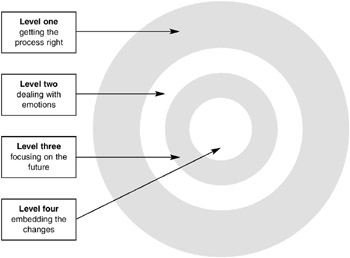
Figure 5.3: Noer's four-level redundancy intervention model
Source: Noer (1993)
Level one: getting the implementation process right
Level one interventions are all about getting the process of change right. In any change process there needs to be a good level of efficient and effective management. This includes a communication strategy and a process that is in line with organizational values.
Noer suggests that once the decision is made to effect redundancies, it needs to be done cleanly and with compassion. This requires open communication – ‘over communicating is better than under-communicating’ – emotional honesty and authenticity.
Although this is just level one it is hard to get this one absolutely right!
Level two: dealing with emotions
Once you have attended to getting the task process right, the next level is getting the emotional process right. This involves dealing with the disclosed and undisclosed feelings mentioned above. Let us be frank: a lot of people are not very good at this. For many, allowing the release of emotions and negative thoughts about the situation feels like they are opening a hornet’s nest. Managers need some support and a considerable amount of self-awareness if they are to handle this well.
There are many ways that managers can facilitate this process, with either one-to-one meetings or team meetings.
This level is about ‘allowing time for expressions of feelings about situation plus implications for future and next steps for moving on’.
Level three: focusing on the future
The change curve indicates that a period of inner focus is followed by a period of outward focus. Noer’s research suggests that once levels one and two have been dealt with, the organization now needs to focus on those surviving the redundancy. This is aimed at ‘recapturing’ their sense of self-control, empowerment and self-esteem. In the same way that those who have been made redundant need to go through a process of regaining their self-worth and focusing on their strengths, those remaining need to do the same.
There should be plenty of organizational imperatives for this to happen! But once again, let it be a considered approach rather than haphazard. The organization would not have gone through the changes that it has, without a clear need to do so. It remains to those left to address that need – be it cost-efficiency, productivity, culture change or merger. The more that individuals and teams can be involved in shaping the organization’s future, the greater will be the engagement and commitment, and the greater the chances of success.
Level four: embedding the changes
Level four interventions occur at a whole-system level. One option – the laissez-faire or reactive one – is to pretend that nothing much has changed. In terms of Satir’s model, as described by Weinberg, the organization can fail to really address or redress the situation. It could:
- try to reject foreign elements;
- try to accommodate foreign elements in its old model;
- try to transform the old model to receive foreign elements, but fail.
Any of these options creates a scenario in which the changes are not sustainable. Noer suggests embedding any changes made into the new way of working. This includes:
- creating structural systems and processes that treat and/or prevent survivor syndrome symptoms;
- redefining the psychological contract – being clear about what the new deal now is between employer and employee;
- enacting and embodying the new culture and its values if that is one of the stated objectives;
- ensuring all HR practices and management style are aligned with the espoused culture.
Key lessons that Noer teaches us are:
- to address change on both the task and people level;
- to pay attention, not only to what individuals and groups are going through now, but also the tasks necessary to move the organization along; to use these tasks to engage people as they come out of the more negative aspects of the change curve;
- to take the opportunity of the turbulence of the situation to embed into the organization those structures, systems and processes that will be necessary to sustain the changes in the longer term.
ENABLING TEAMS TO ADDRESS ORGANIZATIONAL CHANGE
Teams are often strongly impacted by restructuring processes. Their composition changes, or they have a new leader, or maybe they have a new purpose. There needs to be a process for quickly establishing individual and team roles, responsibilities and priorities.
Issues that teams and groups have to contend with during periods of organizational change brought about by restructuring include:
- loss of individual roles and jobs;
- new individual roles and jobs;
- loss of team members;
- new team members;
- new team purpose and objectives;
- new line manager;
- new organizational or departmental strategy.
Any of these can cause individual members of a team, or the team as a whole, to experience a range of emotions and new ways of thinking about their organization, their colleagues and their own career.
Teams need to develop so that their contribution to the organizational changes can be as good as possible as quickly as possible.
From our consultancy experience we find one particular framework useful for newly restructured teams. This framework encompasses a number of the issues we have highlighted. We encourage teams to work through the four-part framework in order to establish quickly the sense of team cohesion necessary for tasks to be accomplished in a meaningful and collaborative way. This is best done in a workshop format.
We have found that if a team spends the time to focus both on the people and task side of this process, it will be able to deal with the transition less turbulently than one that has not.
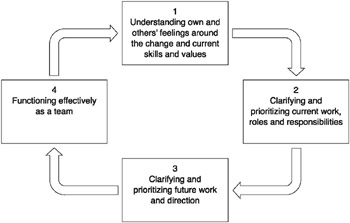
Figure 5.4: The four-stage team alignment model
Four stage team alignment
- Understanding one another’s skills, feelings and values.
It is useful for the team to acknowledge its own journey to where it is today. This means talking about the individuals, the team and other influential parts of the organization, and the processes of changes that have been gone through to arrive at the current situation. How much of this it is necessary to acknowledge will depend upon the scale of change and the story so far.
- Clarifying and prioritizing current work.
The team need to clarify the current level of demand, and must work together to satisfy current customer needs.
- Clarifying and prioritizing future work and direction.
If teams are facing a large change agenda, they can easily become overwhelmed unless activities are phased and planned. Do-ability must be convincing. Teams need to take stock of their current agenda, ensure it is understood, and agree priorities, responsibilities and timing.
- Functioning effectively as a team.
The impact of stages 1 to 3 can be extremely demanding on a team. The team needs to develop clarity about its roles, dynamics, practicalities of meetings, phasing of its development activities, communication and follow-through. Most teams will have deficiencies and development needs in one or more areas. Teams need to assess where they need to improve and focus on those areas as a priority.
The specific outcome of this process for individuals and teams is greater clarity about the practical changes that need to happen and how necessary transformations can be managed.
You will have seen from the chapters on individual and team change that all individuals and teams undergoing change will progress through various stages. The four-stage team alignment model above attempts to address some of the key points from those chapters. Table 5.4 on pages 190 and 191 brings all the key team factors together in one table as useful reference.
|
Forming |
Storming |
||||
|---|---|---|---|---|---|
|
Task |
People |
Task |
People |
||
|
Team purpose |
Establish purpose of change and team objectives in relation to change |
Ensure understanding and commitment from team around change purpose on an intellectual and emotional level |
Ensure clarity around purpose of change and team objectives in relation to change |
Check out individual engagement to purpose (enrolment, enlistment, compliance, resistance). Discuss differences. |
|
|
Team roles |
Establish roles and responsibilities of whole team and individual members |
Ensure individuals understand their roles and those of others. Establish whether there are any overlaps or grey areas. |
Ensure clarity of roles and responsibilities of whole team and individual members |
Establish degree of comfort with individual roles and establish levels of support and challenge required. Highlight areas of team tension. |
|
|
Team processes |
Highlight the need for team processes |
Establish groundrules for team working |
Establish processes for decision making, problem solving, conflict resolution if not already in place |
Check out levels of trust and agreement. Surface areas of team tension. |
|
|
Team relations |
Highlight the need for team processes |
Establish groundrules for team working |
Ensure team is agreed on purpose, objectives, roles and processes |
Build safe environment for team to openly express thoughts and feelings |
|
|
Inter-team relations |
Establish dependencies on and with other organizational groupings |
Highlight the need to establish protocols with key organizational groupings |
Establish process for communicating with other organizational groupings |
Engage with other groupings on how they will work together |
|
|
MBTI [*] |
Ensure balance between high level vision and more tangible and specific objectives |
Balance between acknowledging the business case for the change and individuals’ feelings about the change |
Ensure balance between tying agreements down and keeping options open |
Ensure that different types are understood and potential pitfalls and communication barriers |
|
|
Key Belbin roles |
Chair, shaper, plant, company worker |
Chair, team worker |
Chair, resource investigator |
Chair, team worker, monitorevaluator |
|
|
Organizational focus |
Ensure alignment of team goals to organizational change objectives |
Ensure team members engage on an intellectual and emotional level with organizational goals |
Ensure team structure, roles and responsibilities fit with proposed changes and organizational ethos |
Ensure commitment to organizational goals and operating in line with values |
|
|
Norming |
Performing |
||||
|
Task |
People |
Task |
People |
||
|
Team purpose |
Review progress on team purpose and objectives; adjust as necessary |
Review progress, recognize achievement |
Review progress on team purpose and objectives; adjust as necessary |
Review team performance against purpose, recommit as necessary |
|
|
Team roles |
Review roles and responsibilities; adjust as necessary |
Review progress, recognize achievements and development areas |
Review roles and responsibilities; adjust as necessary. Develop strategies for improving performance. |
Review individual role performance and structure, recognize achievement and provide development |
|
|
Team processes |
Review team processes; adjust as necessary |
Review team processes; adjust as necessary |
Review team processes; adjust as necessary. Develop strategies for improving performance. |
Review level of team efficiency; adjust as necessary. Develop strategies for improving performance. |
|
|
Team relations |
Review team relations; attend to if necessary |
Review progress; recognize achievement |
Review team relations; attend to if necessary. Develop strategies for improving performance. |
Reflect upon level of team effectiveness. Develop strategies for improving performance. |
|
|
Inter-team relations |
Review level of inter-team working; plan negotiations if necessary |
Review level of inter-team working; engage others in negotiating better relations if necessary |
Implement actions from review if necessary. Develop strategies for improving performance. |
Continue to foster good working relations with other organizational groupings |
|
|
MBTI[*] |
Review predominate team type, take appropriate managerial action, if necessary |
Review team strengths and weaknesses and develop blind spots |
Balance time between reviewing past performance and planning future changes |
Balance time between individual and team needs, past performance and future planning |
|
|
Key Belbin roles |
Monitor-evaluator, shaper, company worker, completer-finisher |
Chair, monitor-evaluator, team worker |
Shaper, (plant), monitor-evaluator, completer-finisher |
Chair, monitor-evaluator, team worker |
|
|
Organizational focus |
As team begins to experience less turbulence, review alignment with organizational goals and check team performance against milestones |
Ensure team model values and espoused behaviours within and outside of team |
Ensure team in all of its five elements is performing at an effective level |
Ensure team is operating effectively across organizational boundaries |
|
|
[*]MBTI = Myers Briggs Type Indicator |
|||||
CONCLUSION
Restructuring is an ever-present phenomenon in today’s organizations, and the process itself can be deeply unrewarding for those who initiate and those who experience it. We have drawn together ideas in Table 5.4, from both a task and a people perspective, which will increase the chances of achieving a smoother journey. However it must be emphasized that turbulence is one thing you will not avoid. How you manage it will be the test of how well you can lead change.
Part I - The Underpinning Theory
Part II - The Applications

EAN: 2147483647
Pages: 96
