Home Lighting Basics
Home LightingBasics
In this chapter, you will learn about
- Light and lighting terminology
- Lighting loads and types
- Lighting fixtures
In a typical home, to turn a light fixture either on or off, you must be in the same room and access either a wall or lamp switch. However, through a home lighting control system, it’s possible to turn lights on or off from another room or perhaps even another town.
When designing a lighting system for a home, you have more to deal with than just how to turn light fixtures on or off. To properly design a lighting system, you must consider a number of issues, including the following:
- Where to place the lights
- What kind of lights should be used and how many
- Where to put the switches, what type of switches should be used, and what lights are controlled by what switches
- What lights are to be controlled remotely
Lighting systems have some very basic operational components: light, light sources, light fixtures, and lighting controls. These basic components, when used in the right combinations and programmed well, can provide a system of lighting that serves the needs of a home’s occupants.
This chapter covers lighting basics and fixture types. Although I mention a few of the devices typically included in a lighting system, Chapter 22 covers that area in more detail.
Light
Perhaps the first topic we should discuss is light, which is obviously a central part of a lighting system. The word light has over 30 different meanings in an English dictionary, but in the context of a home’s lighting system, light takes on only a few meanings:
- The illumination that enables us to see
- A device that produces illumination
- The illumination from the sun
In the daylight hours, we depend on the sun and its light rays to provide illumination. However, after sundown, artificial light sources must be used. In designing a home’s lighting system, the trick is to place the light sources and the correct level of illumination in the right places.
What Is Light?
Visible light, which means the light that you can see, is only one band in the electromagnetic spectrum that has radio waves at one extreme and gamma rays at the other extreme. Visible light is about in the middle of the electromagnetic spectrum—right between infrared (IR) waves and ultra violet (UV) waves.
Although it may sound like a contradiction, we can’t actually see visible light; we can see only reflections of light waves from objects, but not the actual light source. What this means is that you can’t actually see light before it hits an object and is reflected back into your eye. Without going into the astrophysics of lighting and luminescence and the history and evolution of modern lighting devices, let’s just agree that the design of a lighting system must take into consideration how light is reflected to achieve desired results.
Light Waves
Light reflects from objects in waves of energy that can travel through virtually any space, including a vacuum. A light wave has the same properties of any electromagnetic wave, including wavelength and frequency. Visible light has a wavelength between 400 nanometers (nano means one-billionth) and 700 nanometers (nm). The full spectrum of electromagnetic light (see Figure 21-1) ranges from gamma rays (at 1 nm) to radio waves (in meters and centimeters). The frequency, or the number of waves per second, is measured as hertz (Hz). It is the frequency of visible light that we see as color. For example, the light we see as red has a frequency of 430 trillion hertz (teraHz) and the light we see as violet has a frequency of 750 teraHz. Between these two frequencies exist the other primary colors (orange, yellow, green, blue) each at a different frequency.
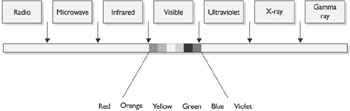
Figure 21-1: The electromagnetic spectrum showing the colors (frequencies) of visible light
Generating Light
Producing light involves applying a charge to the atoms of a material to energize their electrons. The energized electronics emit photons, which are the particles that produce the light we see. The photons produced from different materials, which means different types of atoms, have a particular frequency. The frequency of the photon determines the color of its light. For example, the sodium atoms in a sodium vapor light produce photons of a frequency that falls in the yellow light spectrum.
The most common way to energize atoms to produce light is with heat, which is the action behind incandescence, as in an incandescent lamp. Applying enough heat to a material creates photons on every color spectrum that merge together to create what is called white light, or colorless light. For example, in an ordinary 100-watt lamp, an inner metallic strip is heated using electricity to generate light.
White light, or colorless light, is the light produced by the sun. With just our naked eye, we can’t see the colors that combine to create its colorlessness, but if the light shines through a glass of water or a prism, we can see its various color frequencies.
Light and Color
To create colored light, we have two choices: color by addition and color by subtraction. Here’s how they work:
- Color by additionIf you pass white light through a colored filter, such as a colored glass or piece of cellophane, the resulting light becomes the color of the filter. This works on the same principles we learned in grade school about mixing different paint or crayon colors together—red and blue make violet, blue and green make cyan, and green and red make yellow (see Figure 21-2). This is the same principle used by computer monitors to create colors on their screens.
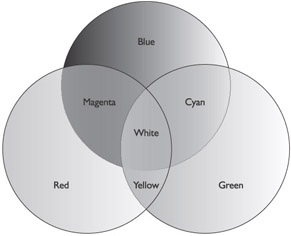
Figure 21-2: Red, green, and blue colors can be combined to create other colors, including white. - Color by subtractionAbsorbing certain frequencies of a light beam—in other words, removing one or more colors—is another way to create light of a particular color. The resulting light will have only the frequencies of the light that weren’t removed. Again, without getting too scientific here, this is how paint and ink work. Paint and ink are engineered to absorb all or part of some light frequencies and reflect back only the remaining light, which results in the colors we see. When you look at a wall and see green, the paint on the wall has absorbed the red and blue frequencies, so all you see is green. Figure 21-3 illustrates that when color is removed from a visible color, another color is produced, including black (the effect of removing all color frequencies).
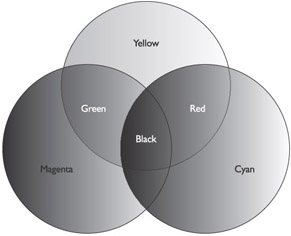
Figure 21-3: Colors change when paint or other colors are designed to absorb one or more colors.
The bottom line on light and color is that an object can create light by emitting the frequency of a certain color or it can absorb light frequencies to reflect a certain color.
Light and Objects
When light shines on any object, the light interacting with the object’s surface will do one of four things:
- AbsorptionThe object absorbs the light or certain frequencies of the light, such as from a painted wall or a color photograph.
- TransparencyThe light passes through the object without changing, such as light through a windowpane.
- RefractionThe light passes through the object, but is divided into its separate frequencies.
- ReflectionThe light bounces back or is scattered by the object.
More than one of these actions can occur when light strikes an object.
Lighting Characteristics
Light is measured in a variety of standard measurements. The light produced by lighting fixtures is measured using the following:
- Foot-candlesThis is the measurement of the amount of light that reaches a particular object. Foot-candles are commonly used to measure the amount of light hitting a video screen. A foot-candle is the equivalent of one lumen per square foot. For example, most rooms and areas of a home, such as the bathrooms, kitchen, hall, and living spaces, should have 35 foot-candles of light for general lighting. In areas where task lighting is needed, 70 foot-candles of lighting should be available.
- LumensThe amount of visible light produced by a light source. The exact definition of a lumen is very technical but, in general, the more lumens a light source produces, the better.
- WattageIn the context of lighting, wattage (or watts) measures the amount of electricity a lighting source uses and not the amount of light it produces. In most cases, a higher wattage lamp produces more light because it uses more power to produce light, but not always.
Light Sources
The primary light sources in home lighting, besides the sun, are incandescent lamps, fluorescent tubes and lamps, and halogen and Xenon lamps. The type of lighting source (lamp or tube) used in a lighting fixture can make a huge difference in the lighting level and color in a room or zone.
For example, in a screw base lighting fixture, such as a table or floor lamp, the light produced by a 100-watt incandescent lamp is much different than the light produced by a 75-watt compact fluorescent lamp, besides the obvious difference in wattage.
Incandescent Lamps
Incandescent lamps, or what are commonly called, simply, light bulbs, are not complex devices. The primary components of a lamp are its two metal contacts, which are attached to two wires and a thin metal (commonly tungsten) filament. The whole assembly is enclosed inside a glass bulb that is filled with an inert gas such as argon. When the bulb is screwed into a socket and the power is switched on, an electrical current flows through the wires and the filament, which heats up to about 4,000 degrees Fahrenheit (or about 2,200 degrees Centigrade) and emits light. Incandescent lamps emit what is called warm light.
Lamps are rated by the amount of light (measured in watts) they produce in a certain period of time. Lamps with more power have larger filaments and, in turn, a higher watt rating. A three-way bulb actually has two different filaments on two separate circuits, each producing a different wattage. The socket for a three-way lamp has three positions to select each of the two circuits, or both at the same time.
Fluorescent Lights
A fluorescent light has a low-pressure mercury vapor inside and, when ionized, emits ultraviolet (UV) light. UV light can be harmful to humans, so the inside of the light’s glass tube is coated with phosphor, which converts the UV light into visible light. Inside the fluorescent tube are electrodes at each end that excite the mercury in the tube into a vapor that emits UV light. The legacy fluorescent tube emits what is called cold light.
Fluorescent Tube Markings
If fluorescent lighting is included in a lighting design, it’s important to use the right fluorescent tubes or bulbs for the job. To know you have the correct lights, you should be able to decode the markings on the tube (see Figure 21-4).
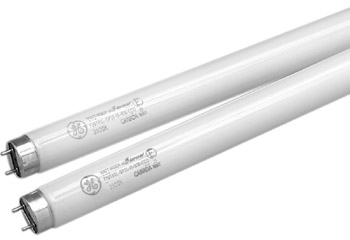
Figure 21-4: Standard fluorescent light tubes
Photo courtesy of General Electric Lighting.
If you find a fluorescent tube marked with something like F40T12CW/IS or F30T8 RS, here’s how to decode it:
- The “F” indicates a fluorescent lamp, which you probably already knew.
- The next two digits (40 or 30 in this case) indicate the wattage.
- The “T” indicates a tube type lamp.
- The next number represents the tube’s diameter in eighths of an inch. For example, 12 means 12/8 (twelve-eighths) or 1.5 inches and 8 means 8/8 (eight-eighths) or 1-inch in diameter.
- The remaining letters represent the characteristics of the lamp. Some of the more common markings are
- CWCool-White, the type of light emitted by the lamp
- ISInstant Start, the type of fixture ballast for which the lamp is designed
- RSRapid Start, another type of ballast
- A fluorescent lamp may also have HO (High Output) or VHO (Very High Output) either before or after its coding to indicate its ballast type. Understand that a VHO lamp requires a special fixture with a specific connector set.
Compact Fluorescent Bulbs
The latest development in fluorescent bulbs is the compact fluorescent bulb (see Figure 21-5) that is a screw-in replacement for an incandescent bulb and fits in most standard light fixtures. In comparison to an ordinary lamp, the compact fluorescent bulb has a longer life (as much as 10,000 hours), uses less energy, produces less heat, and emits a warmer light.
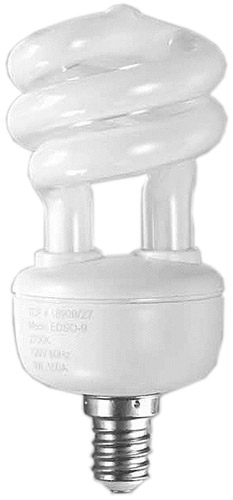
Figure 21-5: A compact fluorescent lamp
Photo courtesy of General Electric Lighting.
Halogen Lamps
Incandescent lamps aren’t very efficient, and they only last up to about 1,000 hours of normal use. On top of that, most of the energy produced by an ordinary lamp is heat. The tungsten filament of a halogen lamp is encased inside a quartz enclosure filled with halogen gas, which enables it to produce a brighter light. However, like the incandescent bulb, the halogen lamp also produces a lot of heat. Because of its design and elements, a halogen lamp (see Figure 21-6) can outlast a regular lamp. Some halogen-type lamps are filled with Xenon gas, which produces a brighter and whiter light.
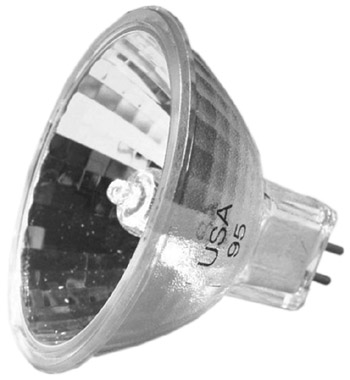
Figure 21-6: A halogen lamp can be a good choice for task or showcase lighting.
Lighting Load
There are actually two types of lighting load that can be calculated: circuit lighting load and lighting load. A circuit lighting load is the total electrical draw placed on an electrical circuit breaker in the central electrical panel. A circuit lighting load typically includes the multiple lighting loads in one or more rooms. For example, in the electrical panel, circuit breaker #4 could be connected to the kitchen ceiling, kitchen sink area, and the kitchen island area lighting loads.
A lighting load, as opposed to a circuit lighting load, is the total electrical draw from all of the fixtures controlled by a single lighting switch or control. For example, a kitchen wall switch may control the 6 ceiling fixtures in the kitchen. One of the more important outcomes of a lighting design is the determination of the lighting loads. The lighting load of a room or zone is the total wattage requirement (energy consumption) of all of the fixtures in that area. For example, if a kitchen has four ceiling-mounted recessed light fixtures, each with a 100-watt lamp, the total potential lighting load for that room is 400 watts. If a dimmer control (see Chapter 22) is installed, when the dimmer is set to 50 per cent (one-half brightness), the lighting load for the room is reduced to 200 watts. The total or maximum lighting load of a room is a key consideration when deciding on the best lighting control to use.
| Note |
A standard rule of thumb that can be used to estimate the lighting load of any space is to multiply the square footage by 3 watts. |
Estimating Lighting Loads
To estimate the energy consumption orwattage requirements for a room, use these
two guidelines:
- For general lighting requirements, multiply the total square footage of the living space by 3 watts of lighting load per square foot. For example, in a 120 square foot room, the general lighting load for the room is estimated at 360 watts.
- If fluorescent lighting is being considered, the lighting load estimation factor can be reduced to 2.5 watts per square foot for general lighting and to 1.5 for ambient lighting. For task lighting, an estimation factor of 4.0 watts per square foot should be used.
| CROSS-REFERENCE |
Chapter 22 covers the importance of lighting load on the lighting control in detail. |
An important part of designing a home lighting system is to reduce or minimize the amount of energy and the peak energy consumption, in the form of electricity, of the lighting fixtures and their lamps and bulbs.
Lighting Types
There are essentially three types of lighting used in most homes:
- General or ambient lighting
- Task lighting
- Accent lighting
General and Ambient Lighting
General lighting is used to replace sunlight in open living areas. It is the lighting type that provides illumination to enable occupants of a room or space to see the objects in a room and walk about safely. General lighting, which is also called ambient or mood lighting (see Figure 21-7), can also be used to show a room and its contents in their “best light.”
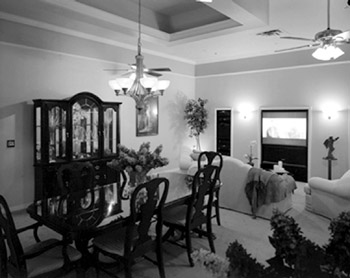
Figure 21-7: An example of general or ambient lighting in a room
Photo courtesy of LiteTouch, Inc.
The types of lamps or light fixtures typically used to provide general lighting are chandeliers, wall and ceiling-mounted fixtures, recessed or track lighting for indoor spaces, and exterior lamps and other light fixtures for outside walkways and patios.
Task Lighting
Task lighting is what it sounds like—lighting specifically designed for close work, such as reading, cooking, hobbies, games, sewing, and the like (see Figure 21-8). The objective for task lighting is to provide the proper amount of light to illuminate the task area, reduce glare and shadow, and to relieve eyestrain.
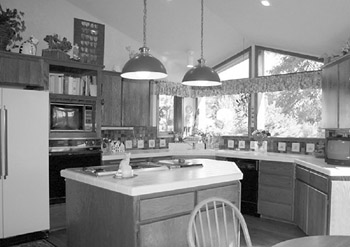
Figure 21-8: Task lighting is used to reduce glare and shadows.
Photo courtesy of LiteTouch, Inc.
Task lighting is typically provided using recessed or track lighting, pendant lamps, or portable (table or adjustable arm) lamps.
Accent Lighting
In most instances, accent lighting is used as a part of a room’s overall dcor to spotlight interior artwork, plants, draperies, or other room features (see Figure 21-9). Accent lighting can also be used outdoors to highlight exterior landscaping features. To provide the proper level of light and to draw interest to the lighted feature, the lighting level used should be at least three times higher than any of the general lighting in that area.
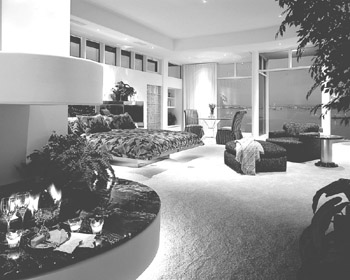
Figure 21-9: Accent lighting can be used to spotlight specific room or landscaping features.
Photo courtesy of American Fluorescent.
Typically, recessed, track, or floor, ground, or wall-mounted fixtures are used as accent lighting.
Lighting Fixtures
A wide variety of lighting fixture types can be used to provide the type of lighting desired: ceiling-mounted, chandelier, pendant, portable, recessed, track, under-counter, and wall-mounted. Here’s a description of each of these fixtures types:
- Ceiling-mounted fixturesCeiling fixtures, like those in Figure 21-10, are used to provide general or ambient lighting in spaces such as hallways, bedrooms, kitchens, bathrooms, laundry rooms, and the like.
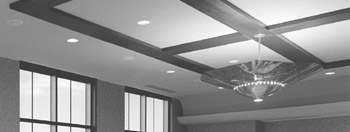
Figure 21-10: Ceiling-mounted lighting fixtures provide ambient lighting.Photo courtesy of LiteTouch, Inc.
- Wall-mounted fixturesTo state the obvious, these fixtures are mounted to walls and include light-bars and sconces (shown in Figure 21-11). Wall-mounted fixtures are used to provide general lighting, but can be used to provide task lighting in some areas, such as above a bathroom mirror.
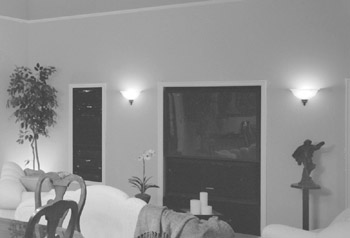
Figure 21-11: Wall-mounted fixtures provide general lighting.Photo courtesy of LiteTouch, Inc.
- ChandeliersAlthough a chandelier is actually a ceiling-mounted fixture, I am listing it separately because in most cases, it is much more expensive than other lighting fixtures in a house and is chosen for its appearance as much as its ability to provide general or task lighting. Chandeliers, like the one shown in Figure 21-12, come in a wide variety of sizes, shapes, and designs and are commonly used in foyers, living rooms, and dining rooms with higher ceilings. Chandeliers can provide ambient lighting or through pendant-style elements, task lighting over tables, pianos, and the like. If a chandelier is to be a part of the lighting control system, its typically high wattage should be taken into account.
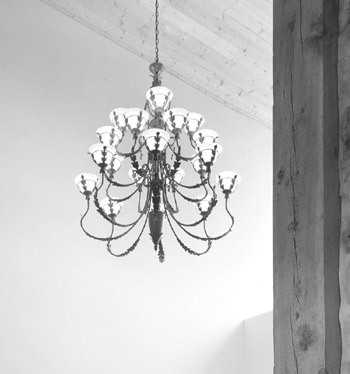
Figure 21-12: An example of a chandelier light fixturePhoto courtesy of LiteTouch, Inc.
- Pendant fixturesThis is another ceiling-mounted fixture that can be used for either task or general lighting, or both. Pendant fixtures, shown in Figure 21-13, can be used over cooking areas, tables, and work areas or, if fitted with a globe or shade, as a part of a room’s general lighting.
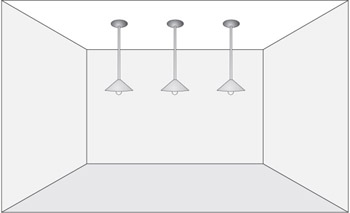
Figure 21-13: Pendant fixtures provide task lighting. - Portable fixturesTable lamps, floor lamps, torchieres (a type of floor lamp that directs its light upward from an inverted cone shade or reflective bowl), adjustable task lighting, and special-purpose lamps, such as art or piano lamps, are all considered to be portable lighting fixtures. Portable fixtures are used to provide general, task, and accent lighting.
- Recessed lightingRecessed lighting utilizes ceiling-mounted fixtures to provide general, accent, and task lighting inconspicuously. Recessed lighting can be used virtually anywhere inside a home, but is common in areas with low ceilings.
- Track lightingThis fixture type allows flexibility by providing adjustable lighting scenes in a room. Most track lighting fixtures can be swiveled or rotated to adjust the areas being illuminated. Track lighting fixtures are available with built-in or external converters (to convert household AC power to DC power for the lamp), which impacts the shape and wattage of the fixture, something that must be considered when track lighting is included in a design.
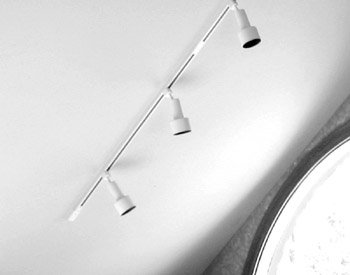
Figure 21-14: An example of a track lighting fixturePhoto courtesy of Connie J. Price
- Under-cabinet fixturesThese fixtures can be used to add accent lighting under a shelf or task lighting under a cabinet, such as in a kitchen. There are various types of fixtures with fluorescents, track lighting, and halogen or Xenon mini-lights.
Review
Lighting systems have some very basic operational components: light, light sources, and lighting controls. In the context of lighting systems, light is illumination, an illumination device, and sunlight. The primary home lighting sources are incandescent lamps, fluorescent tubes and bulbs, and halogen lamps. Lamps are rated by the amount of watts they produce in a certain period of time. A fluorescent light has a low-pressure mercury vapor inside and when ionized, emits ultraviolet (UV) light that is filtered through phosphor. The fluorescent tube emits cold light. The tungsten filament of a halogen lamp is encased inside a quartz enclosure filled with halogen gas. This enables it to produce a brighter light.
Light is measured in a variety of standard measurements, including foot-candles, lumens, and wattage. The lighting system must be designed to provide the minimum light needed (measured in foot-candles, lumens, or wattage).
The lighting load for each room or zone must be determined before selecting the lighting controls. To estimate the energy consumption (lighting load) of a room or zone, multiply the total square footage by 3 watts to yield the lighting load per square foot for the space. There are essentially three types of lighting used in most homes: general or ambient lighting, task lighting, and accent lighting. General lighting replaces sunlight in open living areas. Task lighting provides the proper amount of light to illuminate the task area, reduce glare and shadow, and to relieve eyestrain. Accent lighting is used as a part of a room’s overall dcor to spotlight interior artwork, plants, draperies, or other room features.
A wide variety of lighting fixtures can be used to provide the type of lighting desired: ceiling-mounted, chandelier, pendant, portable, recessed, track, under-counter, and wall-mounted.
Questions
- Which of the following is not a commonly used lighting source for home lighting systems?
- Incandescent bulbs
- Fluorescent tubes
- Mercury vapor lamps
- Halogen lamps
- What is the meaning of the “T12” in the fluorescent tube marking of F40T12CW?
- A tube 12 inches long.
- A tube 1.5 inches in diameter.
- The tube requires a terminated ballast of 12V AC.
- It is a manufacturer’s identity code.
- What is the life expectancy for a compact fluorescent lamp?
- 200 hours
- 2,500 hours
- 10,000 hours
- Unlimited
- What is the measurement used to measure the amount of light that reaches an illuminated object?
- Foot-candle
- Lumen
- Watt
- Voltage
- What is the measurement used to measure the amount of electricity used by a lighting source?
- Foot-candle
- Lumen
- Watt
- Voltage
- What is the factor used to estimate general lighting loads?
- 1.5 watts per square foot
- 2.0 watts per square foot
- 3.0 watts per square foot
- 4.0 watts per square foot
- Which of the following is not a type of residential lighting?
- Spotlight
- Ambient
- Task
- Accent
- What ceiling or wall-mounted lighting fixture type is used to provide adjustable lighting scenes in a room?
- Track
- Pendant
- Vanity
- Chandelier
- Calculating the lighting load for a particular space is important for choosing which of the following?
- Lighting fixtures
- Lighting sources
- Lighting controls
- Sky lights
- What material is used to filter UV light to create visible light on a fluorescent lamp?
- Halogen
- Mercury
- Phosphor
- Tungsten
Answers
- C. Mercury vapor lamps are commonly used for exterior lighting, but virtually never as an interior lamp as the other choices are.
- B. The number, which is typically either 8 or 12, represents the number of eighths of an inch in the tube’s diameter. The “T” indicates tubes.
- C. The standard incandescent bulb has a life as long as 1,000 hours.
- A. Lumens measure the amount of visible light produced by a lighting source. Watts measure the amount of power used by a lighting source. Voltage is not a lighting measurement.
- C. Lumens measure the amount of visible light produced by a lighting source. Watts measure the amount of power used by a lighting source. Voltage is not a lighting measurement.
- C. The other factors are used for fluorescent as well as task and accent lighting.
- A. A spotlight is a type of accent lighting; ambient lighting is the general lighting in a room; and task lighting is used in work areas.
- A. Track lighting can be repositioned, rotated, or swiveled to create a new lighting scene when desired.
- C. Lighting fixtures and lighting sources contribute to the lighting load and determine the energy consumption specified by the lighting load. A skylight should be considered when determining the lighting level in a space, but isn’t a part of the lighting load calculation. Lighting loads are very important to the selection of the appropriate lighting controls.
- C. The color of the phosphor provides the color of the light produced by the lamp.
Part I - Home Technology Installation Basics
- Wire and Cable Basics
- Connector Types and Uses
- Wiring Installation Practices
- Codes, Standards, and Safety Practices
Part II - Structured Wiring
- Infrastructure Wiring Basics
- Planning a Structured Wiring Installation
- Rough-In Installation
- Trim-Out Installation
- Troubleshooting Structured Wiring
Part III - Home Computer Networks
- Computer Network Basics
- Computer Network Hardware
- Computer Network Software
- Designing and Installing a Computer Network
- Troubleshooting a Home Network
Part IV - Audio/Video Systems
- Distributed Audio System Basics
- Designing and Installing Distributed Audio Systems
- Distributed Video Basics
- Designing and Installing Distributed Video Systems
- Troubleshooting Audio Systems
- Troubleshooting Video Systems
Part V. Home Lighting Management Systems
- Home Lighting Basics
- Home Lighting Devices
- Designing a Home Lighting Control System
- Installing a Home Lighting Control System
- Troubleshooting and Maintaining Lighting Control Systems
Part VI - Telecommunications
- Home Communication System Basics
- Designing and Installing a Home Telephone System
- Troubleshooting a Home Communication System
Part VII - HVAC and Water Management
Part VIII - Security System Basics
- Security System Basics
- Designing a Home Security System
- Installing a Home Security System
- Troubleshooting and Maintaining a Home Security System
- Home Security Surveillance Systems
- Home Access Control Systems
Part IX - Home Technology Integration
- Defining Users Needs and Desires
- User Interfaces
- Home Automation Controllers
- Programming
- Integrating the Connected Home
- Other Home Technology Integration Devices
Part X - Appendices

EAN: N/A
Pages: 300
