Flylib.com

Books Software


Why Podcast?


Why Podcast?

The answer to the above question is simple: Podcasting is so incredibly simple, especially compared with getting your own FCC license, that virtually anyone with a personal computer and an Internet connection can produce a show that could potentially be heard by tens of thousands of people. In the United States alone, where freedom of speech is set forth as one of the founding pillars of society, one does not have to take a large leap of faith to imagine that the podwaves are filling with interesting, offensive, humorous , and often inane chatter.

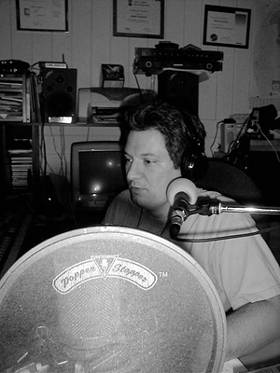
You may ask, "Who is podcasting?" That question can be answered very simply: Everyone is podcasting, Figure 1.3 shows Bob Goyetche podcasting out of his home in Deux-Montagnes, Quebec. By everyone, I mean people from all geographic locations and all walks of life. If the Internet ushered in a revolution in information dissemination , podcasting has done the same for the audio format. Podcasting is the metaphorical saw that cuts through the chains of radio, be it satellite radio or the old-fashioned AM/FM brand.

Figure 1.3. Bob Goyetche podcasting from his home in Deux-Montagnes.

Photo courtesy of Bob Goyetche


The following is a short list of the sorts of topics that are routinely discussed in podcasts available today:

  • Wine connoisseurship

  • Husband-and-wife relationships

  • Suburban life

  • Christian fundamentalism

  • Geek news

  • Science fiction

  • Comedy

  • How-to shows

  • Sports

  • UFOs

  • Music shows of all genres

Needless to say, this list could go on and on. And on. The number of podcasts is growing exponentially, and by the time you read this book, there likely will be a podcast for nearly every subject that could come to mind. If you can think of a subject that isn't covered, you've found your niche to start podcasting yourself!


Commercial Podcasting

For existing radio networks, individual radio stations, and even television stations , the move to podcasting is an obvious one. These outlets quickly realized that there was a market for their programming to be disseminated in the form of MP3 or AAC files so that individuals could enjoy them on their own time. And while the listener has control over whether she listens to any advertisements during the program, the exposure can only serve to aid in the growth of a fan base for any program. As a result, an increasing number of media outlets are making podcasts available to the public from their Web sites.

Also, several Web sites, including Apple Computer's iTunes Music Store and Audible.com's online store ( Figure 1.4 ), sell commercial podcasts of periodicals such as Scientific American Magazine and newspapers such as The Wall Street Journal . The cost of these podcasts is often less than that of the publications on the newsstand, and they can be purchased through subscription, much like any magazine or newspaper. As time goes on, we can expect nearly every magazine (with the exception of certain sexually explicit rags) to be available in this format, allowing readers everywhere to get in their reading while riding a bike or driving a car.

Figure 1.4. Audible.com's Web site sells audiobooks but also commercial podcasts of popular television and radio shows.


The Podcasting Echo

Exactly what mark podcasting will make on the world is a chapter that is as yet unwritten. Still, despite the fact that podcasting is in its infancy, we don't need a crystal ball to see that the whirlwind surrounding it today will most likely stir up the sand in several established sandboxes. Let's take a look at what might be affected, directly or indirectly, by the rise of podcasting:

Conventional radio. Perhaps the one area that might be most affected by podcasting, traditional radio has a lot to lose. In today's world, most of the people who listen to radio do so in their cars. With an increasing number of cars coming with MP3 players or Apple iPod connections, the ability for a driver to listen to podcast material rather than advertisement-laden radio broadcasts increases . The effects of this on radio are already apparent, with many radio programs offering podcast versions of their shows via station Web sites.

There are also products on the market that effectively turn any radio broadcast into a podcast. Griffin Technology's radio SHARK ( www.griffintechnology.com ), for example, will capture any AM or FM radio broadcast and automatically export an MP3 file to iTunes so that the program will be loaded directly onto your iPod the next time you connect it to your computer.


Satellite radio. With less to lose than conventional radio (because satellite radio doesn't include advertising), satellite radio is still in a flat position, because its content is available only at set times. Podcasts are available at any time. Might the satellite-radio fees be diverted to individual commercial podcast subscriptions? It's possible.

Internet radio. Internet radio is perhaps the safest of the radio media, because software already exists that allows the user to time-shift Internet radio shows. The downside to Internet radio is that it is primarily intended to be listened to on a computer and, as such, doesn't have the mobility of a podcast.

Celebrity. In less than a year of official existence, the podcast has already created celebrity. Of course, Adam Curry (former MTV veejay) is the face of iPodder and podcasting in general, but the hosts of the most popular podcasts are also beginning to achieve some measure of celebrity. It's only a matter of time before a podcaster makes the jump from podcasting to mainstream radio.

During the writing of this book, Adam Curry and Sirius Satellite Radio announced that Curry will be broadcasting a four- hour daily show on podcasting over the Sirius Satellite network. Although this broadcast had not premiered at this writing, it is a fair bet that it will give podcasting in general another huge shot in the arm in terms of positive publicity and legitimization.


Television. Television doesn't have a great deal to fear from podcasting. It can, however, profit from the new medium, and some canny producers are already making sure that they have a piece of the podcasting pie. Talk-based shows like "Charlie Rose" and the "BBC News Hour" are available on commercial services like Audible.com (www.audible.com), making them available to an audience that might not otherwise partake.

Advertising. The obvious problem for advertisers lies in placing advertising in a medium that prides itself on freedom: freedom of ideas, freedom from advertisers' pressure, freedom to say what they want. With podcasting's increasing fan base, you can be sure that corporations will want to find a way to advertise, but it's unclear whether the listeners will accept such a thing. Perhaps the most logical path will be for companies to sponsor the production of individual podcasts, thus attaching their names to successful podcasting endeavors.

Education. This is highly speculative , but one can imagine university classes that are digitally recorded and then made available on a Web site as podcast "notes." Students can download the audio of that class and listen to it while they're out drinking beer and eating pizza later that evening. The possibilities for education are huge, and as MP3 players and iPods become ubiquitous (in phones and PDAs, and as stand-alone players), the ability for education to take advantage of this information pathway is increased. Who knows what the future of education will be?

Book and magazine publishers. Perhaps at the forefront of podcasting (although some would argue that pay service isn't true podcasting), Audible.com went online in late 1997 and was at the forefront of digital audio content delivery. Audible made its name by selling audiobooks for use on the computer, CD player, or MP3 player, but since its inception, it has been on the cutting edge, offering everything from comedy shows to daily newspapers (in audio format). No doubt the success of Audible.com has spurred more publishers to produce audio versions of their books, thus changing the publishing landscape.

The legal system. Any time there is talk of digital content of any kind, legal ramifications start to rear their ugly heads. Although independent podcasts are free to the world, it's only a matter of time before some conflict arises in this area. How and when are matters of opinion, but one only has to look at the music industry to see how ugly things can become. That said, let's try to be optimistic. Perhaps the spirit of podcasting will prevail, and the medium will thrive without copyright-infringement lawsuits to bog it down.

Commerce. As mentioned previously, Web sites like Audible.com and Apple's iTunes Music Store already sell what are essentially podcast versions of popular radio and television shows, as well as audio versions of periodicals. As podcasting continues to take off, one can imagine compact discs for sale with hundreds of podcasts in a sort of "Best of Podcasting 2005" compilation. No doubt we will see many changes in commerce and e-commerce as a result of podcasting's entrance into the marketplace .