Section 21: Take Responsibility for What You Should Own
Overview
Jake worked for me several years ago and delivered great work. But, he avoided conflicts. So when anyone needed something fixed, Jake was reluctant to address it. Over the span of several months, his co-workers realized it was easier to fix problems by themselves rather than by asking him to redo his work.
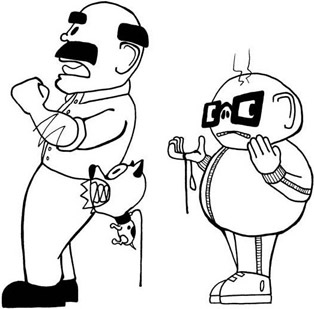
Jake sensed something was wrong and wondered why people seemed to value his contribution less and less. Teammates didn’t ask him for help, even when he could have provided valuable assistance. Sometimes he would deliver something that never seemed to be used by anyone. Jake was frustrated and lonely.
Jake’s view of the organization was that mistakes should never happen and admitting fault was showing weakness in front of others. He is still struggling with this issue and seems unwilling to admit his mistakes to others.
The reality is that things change, mistakes are made, and miscommunications happen. You cannot run away from this just because it is uncomfortable. You must address situations quickly so life can move on.
People tend to have a surprising tolerance for flaws and mistakes. After all, each of us is painfully aware of our own shortcomings and problems. If you take responsibility for your actions and fix problems quickly, you can often be seen as more valuable than those who never made mistakes. It is counter-intuitive, but true.
The difference between doing a bad job and making a mistake is whether you correct it and learn from the experience. If you are constantly correcting your mistakes and making new ones, that means you are learning and growing. If you are making the same mistakes, it is time to step back and examine your fundamental approach and underlying assumptions. Perhaps you need help from others to find a different way to solve the problem.
This is also valid at the group or even the corporate level. The IBM culture is famous for the philosophy of taking responsibility for customer satisfaction, whether or not it was IBM’s fault. IBM recognizes that respect from customers is worth far more than the ability to place blame and pass the buck. Customers do not expect companies to be flawless, but they do expect and even demand that problems be addressed quickly.
In 1982, Johnson & Johnson experienced a crisis when bottles of Tylenol were laced with cyanide in Chicago. The company was saved when they took quick, decisive action to correct the problem by recalling products from shelves across the country. The public was shaken about the initial deaths, but the true character of the company was shown by how they reacted to and corrected the problem. Other companies that try to avoid responsibility for problems suffer enormously, and often go bankrupt over issues that could have been corrected.
Look in the mirror to assign blame, look out of the window to assign praise.
—Robert Hughes, Coach

- Step 1.1 Install OpenSSH to Replace the Remote Access Protocols with Encrypted Versions
- Step 1.2 Install SSH Windows Clients to Access Remote Machines Securely
- Step 4.5 How to use OpenSSH Passphrase Agents
- Step 5.2 Troubleshooting Common OpenSSH Errors/Problems
- Step 6.2 Using Port Forwarding Within PuTTY to Read Your E-mail Securely